The short answer
You likely need a new chimney liner if your flue tiles are cracked or missing, you smell smoke or creosote, or you're switching your heating fuel. Expert Chimney Sweep inspects the flue with a camera, then installs a liner sized to your appliance and seals it at the top and bottom.
A chimney liner is the protective channel inside your chimney that carries smoke and exhaust gases up and out of your home. In many older Brooklyn houses, the original clay tile liner has cracked, shifted, or worn away after decades of heat, moisture, and freeze-thaw cycles. Some chimneys were built with no liner at all. When the liner fails, heat and combustion gases can reach the brick, mortar, and nearby wood framing, and draft suffers. Expert Chimney Sweep installs new liners for fireplaces, wood stoves, boilers, furnaces, and water heaters in Brooklyn and nearby cities. Our certified technicians size each liner to the appliance it serves, so exhaust moves up the flue the way it should.
Signs you need a new chimney liner
Liner damage is usually hidden inside the chimney, so most homeowners notice the effects first. If you see any of these, schedule an inspection before your next fire or heating season:
- A smoke or creosote smell in the room, especially on humid days or when the fireplace is not in use
- Poor draft: smoke rolls back into the room, fires are hard to start, or your boiler or water heater shows signs of backdrafting
- Pieces of clay tile, brick flakes, or crumbled mortar in the firebox or at the base of the flue
- White staining on the brick, inside or outside, which means moisture is moving through the masonry
- Water in the firebox or rust on the damper or the appliance connection
- A recent or planned switch from oil to gas, or a new heating appliance connected to an old flue
What's included in a liner installation
Every job starts with an inspection, because the right liner depends on what you burn, the size of your appliance, and the shape and condition of the existing flue. Once we know what the chimney needs, the installation covers the following:
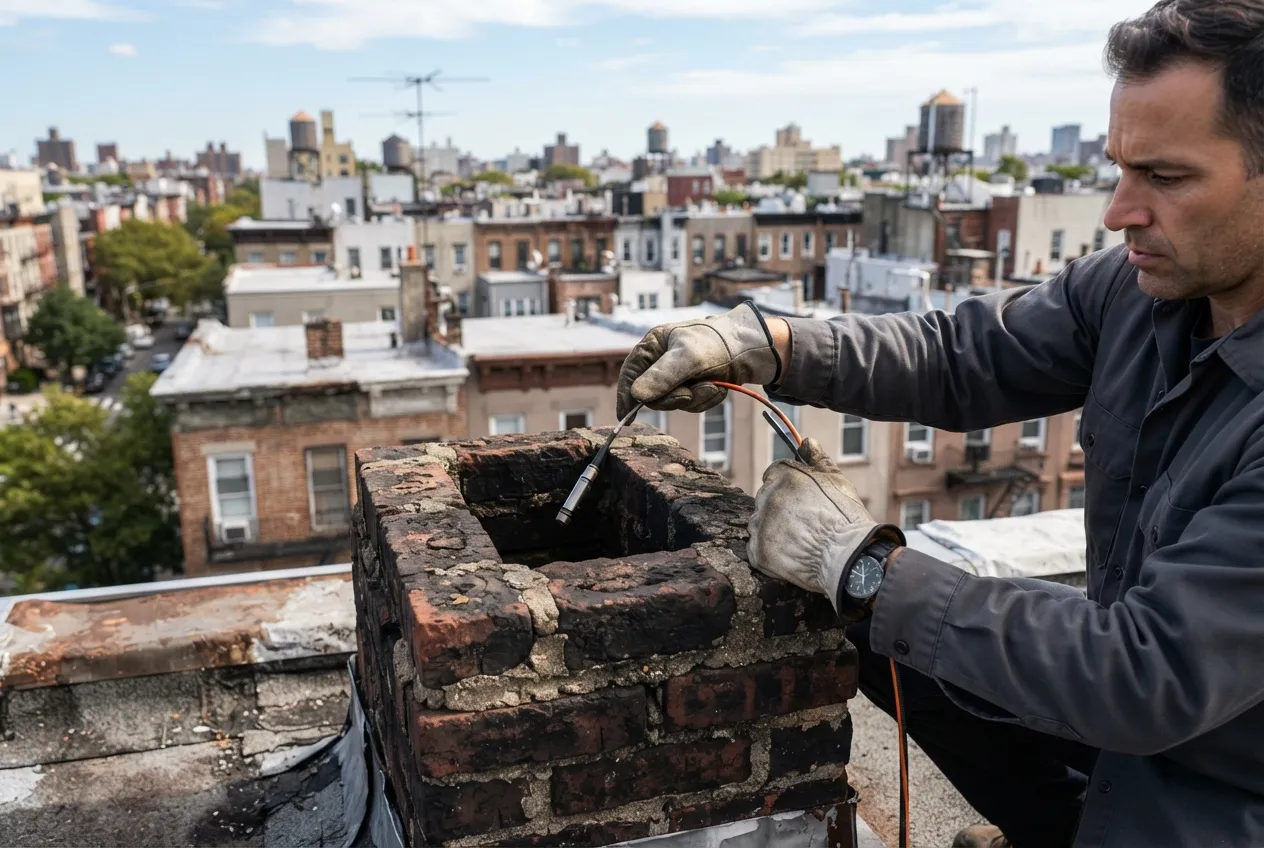
- Camera inspection of the full flue to document cracks, gaps, and missing tiles
- Cleaning the flue to remove creosote, soot, and loose debris before the liner goes in
- Measuring the flue and matching the liner diameter to the appliance it will vent
- Removing broken tile sections where needed to make room for the new liner
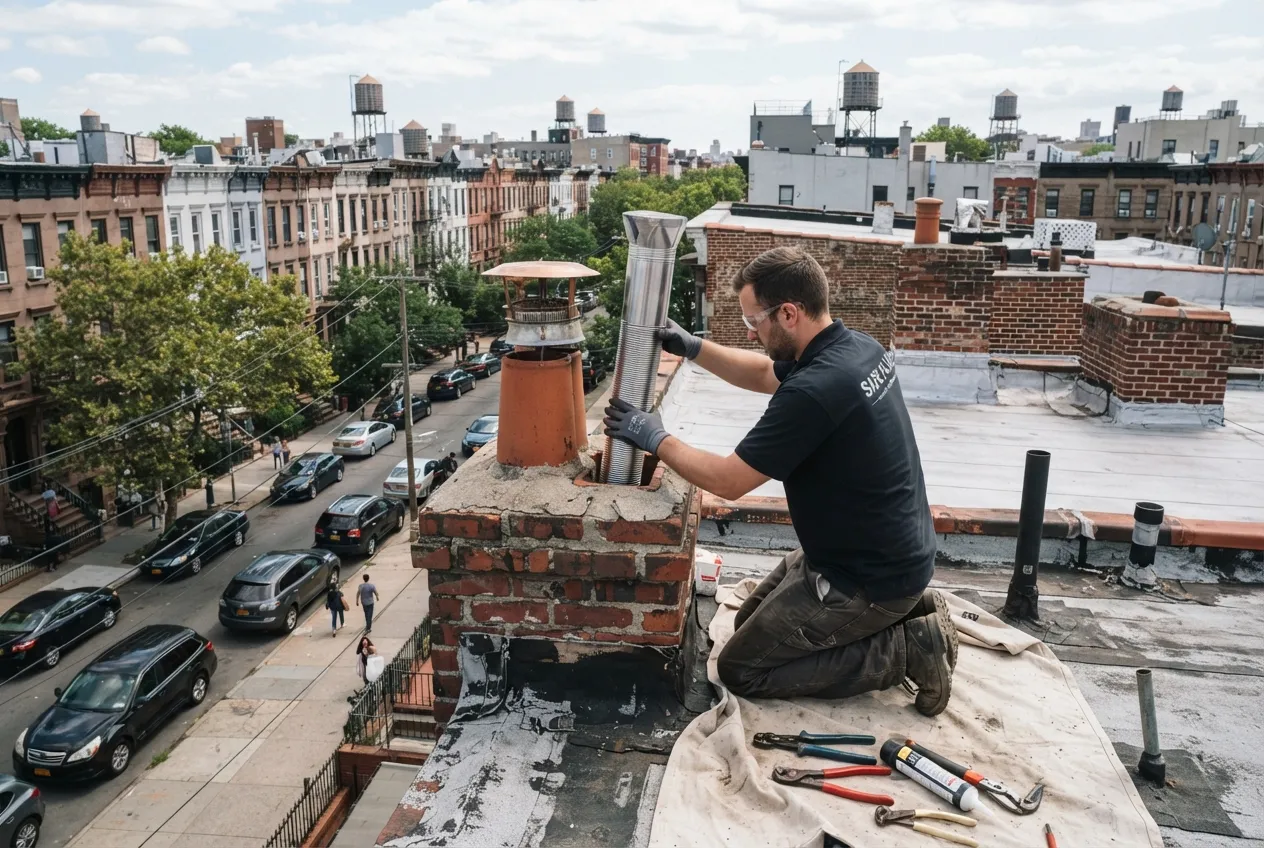
- Installing a stainless steel liner suited to your fuel type, running from the appliance or smoke chamber to the top of the chimney
- Connecting the liner at the bottom with the correct fittings for your fireplace, stove, boiler, or water heater
- Fitting a top plate and a rain cap to keep out water and debris
- Adding insulation around the liner where the flue size and appliance call for it
- A final draft check and photos of the finished work
How our crew works in your home and on the roof
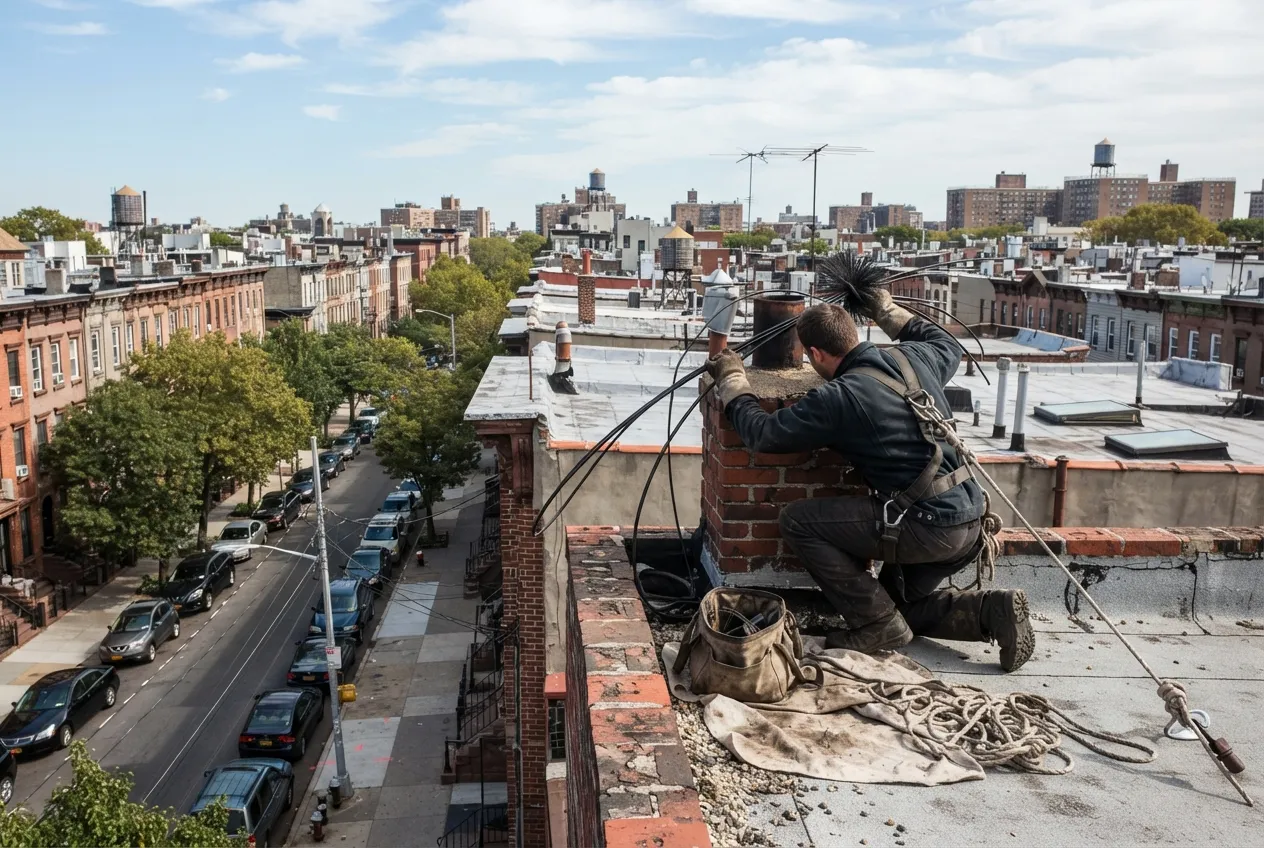
Inside, we lay drop cloths from the door to the fireplace or appliance, and we cover nearby furniture and flooring. While we clean the flue with rotary brushes, HEPA vacuums capture the dust and soot at the opening, so it stays out of your living space. We run a camera up the flue before and after the work, and we can show you the footage so you can see what we found and what we installed.
On the roof, the crew works from the chimney crown and feeds the new liner down from the top. We check the crown, flashing, and cap while we are up there, because water getting in from above is a common reason liners fail in the first place. If roof access is difficult, as it often is on attached rowhouses and brownstones, we plan the safest route before the visit and let you know if we need access through a hatch or a neighbor's roof. When the job is done, we clean up inside and out and haul away the old tile pieces and packaging.
Time for your annual chimney check?
The standard we follow
We follow the NFPA 211 standard, which calls for chimneys, fireplaces, and vents to be inspected once a year. Chimney professionals use three inspection levels. Level 1 applies when nothing has changed. Level 2 applies when the system changes, such as a new appliance or a fuel switch, or when the home is sold. Level 3 is for hidden hazards that can only be reached by opening part of the chimney or building. Liner work almost always involves at least a Level 2 inspection, because we examine the full flue with a camera.
Fuel conversions matter a lot in New York City. When a building switches its boiler from oil to gas, the chimney has to be evaluated as part of the work. A new liner is often needed because gas exhaust produces acidic condensate that can corrode a masonry flue. NYC's heat season runs from October 1 through May 31. If you own a building with tenants, scheduling liner work before October helps you keep the heat running when the city requires it.
What affects the price
Every chimney is different, so we price liner installation after the inspection. These are the main factors:
- Chimney height and roof access, including roof pitch and whether the roof can be reached from your own building
- Fuel type and appliance, since wood, gas, and oil each call for a different liner and fittings
- Flue size, shape, and condition, including offsets or bends and whether old tiles must be removed
- How much creosote or soot buildup has to be cleaned out first
- Whether insulation is needed around the liner
- Whether a camera inspection shows repairs needed to the crown, flashing, smoke chamber, or masonry
How a visit works
When you contact us, we ask what the chimney serves, what you have noticed, and whether you are planning a fuel change. We schedule an inspection visit, clean and examine the flue, and walk you through the camera footage and our recommendation. You get a clear written quote before any installation work begins.
On installation day, the crew arrives with the liner already sized for your chimney. Most single-flue jobs are finished in one visit, but work time depends on access and on how much old tile has to come out. Before we leave, we test the draft, show you the finished work, and explain how to keep the new liner in good shape with yearly inspections.
Chimney Liner Installation by city
- Chimney Liner Installation in Clinton Hill
- Chimney Liner Installation in Prospect Heights
- Chimney Liner Installation in Fort Greene
- Chimney Liner Installation in Park Slope
- Chimney Liner Installation in Downtown Brooklyn
- Chimney Liner Installation in DUMBO
- Chimney Liner Installation in Boerum Hill
- Chimney Liner Installation in Bedford-Stuyvesant
- Chimney Liner Installation in South Williamsburg
- Chimney Liner Installation in Crown Heights
- Chimney Liner Installation in Brooklyn Heights
- Chimney Liner Installation in Carroll Gardens