The short answer
A chimney cap keeps rain, animals and debris out of your flue, and a chase cover seals the top of a framed chimney so water cannot run inside it. If you hear animals, find water or debris in the firebox, or notice a damp, smoky odor after rain, the cap or cover likely needs to be replaced or installed.
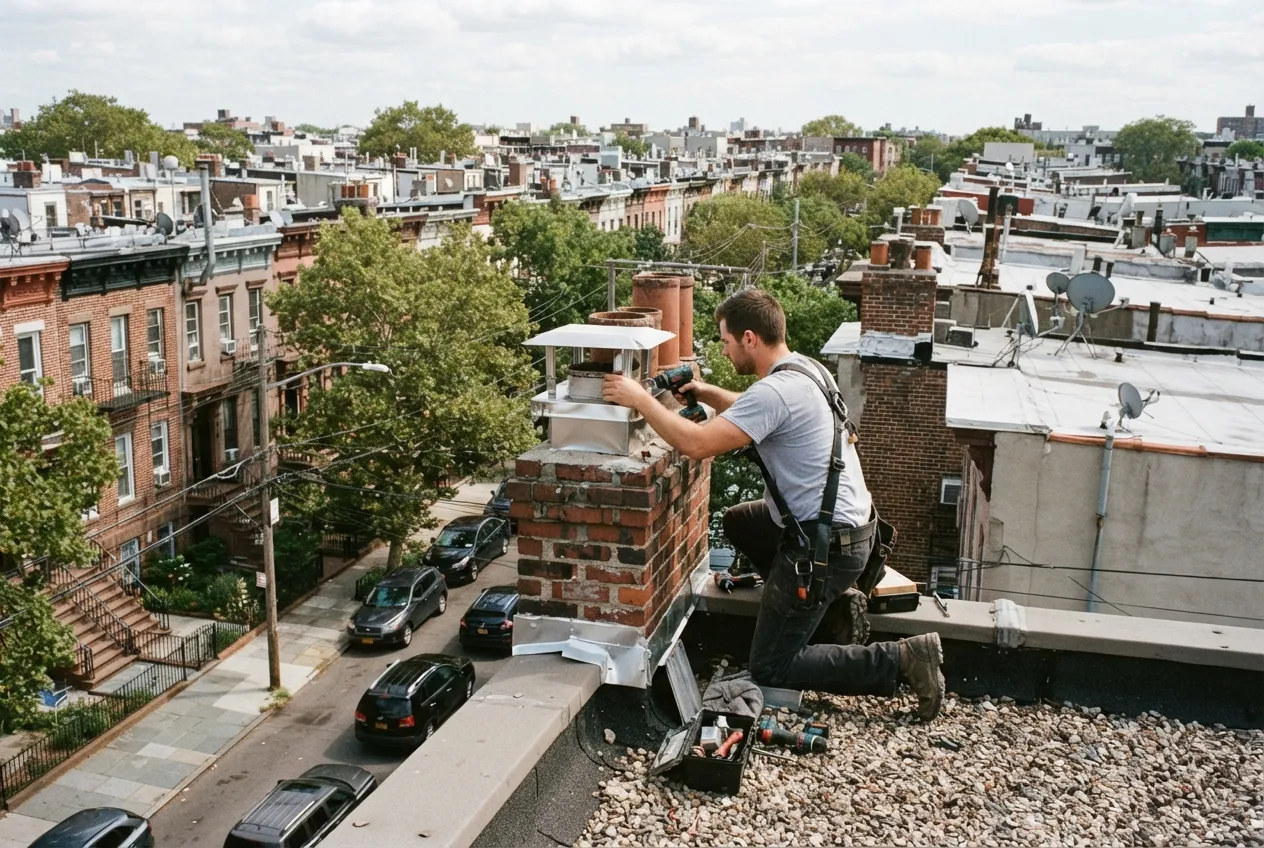
The top of your chimney takes more weather than almost any other part of the house. A chimney cap covers the flue opening with a metal hood and a mesh screen, so rain, snow, leaves and animals stay out while smoke still gets out. A chase cover is the metal panel that seals the top of a framed chimney chase, the boxed-in kind built around many factory-made fireplaces. On a masonry chimney, which is common on Brooklyn rowhouses and brownstones, that job falls to the cement crown, so we check the crown along with the cap. Expert Chimney Sweep installs, replaces and repairs caps and chase covers for homeowners in Brooklyn and nearby cities. We fit each one to your flue, fasten it securely and look at what the missing or failing piece may have already let in.
Signs you need a new chimney cap or chase cover
A missing, rusted or loose cap rarely announces itself from the street. Most owners notice the effects inside the house first. If you see any of the signs below, have the top of the chimney looked at before the problem spreads into the flue, the walls or the attic.
- Scratching, chirping or fluttering inside the chimney, which often means birds, squirrels or raccoons are getting in
- Water, puddles or rusty drips in the firebox or on the damper after a storm
- A strong smoke or creosote smell on humid or rainy days, a common sign of moisture mixing with deposits in the flue
- Leaves, twigs, nesting material or flakes of brick and mortar collecting in the firebox
- White staining on the outside brickwork, which points to water soaking into the masonry
- Smoke pushing back into the room on windy days when the top of the flue is open to gusts
- On a framed chase, rust streaks running down the siding or a cover that sags and holds standing water
What is included
Every cap or chase cover visit covers the work itself plus a look at the parts the old one was supposed to protect. Here is what you can expect from the visit:
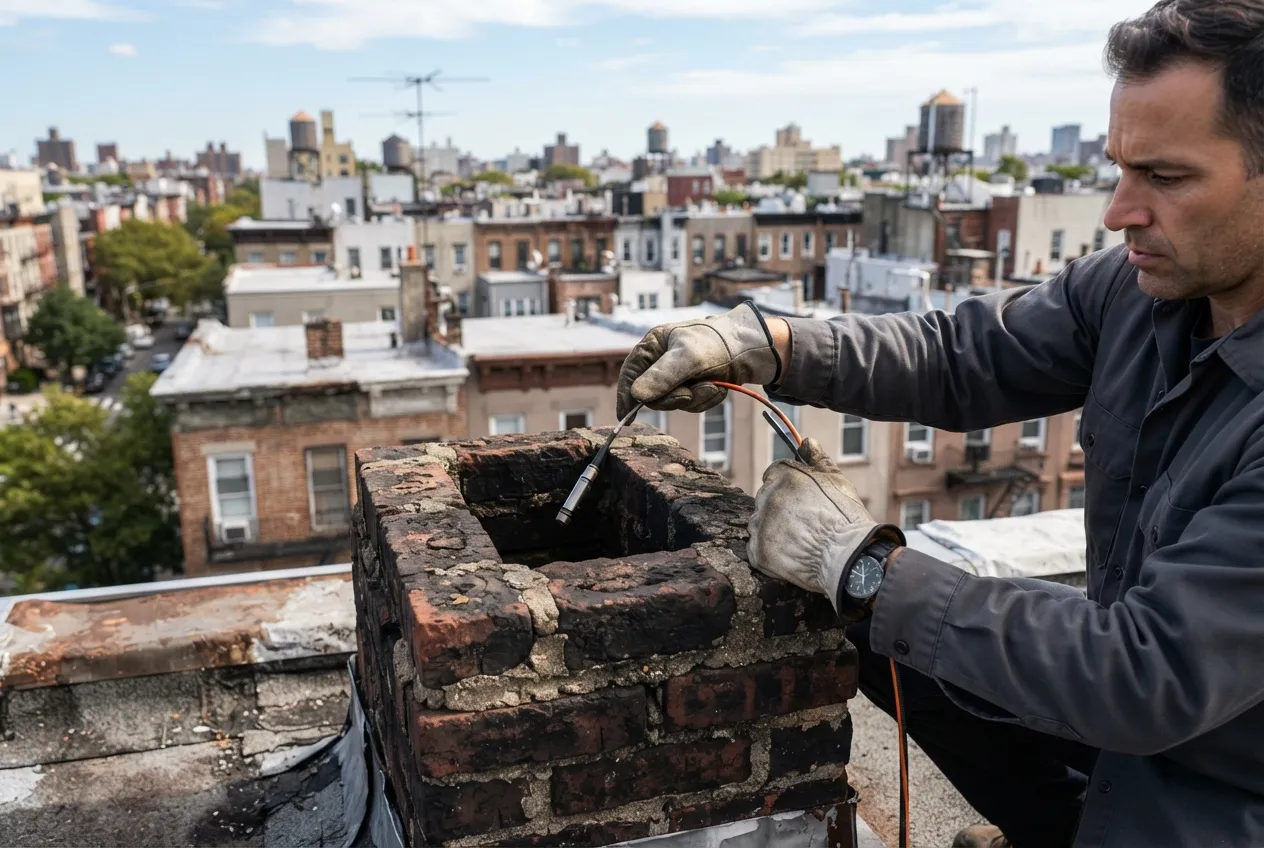
- Roof-level inspection of the cap, chase cover or crown, flue tiles or liner, and surrounding masonry or siding
- Measurement of each flue opening, or the full chase top, so the new piece fits properly
- Removal of the old cap or cover and any nesting material or debris at the top of the flue
- Installation of a cap with a screened side and a hood sized for your flue, or a chase cover with a raised center and drip edge to shed water
- Secure fastening and sealing so the cap or cover stays put through wind and winter weather
- Camera check of the flue below when water or animal entry suggests hidden damage
- Photos of the before and after, with a plain explanation of anything else we found
How our crew works on your roof and inside your home
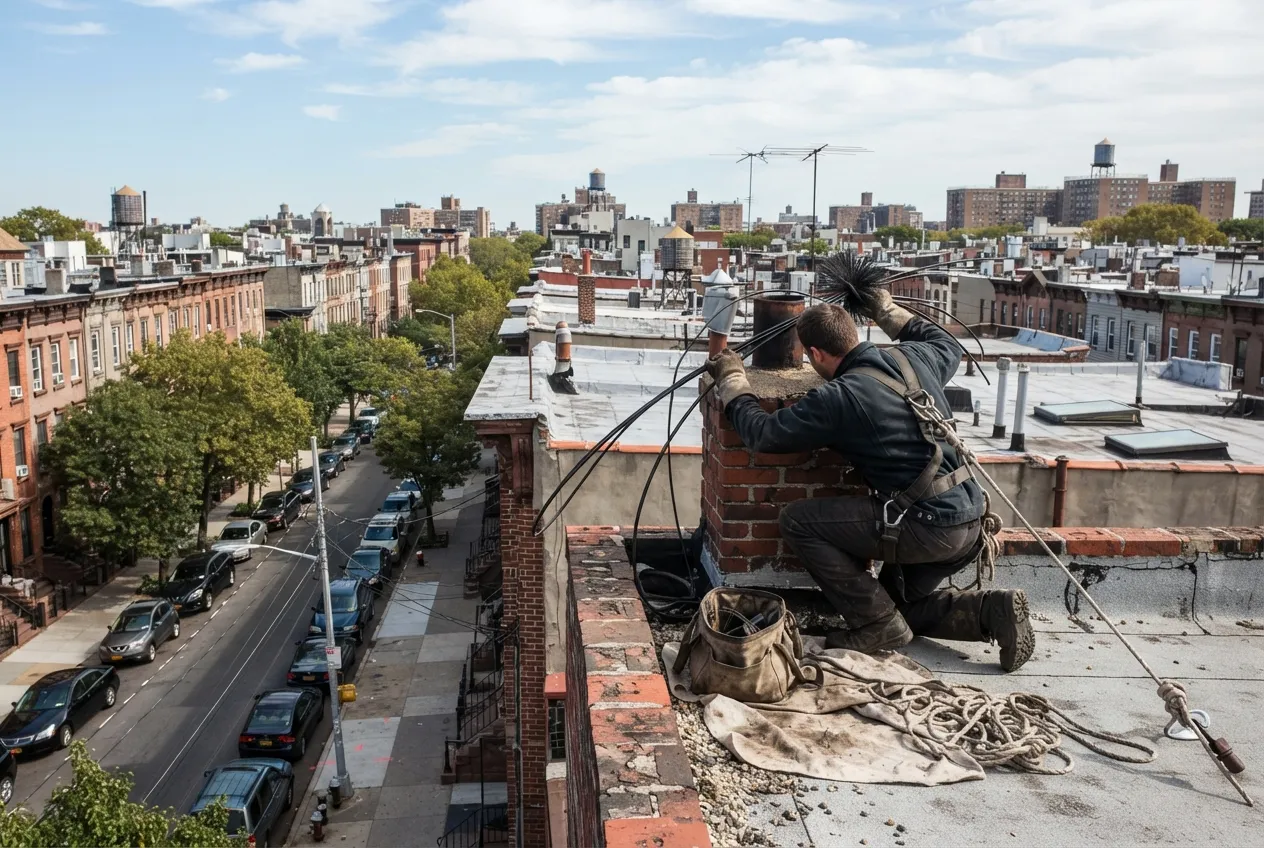
Most of this job happens on the roof. Our certified technicians set up safe access first, whether that is a flat rowhouse roof reached through a hatch or a pitched roof that calls for ladders and fall protection. We take care not to damage roofing, flashing or neighboring chimneys on shared party walls, which are common on attached Brooklyn homes.
When a flue has had animals or water in it, we also work from inside. Before anything else, we lay drop cloths from the door to the fireplace and cover the hearth. Nests and debris are removed carefully, and we use HEPA vacuums to keep soot and dust out of the room. If the flue needs cleaning, we use rotary brushes sized to the liner.
Where it fits, we run a camera up the flue to check for cracked tiles, gaps in the mortar joints or moisture damage that you cannot see from the top or the firebox. You get to see what we see, so any recommendation is easy to understand.
Time for your annual chimney check?
The standard we follow
Our work follows NFPA 211, the national standard for chimneys, fireplaces and vents. It calls for these systems to be inspected once a year, and installing a cap or chase cover is a good time to make sure that has happened.
Chimney professionals use three inspection levels. Level 1 applies when nothing about the system has changed. Level 2 applies when the system changes, for example a new appliance or a switch of fuel, or when the home is sold. Level 3 is used when a hidden hazard has to be reached by opening part of the chimney or building. If your building is converting a boiler from oil to gas, keep in mind that New York City requires the chimney to be evaluated as part of that work, and a new liner is often needed because gas exhaust produces acidic condensate that can corrode a masonry flue. The cap should be chosen to match whatever liner ends up in place.
What affects the price
We give you a clear quote after we see the chimney, because a few factors change the scope of the work:
- Building height and how we reach the roof, including hatch, ladder or pitched-roof access
- The type of fuel the flue serves, such as wood, gas or oil, which affects the cap style and materials
- The size, shape and number of flues, and whether a single cap must cover several of them
- The condition of the crown, liner or chase top the cover sits on
- How much nesting material, debris or buildup has to come out first
- Whether a camera inspection or repair work is needed after we see what the old cap let in
How a visit works
You contact us and tell us what you have noticed, such as noises, water or a smell. We schedule a time and, if the fireplace or heating system has been used recently, ask that it be allowed to cool beforehand. On the day, the crew protects the work area inside, goes up to inspect the top of the chimney, and shows you photos before starting any work you have not already approved.
Once the new cap or chase cover is on, we clean up, walk you through what we did and note anything to watch for. Since New York City's heat season runs from October 1 through May 31, many owners schedule this work in late spring or summer so the chimney is sealed and ready before heat is needed again.