The short answer
If your South Williamsburg building has an unlined or deteriorating masonry flue, or is converting a boiler from oil to gas, it likely needs a new chimney liner sized to the appliance it serves. We inspect the chimney, measure the flue, and install a properly sized liner so exhaust vents safely and the masonry is protected from corrosion.
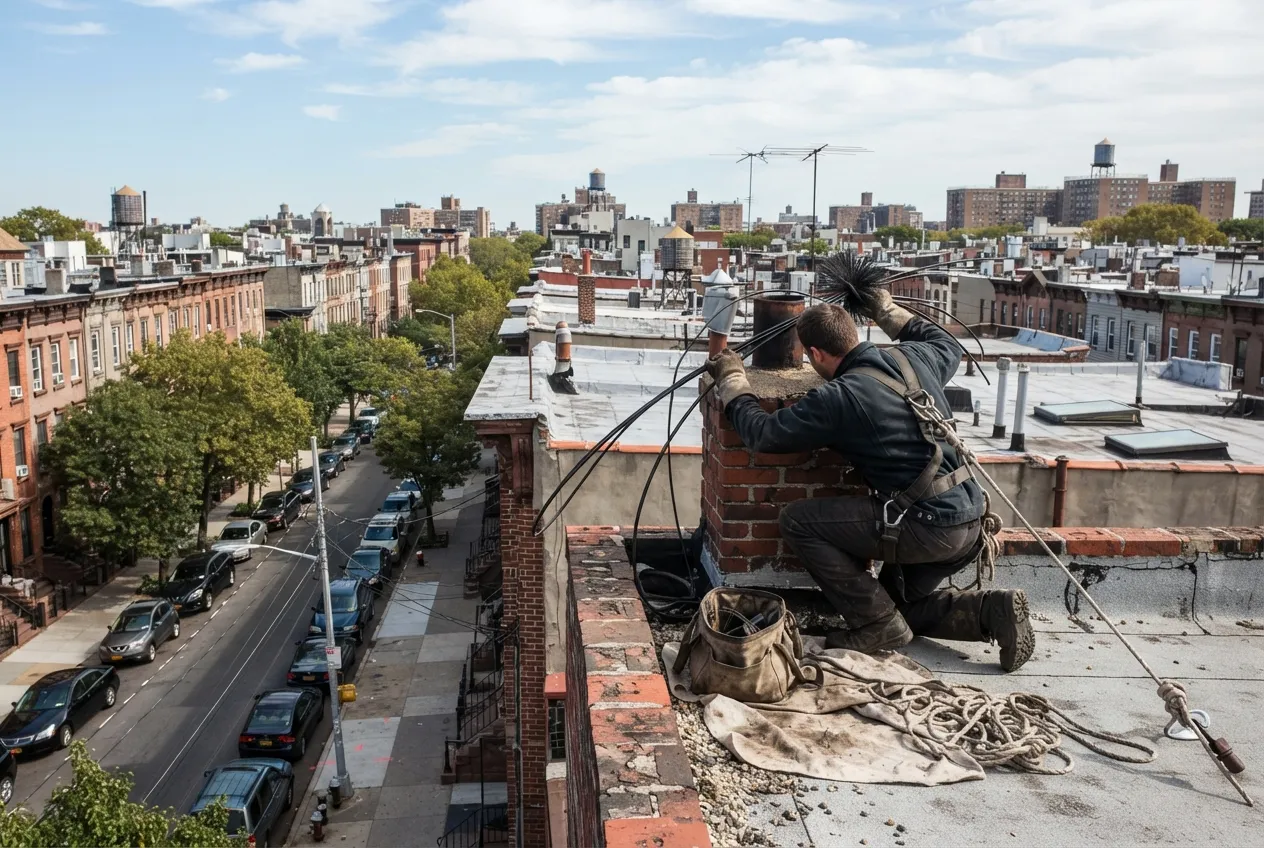
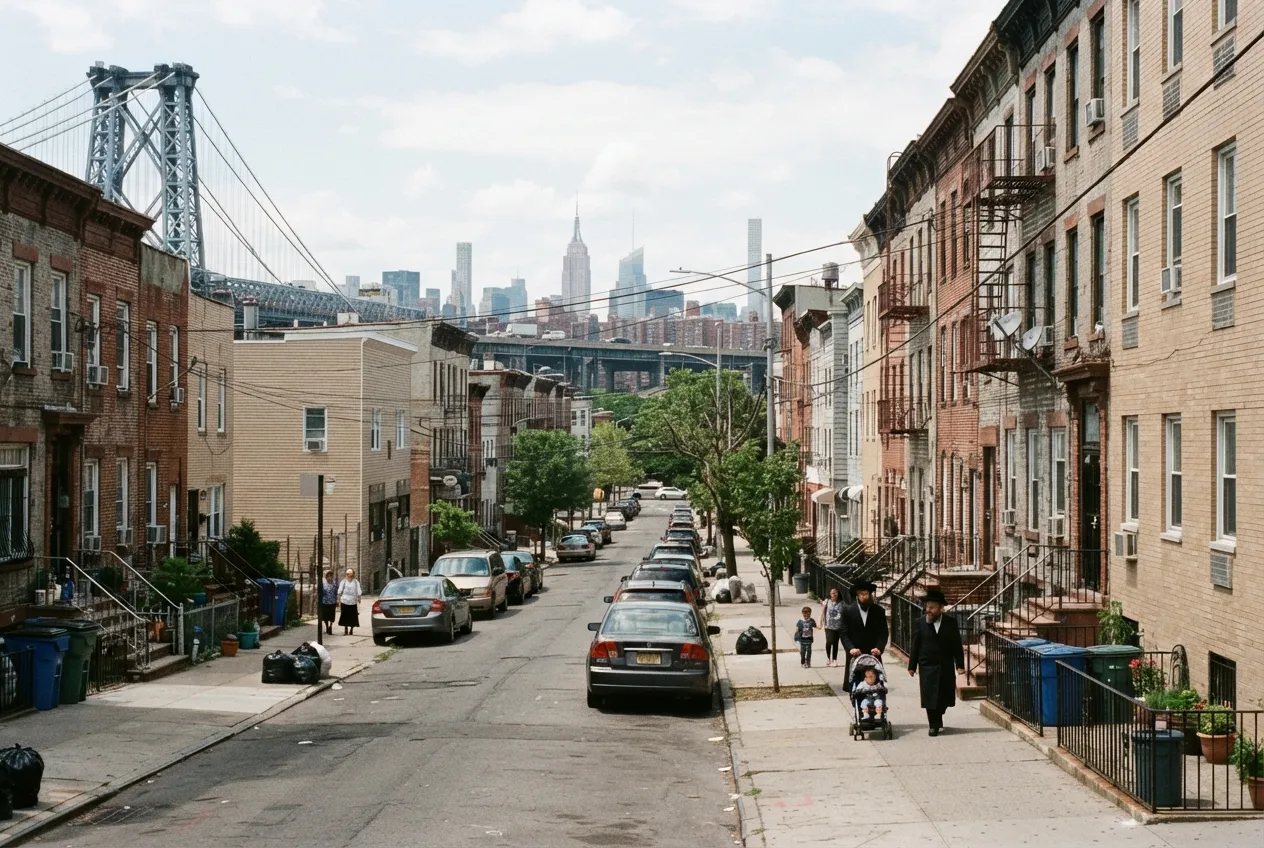
Most homes in South Williamsburg are older masonry buildings: rowhouses, brownstones, and pre-war apartment buildings whose chimneys were built long before today's gas boilers, water heaters, and high-efficiency appliances. In many of these chimneys, the original flue is unlined brick or aging clay tile that was never designed for modern exhaust. A chimney liner is the tube that runs up the inside of the chimney. It carries combustion gases safely out of the building and protects the masonry around it. Our certified technicians install liners for homes and buildings throughout the 11249 ZIP code, and our Clinton Hill office is about a mile south, so getting to your building is simple.
Why older South Williamsburg chimneys often need a new liner
Many chimneys in the neighborhood's rowhouses and pre-war buildings have flues that have been in service for generations. Clay tiles crack, mortar joints wash out, and unlined brick flues let heat and exhaust reach the surrounding masonry and, in some cases, the wood framing near it. Gaps in a flue can also let carbon monoxide leak into living spaces instead of venting outside.
Sizing is another common problem. Old flues were built for coal or oil equipment that pushed large volumes of hot exhaust. A modern boiler or water heater produces cooler, smaller exhaust that can stall in an oversized flue. When that happens, moisture condenses inside the chimney, draft weakens, and the masonry deteriorates faster. A liner sized to the appliance solves both problems.
Oil-to-gas conversions and the heating season
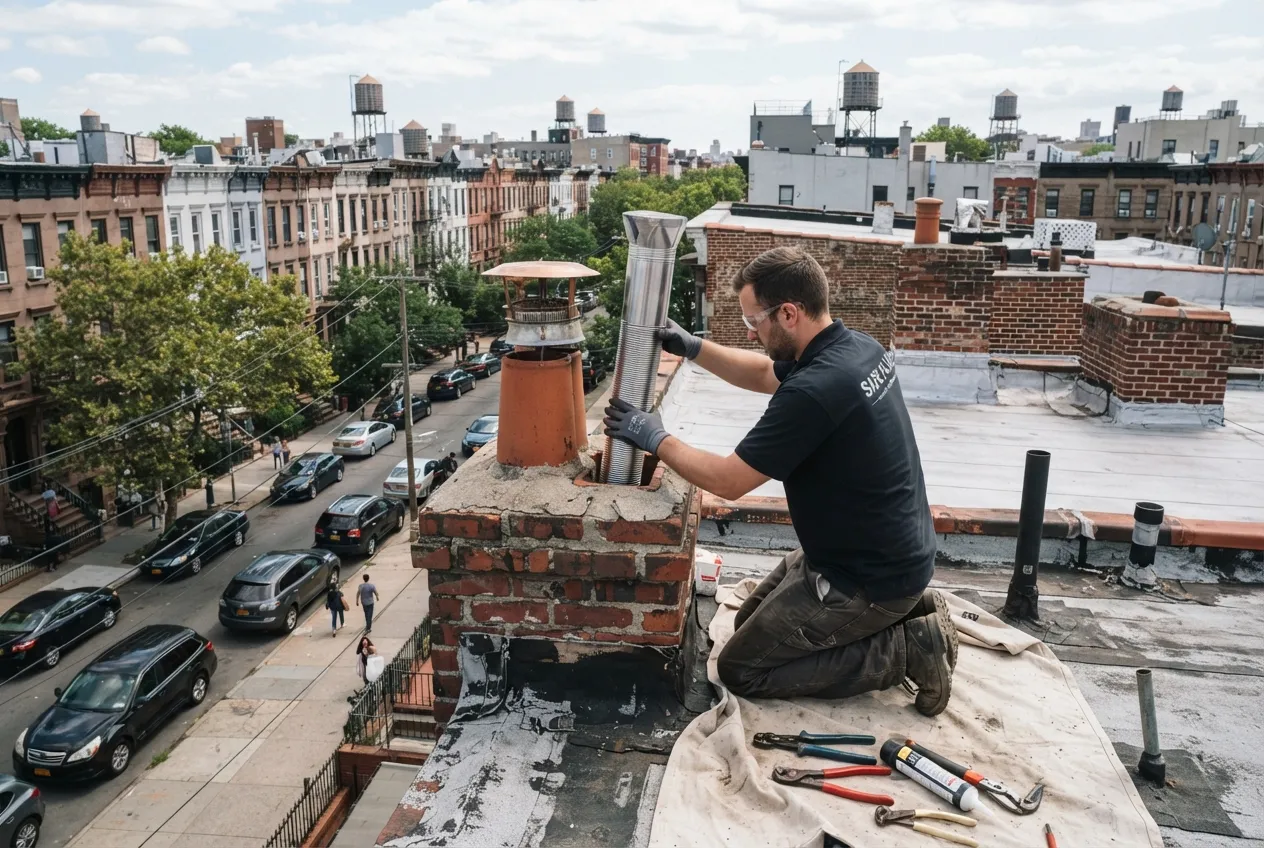
When a New York City building converts its boiler from oil to gas, the chimney has to be evaluated as part of the work. A new liner is often needed because gas exhaust produces acidic condensate that can corrode a masonry flue. If your building is planning a conversion, involve us early so the chimney work fits the boiler schedule rather than holding it up.
Timing matters in apartment buildings. New York City's heat season runs from October 1 through May 31, and building owners must keep apartments heated to the city's minimum temperatures during that period. Scheduling liner work in the warmer months lets you finish relining and get the heating system back online before tenants need heat.
How we install a chimney liner
Every job starts with an inspection. The NFPA 211 standard calls for chimneys to be inspected once a year, and a Level 2 inspection is the appropriate level when the system changes, such as installing a new appliance or switching fuel. From there, the work follows a clear sequence:
- Inspect the existing flue, including a camera inspection, to document cracks, gaps, blockages, and the condition of the masonry.
- Confirm which appliances vent into the chimney and measure the flue so the liner is sized correctly for them.
- Recommend a liner type suited to the fuel and appliance. Stainless steel is the most common choice for gas and oil equipment in older masonry chimneys.
- Clean the flue and clear debris so the liner can be installed without obstruction.
- Install the liner with the proper connections at the appliance and the top of the chimney, and add insulation where the installation calls for it.
- Fit a cap to keep out rain, debris, and animals, then check that the appliance drafts properly.
Time for your annual chimney check?
Signs your chimney may need relining
Some problems are visible from inside the home. Others only show up on an inspection. Call us to take a look if you notice any of the following:
- Pieces of tile, mortar, or brick collecting at the base of the chimney or in the cleanout.
- Water stains, peeling paint, or white, chalky deposits on walls next to the chimney.
- A boiler or water heater that has trouble venting, or a carbon monoxide alarm that goes off near heating equipment.
- A planned switch from oil to gas, or a new appliance being connected to an existing flue.
- An inspection report that notes cracked, missing, or deteriorated flue tiles.
Serving South Williamsburg and nearby Brooklyn neighborhoods
We work in single-family rowhouses, multi-unit brownstones, and larger pre-war apartment buildings across South Williamsburg. Each building type comes with different access, roof, and scheduling considerations, and we plan the job around how your building is actually used, including coordinating with tenants and boiler contractors when needed.
Our office is in Clinton Hill, and we also install chimney liners in Fort Greene, Bedford-Stuyvesant, Downtown Brooklyn, DUMBO, and Clinton Hill itself.
More services in South Williamsburg
- Chimney Sweep in South Williamsburg
- Chimney Inspection in South Williamsburg
- Chimney Repair in South Williamsburg
- Air Duct Cleaning in South Williamsburg