The short answer
If your Prospect Heights chimney is unlined, has cracked clay tiles, or is venting a new or converted gas appliance, it likely needs a properly sized liner. Our certified technicians inspect the flue, recommend a liner matched to the appliance, and install it from the roof, usually without opening walls.
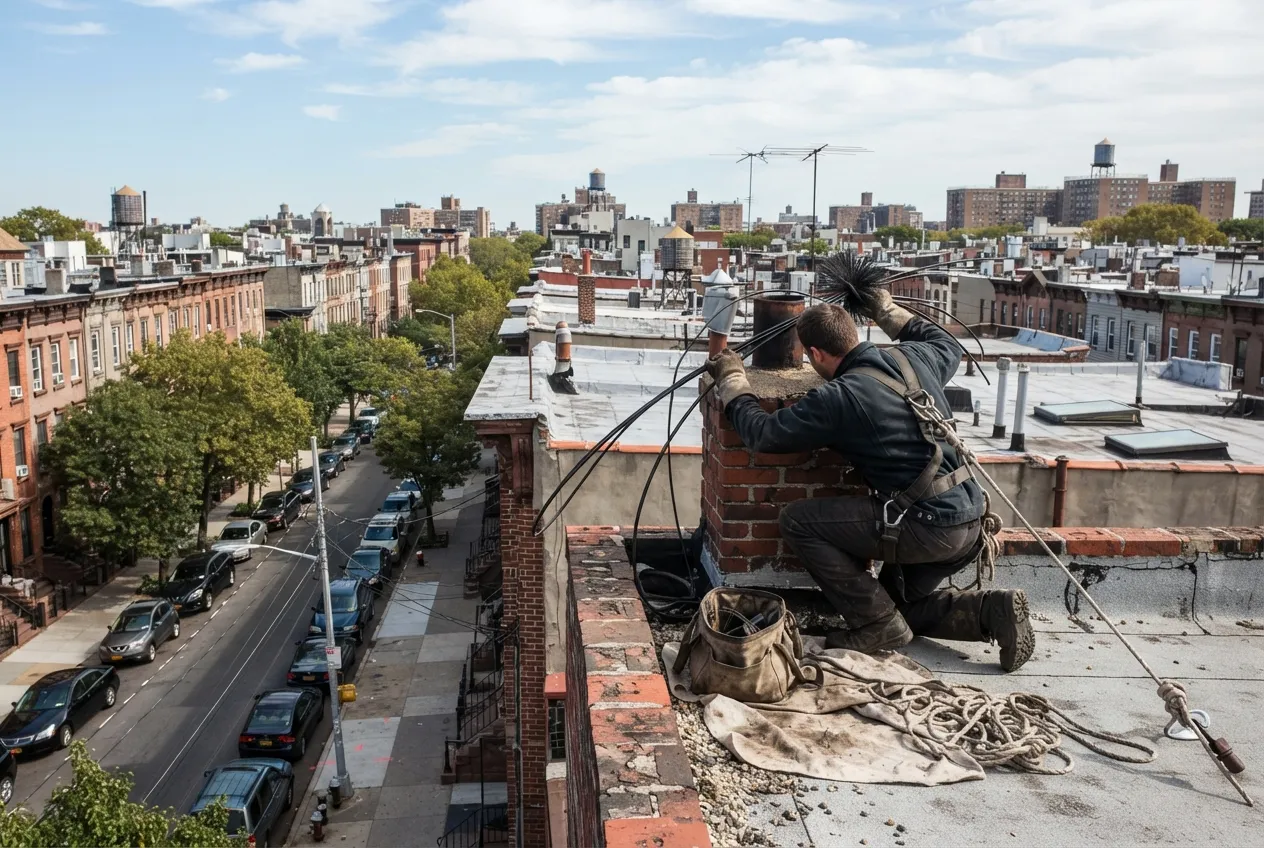
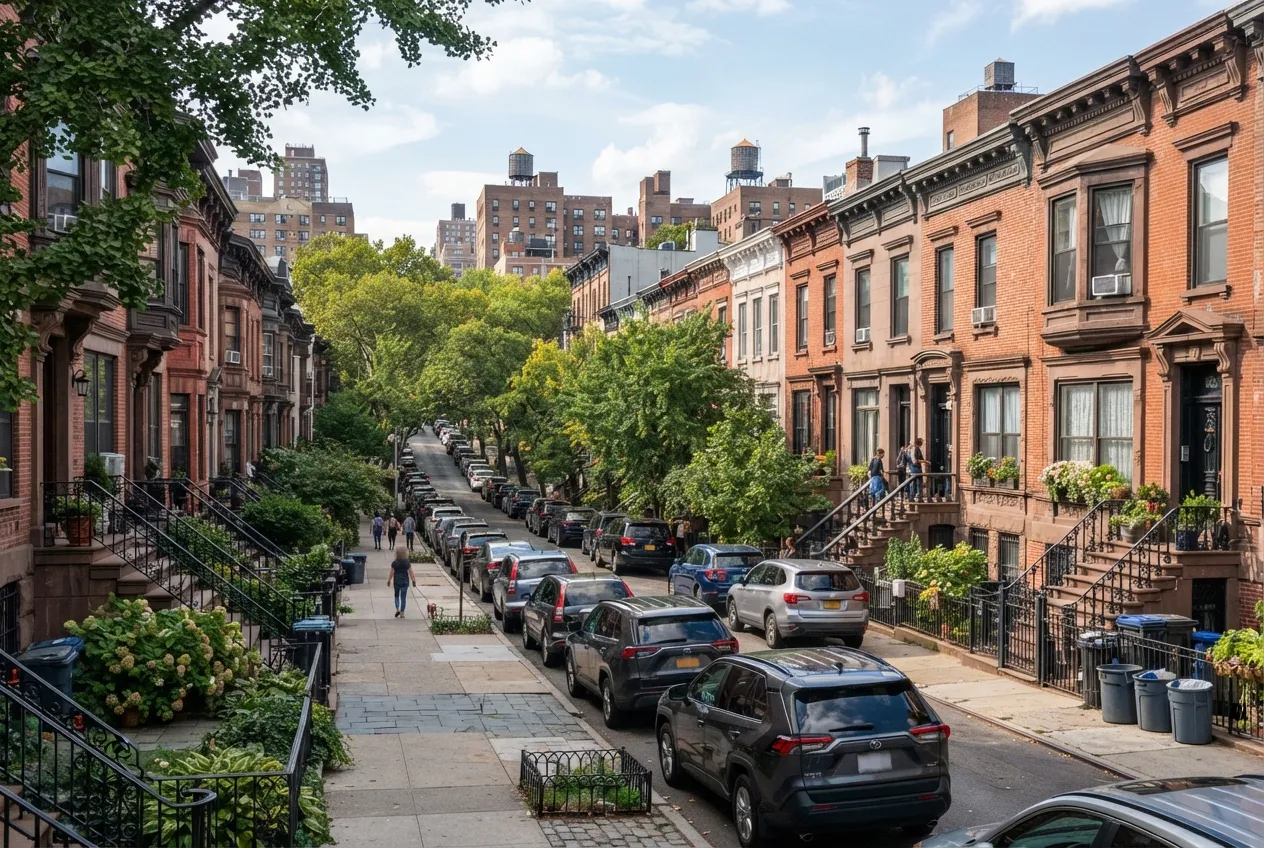
Prospect Heights is full of brownstones, rowhouses and pre-war apartment buildings whose chimneys were built long before today's boilers, water heaters and inserts. Many of those flues now vent gas appliances, while others sit unused behind a mantel and are waiting to be brought back into service. In both cases, the liner decides whether the chimney can safely carry exhaust out of the house. Our crew works out of Clinton Hill, about a mile north of Prospect Heights, so the trip is short. This page explains when a liner is needed, which types fit older Brooklyn chimneys, and how installation works on a rowhouse or apartment building roof.
Why older Prospect Heights chimneys often need a liner
Many masonry chimneys in the neighborhood's older homes were built with no liner at all or with clay tile sections. Over the decades, those tiles crack, shift and lose mortar at the joints, which leaves the brick behind them exposed to heat and exhaust.
The problem gets worse when a chimney built for coal or wood ends up venting a gas appliance. Gas exhaust is cooler and wetter than wood smoke. As it cools inside a large, cold masonry flue, it leaves acidic condensate on the walls, and that condensate breaks down mortar and brick from the inside. A liner sized to the appliance keeps the exhaust warm enough to rise and keeps it away from the masonry.
- Brick or tile fragments collecting at the base of the chimney or in the cleanout
- White staining, damp spots or crumbling plaster on walls next to the chimney
- Rust or debris on top of the boiler or water heater
- A camera inspection showing gaps, cracks or missing tile sections
- Backdrafting, or exhaust smell near the appliance
Oil-to-gas conversions in Brooklyn buildings
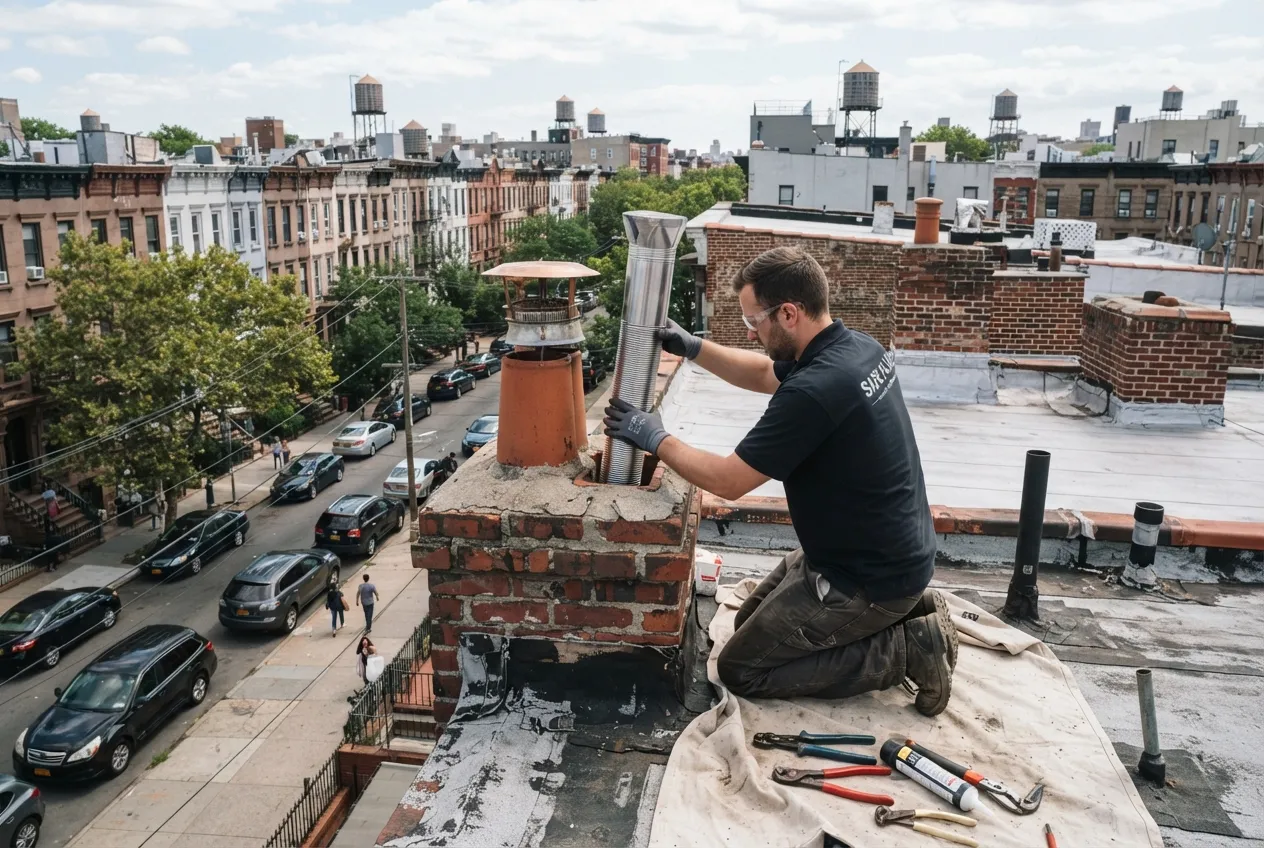
When a New York City building converts its boiler from oil to gas, the chimney has to be evaluated as part of the work. A new liner is often needed because gas exhaust produces acidic condensate that can corrode a masonry flue. Owners of brownstones and small apartment buildings in Prospect Heights run into this often during a heating system upgrade.
We can look at the chimney before the new boiler goes in, so the liner size and material match the equipment your heating contractor is installing. Coordinating early helps keep the conversion from stalling at the end.
Choosing the right liner for your chimney
No single liner suits every flue. The right choice depends on the appliance, the fuel, the size and shape of the existing flue, and its condition. A liner that is too large can let exhaust cool and condense. A liner that is too small can restrict draft.
Stainless steel liners, either flexible or rigid, are the most common choice for gas and oil appliances and for wood stove inserts. For open wood-burning fireplaces or badly deteriorated flues, a cast-in-place liner or another solution may fit better. We explain the options that fit your chimney and why we recommend one over another.
Time for your annual chimney check?
What installation looks like on a rowhouse or apartment building
The process starts with an inspection. The NFPA 211 standard calls for a Level 2 inspection when the system changes, such as a new appliance or a switch of fuel, and when a home is sold. If a hidden hazard has to be reached by opening part of the chimney or building, a Level 3 inspection is called for. Most liner jobs need a Level 2 inspection, which includes a camera look inside the flue.
After the inspection, we clean the flue, take measurements, and lower the liner from the roof. On attached homes we pay close attention to roof access, shared party-wall chimneys and neighboring flues, and we protect interior floors and finishes. The liner is then connected to the appliance, a cap goes on top, and we check that the system drafts properly.
Timing the work around heat season
New York City's heat season runs from October 1 through May 31. During that period, building owners must keep apartments heated to the city's minimum temperatures. Taking a boiler offline for liner work in the middle of winter can be hard to manage, especially in a building with tenants.
If an inspection turns up liner problems, scheduling the installation for late spring or summer gives you room to finish before the heat has to be back on. After the liner is in, an inspection once a year, as NFPA 211 recommends, keeps it in good shape. We also serve nearby Park Slope, Crown Heights, Fort Greene, Clinton Hill and Downtown Brooklyn.
More services in Prospect Heights
- Chimney Sweep in Prospect Heights
- Chimney Inspection in Prospect Heights
- Chimney Repair in Prospect Heights
- Air Duct Cleaning in Prospect Heights