The short answer
A chimney inspection checks the firebox, damper, flue liner, smoke chamber, crown, cap, and flashing for damage, blockages, and fire hazards. The NFPA 211 standard calls for an inspection once a year, and a deeper inspection is needed when you change appliances or fuel, buy or sell a home, or suspect hidden damage.
A chimney can look fine from the living room and still hide cracked flue tiles, missing mortar, or a blocked cap. An inspection is how you find those problems before you light a fire or the boiler runs all winter. Expert Chimney Sweep inspects fireplaces, wood stoves, and the flues that vent oil and gas boilers and water heaters in Brooklyn row houses, brownstones, and single-family homes in nearby cities. Our certified technicians check the system from the firebox to the crown, explain what they find in plain language, and show you photos so you can see the condition yourself.
Signs you need a chimney inspection
Many chimney problems start as small changes that are easy to ignore. If you notice any of the following, have the system inspected before you use the fireplace or appliance again.
- A smoky or tar-like creosote smell in the room, especially on humid days or when the air conditioning is running
- Poor draft: smoke rolling into the room, fires that are hard to start, or a boiler that backdrafts
- Debris, flakes of brick, or pieces of tile collecting in the firebox
- White, chalky staining on the brick inside or outside, a sign that water is moving through the masonry
- Scratching, chirping, or other animal noises in the chimney
- Water dripping or pooling in the firebox after rain or snow
What's included in the inspection
Every inspection follows the same checklist so nothing is skipped. You get a written summary with photos and a clear explanation of what needs attention now and what can wait.
- Firebox walls, floor, and mortar joints checked for cracks and gaps
- Damper opened and closed to confirm it seals and operates freely
- Smoke chamber and smoke shelf checked for creosote and debris
- Flue liner examined for cracks, missing sections, and buildup
- Connection to the appliance, including the connector pipe for boilers, water heaters, and stoves
- Clearances to nearby wood and other combustible materials where they can be seen
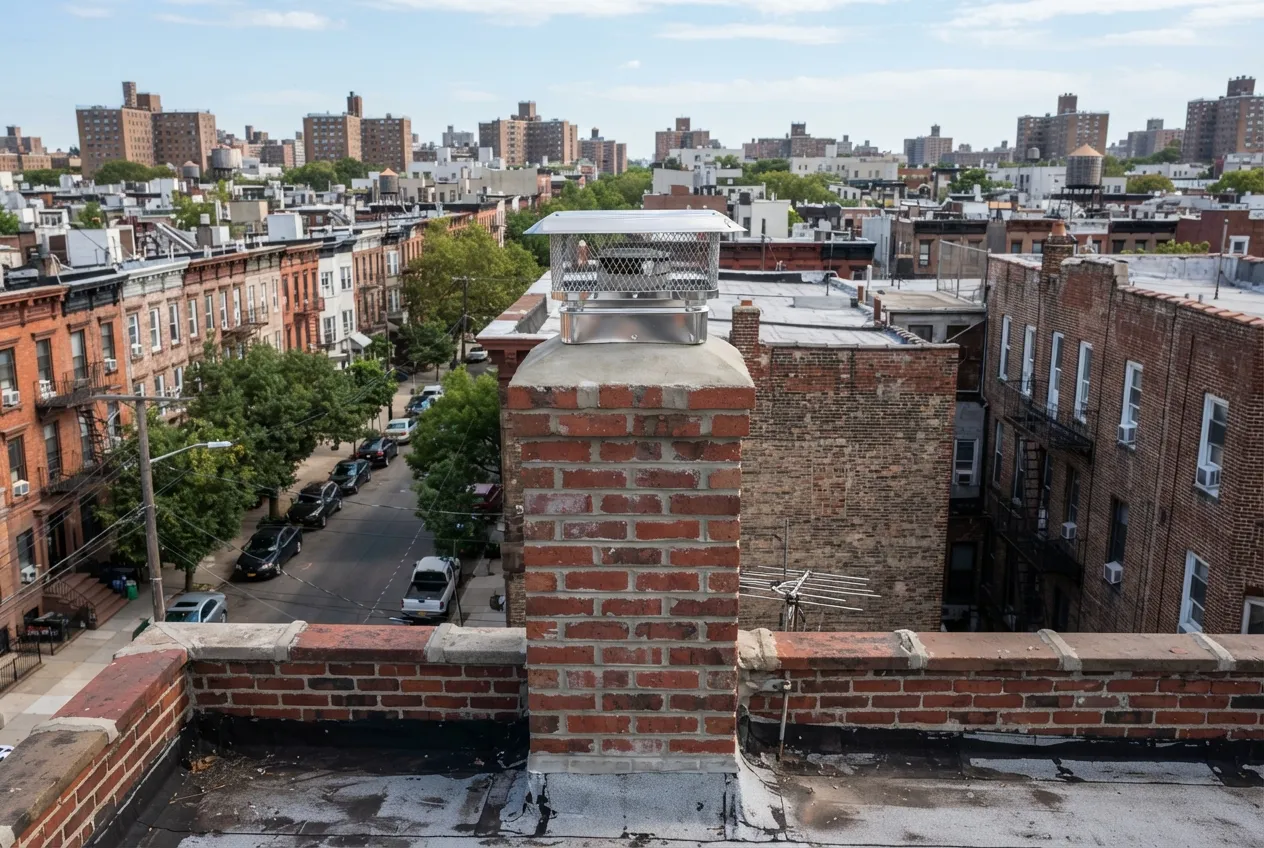
- Chimney crown, cap, and spark screen checked for cracks, rust, and blockages
- Exterior brick and mortar joints checked for spalling and gaps
- Roof flashing checked for lifting, gaps, and signs of leaks
- Camera scan of the flue when the level of inspection calls for it
How our crew works in your home and on the roof
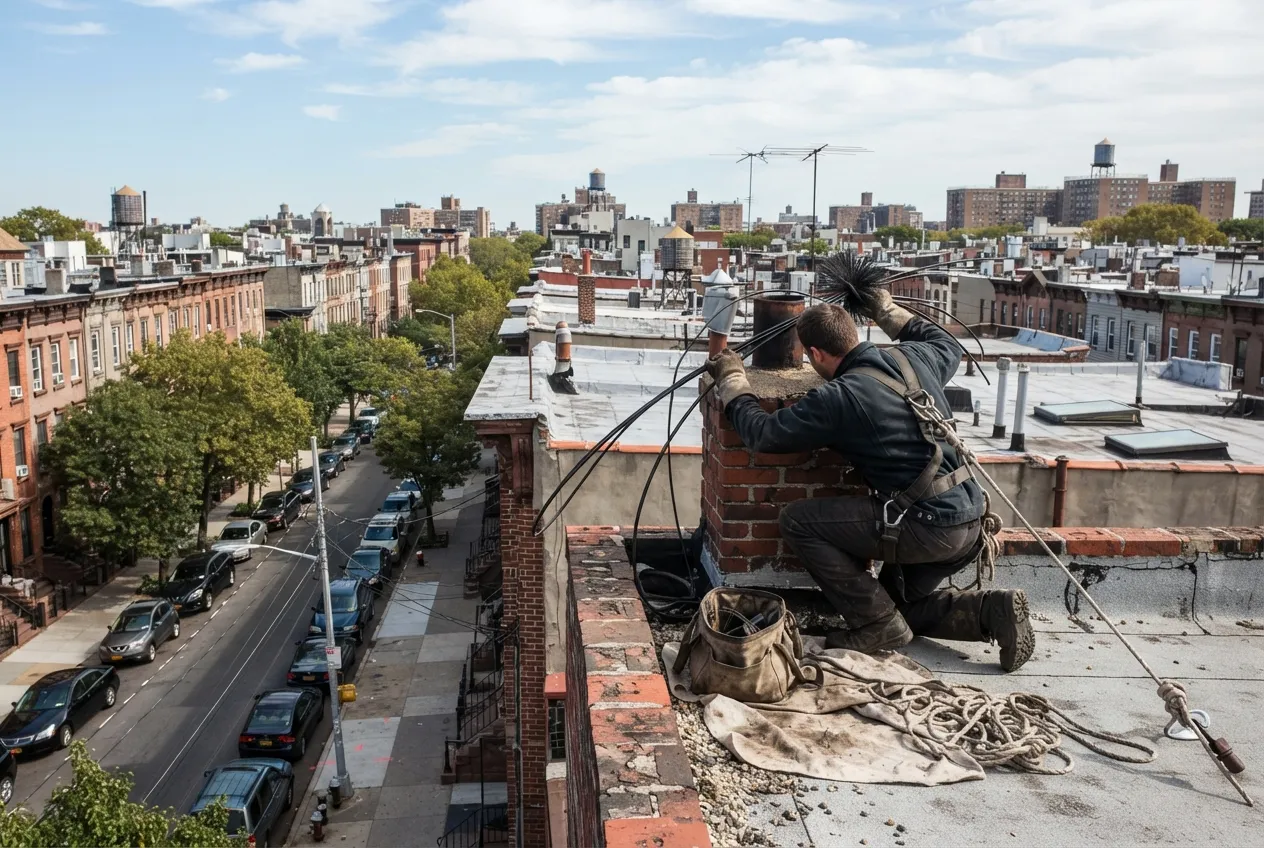
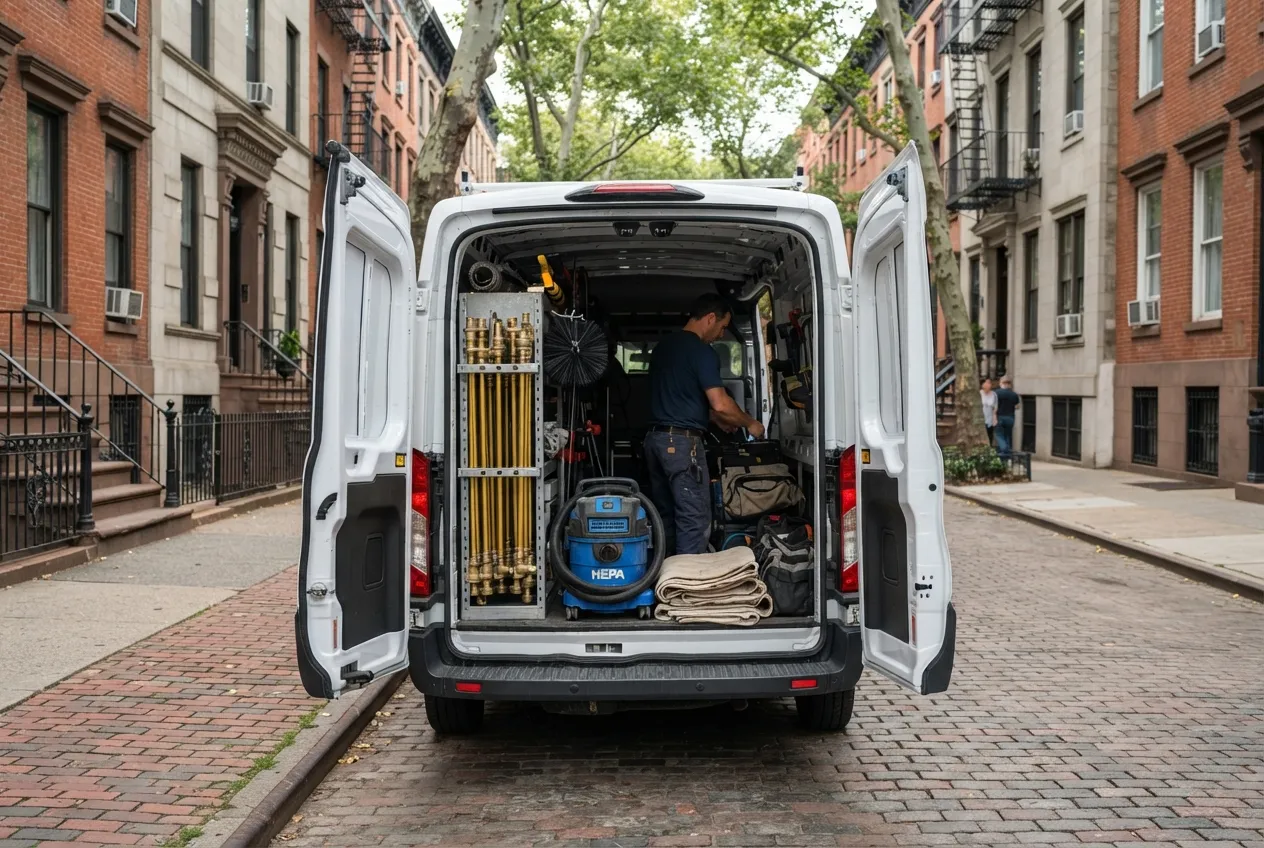
Inside, the crew lays drop cloths from the door to the fireplace or boiler room and covers the hearth before opening anything. We use HEPA vacuums to keep soot and dust out of the room. If the flue is too coated to see the liner, we clear it with rotary brushes first so the inspection reflects the real condition of the tile or metal, not the buildup on top of it.
For a closer look, we run a camera up the flue to record the liner joint by joint. This is how cracked tiles, gaps, and hidden blockages are found in chimneys that can't be seen into from the top or bottom.
On the roof, the technician checks the crown, cap, flashing, and the brick above the roofline, using safe access suited to the building. On attached Brooklyn homes with shared chimneys, we note where your flue sits and what we can and can't reach from your property.
Time for your annual chimney check?
The standard we follow: NFPA 211 and the three inspection levels
The NFPA 211 standard calls for chimneys, fireplaces, and vents to be inspected once a year. Chimney professionals use three inspection levels, and we'll tell you which one fits your situation.
A Level 1 inspection is for systems where nothing has changed and you use the chimney the same way you always have. A Level 2 inspection is needed when the system changes, such as a new appliance or a switch of fuel, or when the home is sold; it includes a camera scan of the flue. A Level 3 inspection is for cases where a hidden hazard has to be reached by opening part of the chimney or the building.
Fuel conversions deserve special attention in New York City. When a building converts its boiler from oil to gas, the chimney has to be evaluated as part of the work, and a new liner is often needed because gas exhaust produces acidic condensate that can corrode a masonry flue.
Timing matters too. New York City's heat season runs from October 1 through May 31, when building owners must keep apartments heated to the city's minimum temperatures. If you own a building with tenants, schedule the boiler flue inspection before October so any repairs are done before heat is required.
What affects the price
Every chimney is different, so we quote after we know the details. These are the main factors:
- Height of the chimney and how easily we can reach the roof
- Fuel type: wood, oil, or gas, and whether it serves a fireplace, stove, boiler, or water heater
- Flue size, number of flues, and the condition of the liner
- How much creosote or soot has to be cleared before the liner can be seen
- Whether a camera inspection is needed or a Level 2 or Level 3 inspection applies
- Any repairs found, such as a new cap, crown work, or a liner
How a visit works
When you call, we ask what the chimney serves, when it was last inspected, and whether anything has changed, so we can plan the right level of inspection. On the day of the visit, the technician walks through the plan with you, sets up drop cloths and the HEPA vacuum, and works through the checklist inside and on the roof.
Before leaving, the technician cleans up, reviews the findings with you, and shows you the photos or camera footage. You get a written summary that separates safety issues from routine maintenance. If repairs are needed, we explain the options and give you a quote; you decide whether and when to go ahead.
Chimney Inspection by city
- Chimney Inspection in Clinton Hill
- Chimney Inspection in Prospect Heights
- Chimney Inspection in Fort Greene
- Chimney Inspection in Park Slope
- Chimney Inspection in Downtown Brooklyn
- Chimney Inspection in DUMBO
- Chimney Inspection in Boerum Hill
- Chimney Inspection in Bedford-Stuyvesant
- Chimney Inspection in South Williamsburg
- Chimney Inspection in Crown Heights
- Chimney Inspection in Brooklyn Heights
- Chimney Inspection in Carroll Gardens