The short answer
A new chimney liner is usually needed when the existing flue is cracked, deteriorated, or sized wrong for the appliance venting into it. In Downtown Brooklyn this often comes up during oil-to-gas boiler conversions and in older masonry chimneys. Our certified technicians inspect the flue first, then install a liner matched to your heating equipment or fireplace.
A chimney liner is the protective channel inside your flue that carries smoke and exhaust gases up and out of the house. In Downtown Brooklyn, many homes are in brownstones, rowhouses and pre-war apartment buildings. In these buildings the original clay tile liners are often cracked, partly missing, or the wrong size for the boiler, water heater or fireplace now connected to them. Expert Chimney Sweep installs chimney liners for homeowners and building owners in the 11201 ZIP code, working from our office in Clinton Hill, about a mile away. We also serve nearby DUMBO, Boerum Hill, Brooklyn Heights and Fort Greene.
Why Older Downtown Brooklyn Chimneys Often Need a New Liner
Many chimneys in the neighborhood's older brownstones, rowhouses and apartment buildings were built for coal or wood and lined with clay tiles, or with no liner at all. Over decades, heat cycles, moisture and acidic exhaust wear down the tiles and the mortar joints between them. Once the liner is cracked or gapped, heat can reach nearby framing. Exhaust gases, including carbon monoxide, can also seep into living spaces or shared walls.
In attached homes and multi-unit buildings, a damaged flue can affect more than one household. That is why a liner problem found during an inspection should be addressed before the next heating season, not put off.
- Pieces of clay tile or flaking masonry falling into the firebox or cleanout
- Water stains, efflorescence or damp spots on walls next to the chimney
- Smoke or odors coming back into the room
- A boiler or water heater that was replaced and now vents into an old, oversized flue
- An inspection report noting cracked tiles, open joints or a missing liner
Liners for Oil-to-Gas Boiler Conversions
When a New York City building converts its boiler from oil to gas, the chimney has to be evaluated as part of the work. A new liner is often needed. Gas exhaust produces acidic condensate, and that condensate can corrode a masonry flue that held up fine under oil.
If you are planning a conversion in a Downtown Brooklyn rowhouse or apartment building, bring us in early. We inspect the existing flue, check its size against the new equipment, and install a liner suited to gas venting. That way the chimney work fits into your conversion schedule instead of holding it up.
Matching the Liner to Your Appliance
A liner only works well if it suits what vents into it. A gas boiler, an oil burner, a water heater and a wood-burning fireplace each have different needs for flue size, material and insulation. A liner that is too large can let exhaust cool and condense. One that is too small can restrict draft.
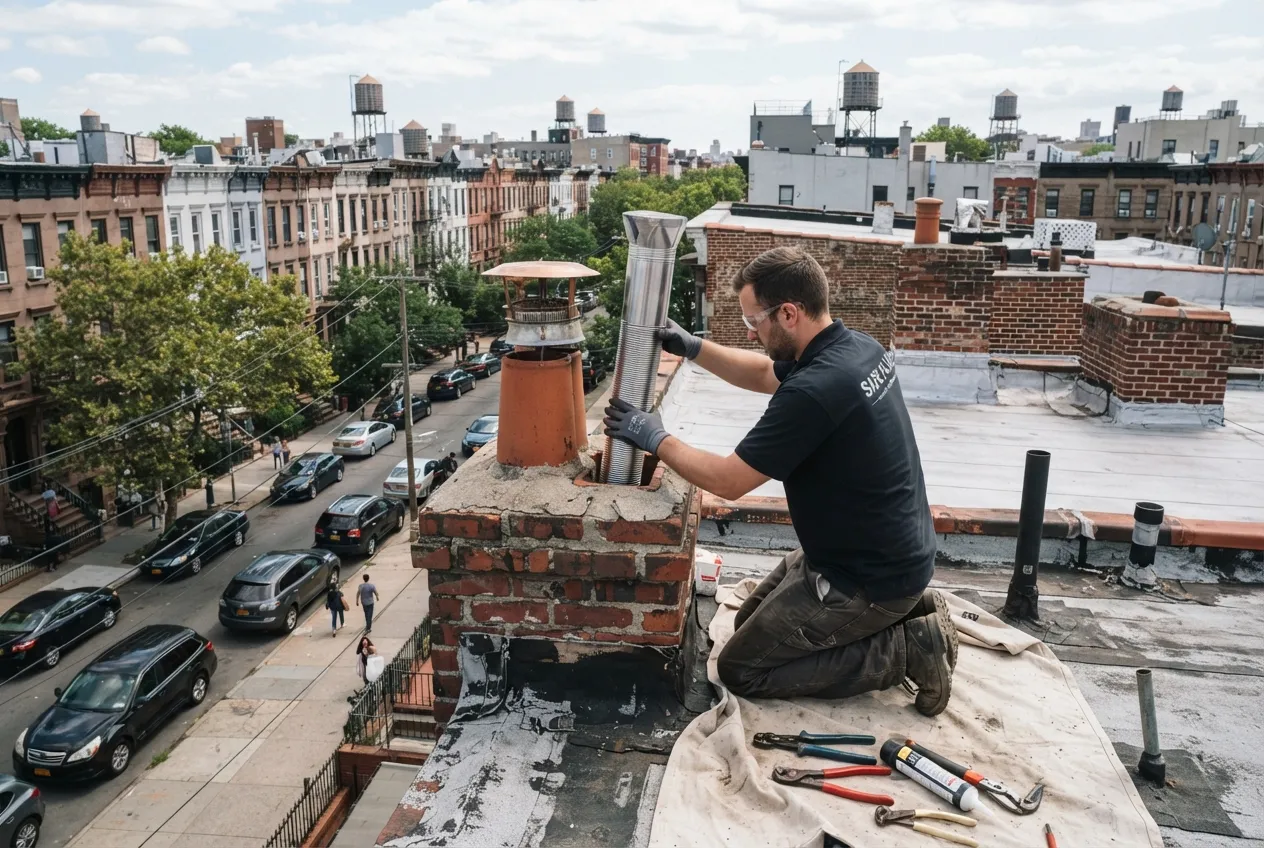
For most heating appliances we install stainless steel liners, which handle corrosive condensate and can be fitted through existing masonry. For fireplaces, we look at the firebox opening and the chimney height to size the liner so the fire draws properly. We explain the options for your specific chimney before any work begins.
Time for your annual chimney check?
What the Installation Process Looks Like
The NFPA 211 standard calls for chimneys, fireplaces and vents to be inspected once a year. It also calls for a more detailed Level 2 inspection when the system changes, such as a new appliance or a switch of fuel, or when the home is sold. Liner work usually falls into that category, so every job starts with a thorough look at the flue.
- Inspect the chimney, including a camera look inside the flue
- Measure the flue and confirm the appliance's venting needs
- Clean the flue and remove loose or failing tile where needed
- Install the liner, connectors and any required insulation
- Fit a top plate and cap to keep out rain and animals
- Check draft and walk you through what was done
Timing Around the Heat Season
New York City's heat season runs from October 1 through May 31. During that time building owners must keep apartments heated to the city's minimum temperatures. If your boiler vents through a chimney that needs a new liner, the safest and least disruptive time to do the work is between June and September, when the heat can be off for the day.
If a problem turns up in the middle of winter, we still help. We will talk with you about how to keep the building safe and heated while the liner is installed.
More services in Downtown Brooklyn
- Chimney Sweep in Downtown Brooklyn
- Chimney Inspection in Downtown Brooklyn
- Chimney Repair in Downtown Brooklyn
- Air Duct Cleaning in Downtown Brooklyn