The short answer
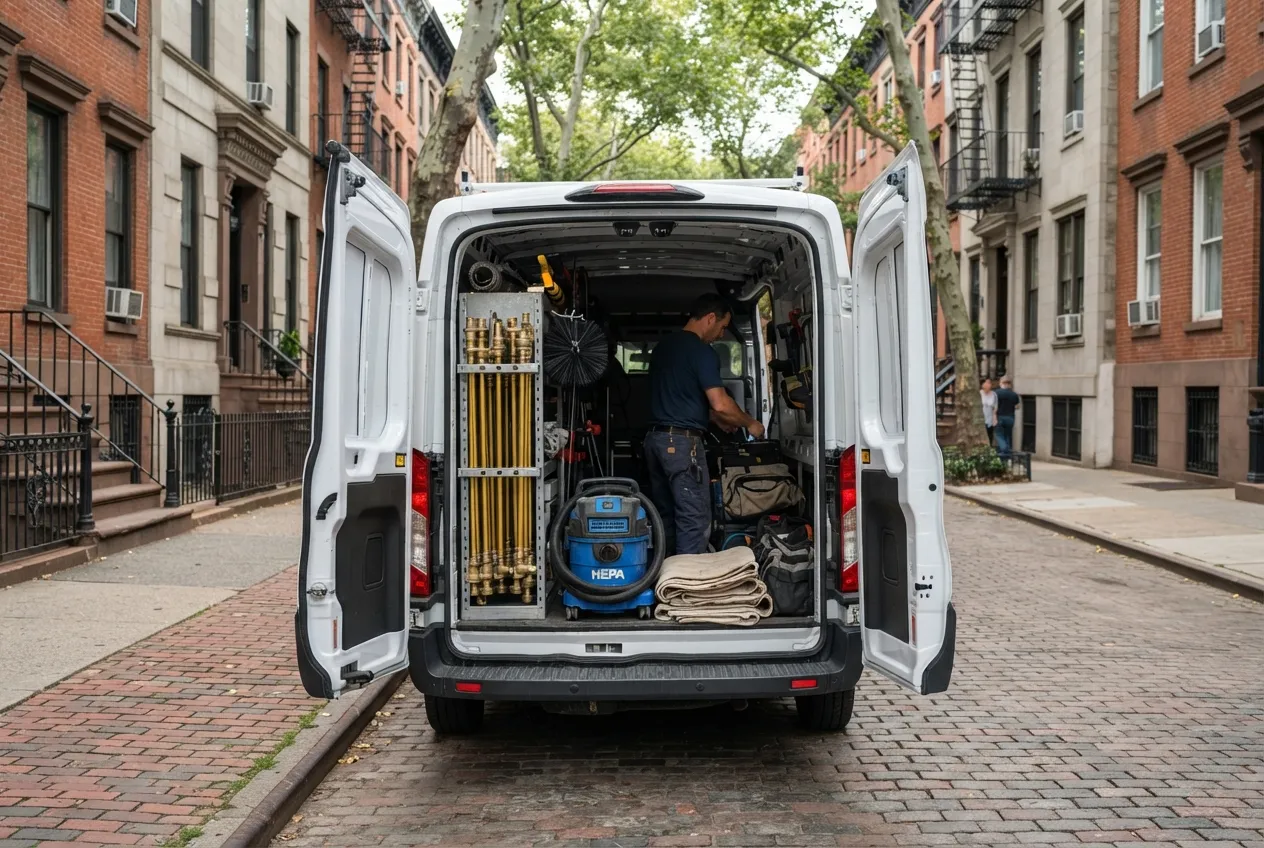
Air duct cleaning makes sense when you see heavy dust or debris in the ducts, find signs of pests, have visible mold growth, or have just finished a renovation. Our crew uses drop cloths, HEPA vacuums, rotary brushes, and a camera to clean supply and return lines and show you the results. Cost depends on the size of the system, access, duct condition, and how much buildup there is.
If your vents puff dust when the system kicks on, or the ducts still hold drywall dust from last year's renovation, a cleaning can clear it out. Expert Chimney Sweep cleans supply and return ductwork for homeowners in Brooklyn and nearby areas, with certified technicians who protect your rooms, show you what came out, and tell you plainly whether cleaning will help. We focus on what you can see and measure: dust, debris, pests, odors, and airflow. We do not promise health improvements, because duct cleaning has not been shown to prevent health problems. When your ducts are dirty enough to justify the work, we clean them thoroughly. When they aren't, we tell you.
Signs you need it
Most homeowners call us after noticing something specific, not on a fixed schedule. These are the signs that usually point to dirty or contaminated ductwork.
- Dust blowing from vents when the heat or air conditioning starts
- A gray film on furniture shortly after you dust
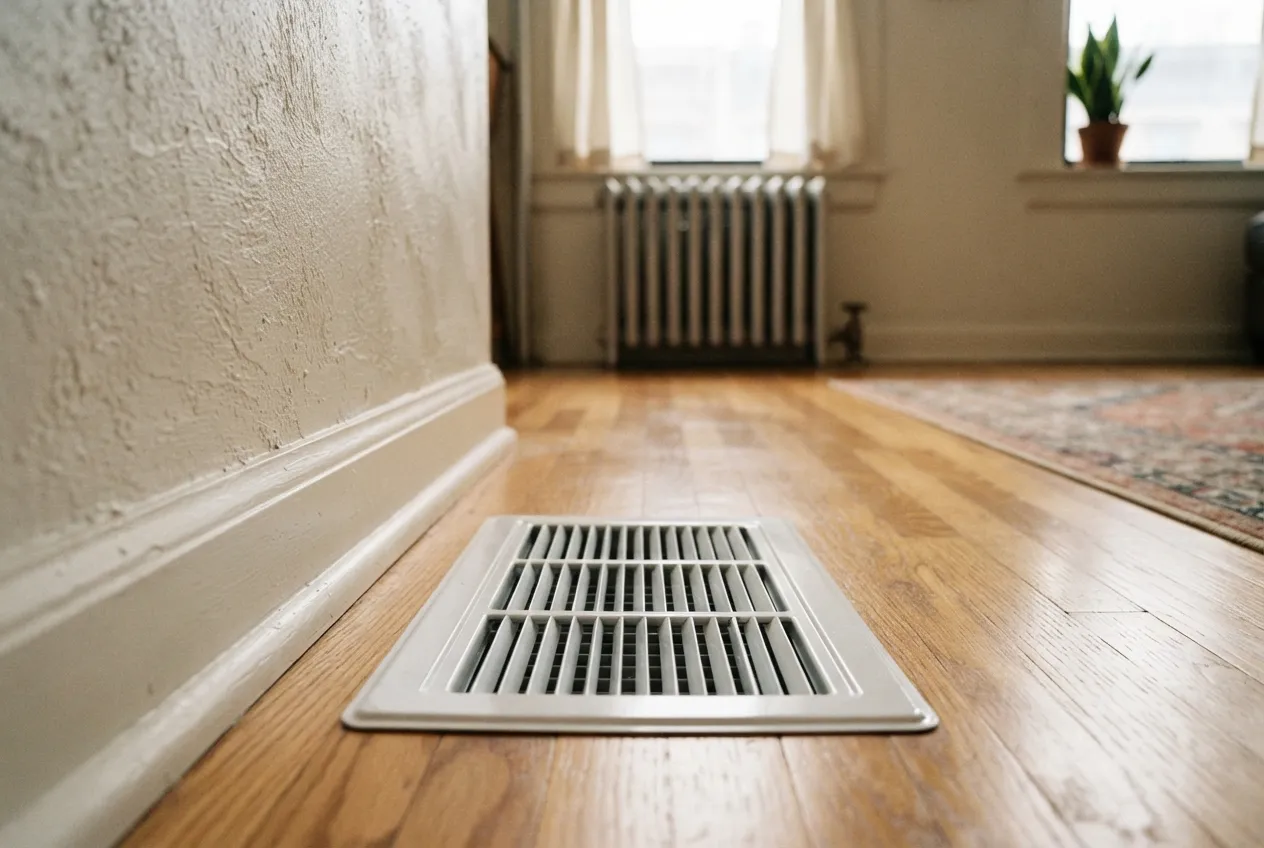
- Clumps of dust, lint, or debris visible inside registers and return grilles
- Drywall, plaster, or sawdust in the system after a renovation
- Scratching or animal noises in the ductwork, or droppings near vents
- A musty or stale odor that gets stronger when the system runs
- Weak airflow from some rooms compared with others
- Visible mold growth on duct surfaces or around registers
What's included in an air duct cleaning
Every visit covers the full system, not just the grilles you can see. If we find something outside the scope of a cleaning, such as a disconnected duct, we point it out and explain your options before doing anything else.
- Walkthrough of the system and a look at your concerns before work starts
- Camera inspection of representative duct runs before cleaning
- Removal and washing of supply registers and return grilles
- Agitation of supply and return ducts with rotary brushes
- Collection of loosened debris with HEPA-filtered vacuum equipment
- Cleaning of the main trunk lines where they can be reached
- Cleaning of the blower compartment and return plenum where accessible
- Filter check and replacement with a filter you provide, or a note on the correct size
- After-photos or camera footage so you can see the result
- A plain summary of any damage, gaps, moisture, or pest entry we noticed
How the crew works in your home
Before any tools come out, the crew lays drop cloths along the path from the door to the equipment and under each register. Furniture near vents is moved or covered. We seal registers in rooms we aren't working in so loosened dust doesn't blow back into the house.
Rotary brushes run through each duct to loosen dust and debris stuck to the walls, while a HEPA vacuum pulls that material out of the system instead of letting it into your living space. We use a camera to look inside runs before and after, so you aren't taking our word for it. Flexible ducts are handled with gentler tools than sheet metal so we don't tear the liner.
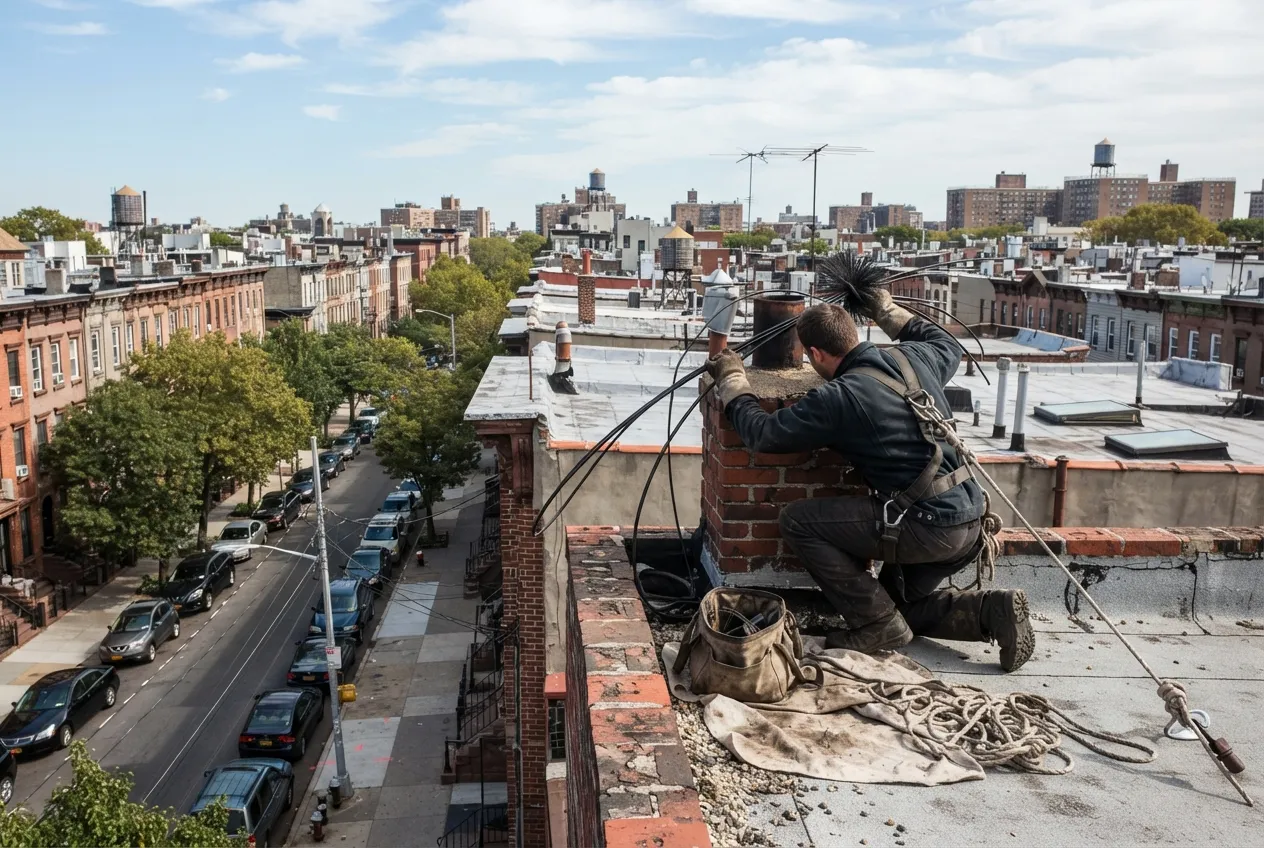
Most duct work happens indoors, in basements, utility closets, and attics. If part of the system, such as an attic air handler or a rooftop unit, sits on or under the roof, we access it safely and only where the setup allows. We do not spray chemical sanitizers or coatings unless you ask about them and we have explained what they do and what product would be used.
Time for your annual chimney check?
The guidance we follow
We follow the U.S. EPA's advice on when duct cleaning is worth doing: when there is substantial visible mold growth, signs of vermin, or excessive dust and debris. The EPA also notes that duct cleaning has not been shown to prevent health problems, so we don't sell it that way. If we see suspected mold, we'll show you, and we'll tell you that the moisture causing it needs to be fixed or the problem will return.
The EPA also warns consumers to research the process before responding to very cheap advertised offers and to be careful with chemical treatments. We think that's good advice. Ask any company, including us, exactly what equipment will be used and which parts of the system will be cleaned.
What affects the price
We quote after seeing the system, because duct jobs vary a lot. The main factors are:
- Size of the system and the number of supply and return vents
- Access, including attic or crawlspace work, high ceiling registers, and the number of floors
- Type of heating and cooling system, such as a furnace, central air, or a heat pump
- Duct material and condition, including flexible versus sheet metal ducts and any damage
- How much dust, construction debris, or pest material has built up
- Whether a camera inspection of hard-to-reach runs or a repair is needed
How a visit works
When you contact us, we ask about your system, the size of your home, and what you've noticed. That lets us bring the right equipment and set a realistic time window.
On the day of the visit, the technician walks the system with you, inspects the ducts with a camera, and confirms the scope before starting. The crew protects your floors and furniture, cleans the system, and reinstalls the registers. At the end, we review the before-and-after footage with you, note anything that needs attention such as loose connections or pest entry points, and leave the work area clean.
Air Duct Cleaning by city
- Air Duct Cleaning in Clinton Hill
- Air Duct Cleaning in Prospect Heights
- Air Duct Cleaning in Fort Greene
- Air Duct Cleaning in Park Slope
- Air Duct Cleaning in Downtown Brooklyn
- Air Duct Cleaning in DUMBO
- Air Duct Cleaning in Boerum Hill
- Air Duct Cleaning in Bedford-Stuyvesant
- Air Duct Cleaning in South Williamsburg
- Air Duct Cleaning in Crown Heights
- Air Duct Cleaning in Brooklyn Heights
- Air Duct Cleaning in Carroll Gardens