The short answer
Expert Chimney Sweep serves Brooklyn Heights from our Clinton Hill office about 2 miles away. We handle chimney sweeping, inspections, repairs, liners, waterproofing, and dryer vent and air duct cleaning for rowhouses, brownstones and pre-war apartment buildings.
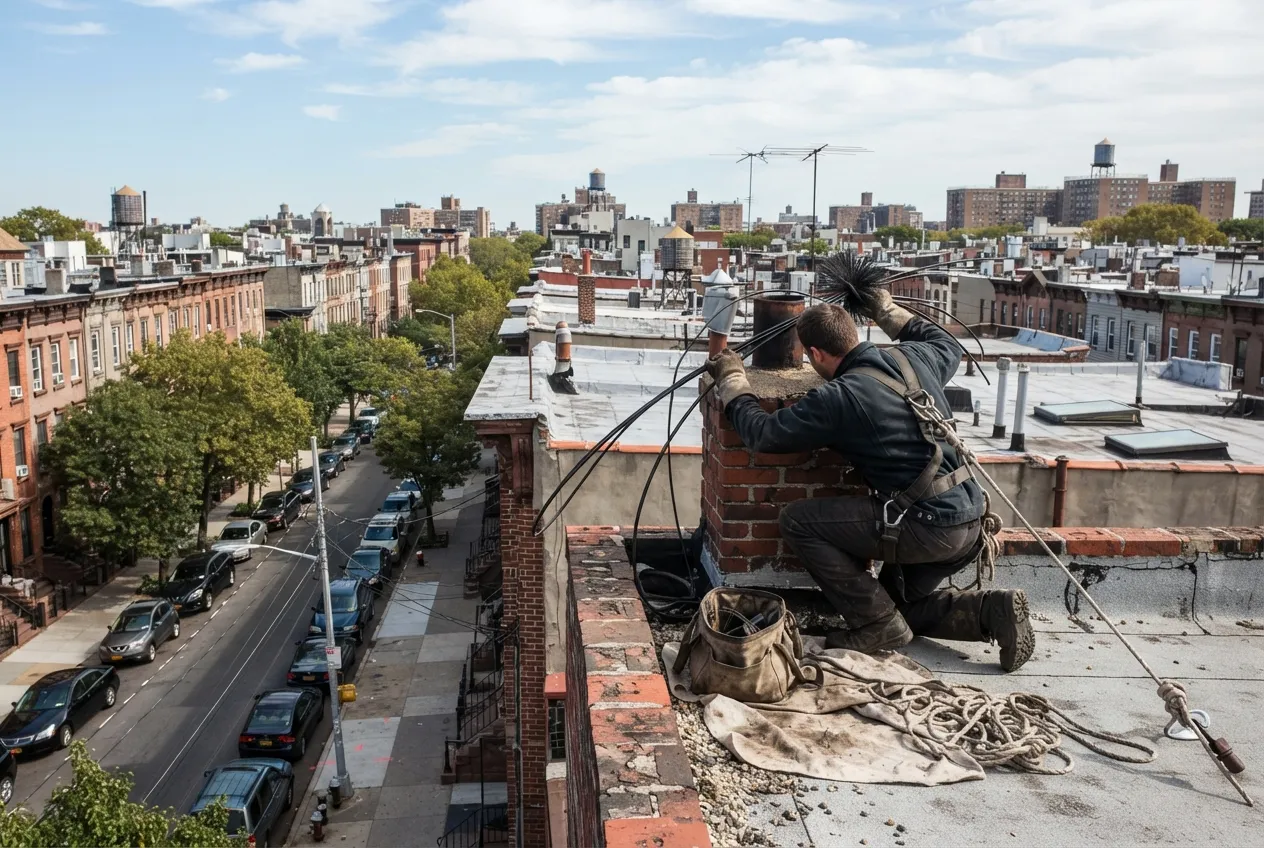
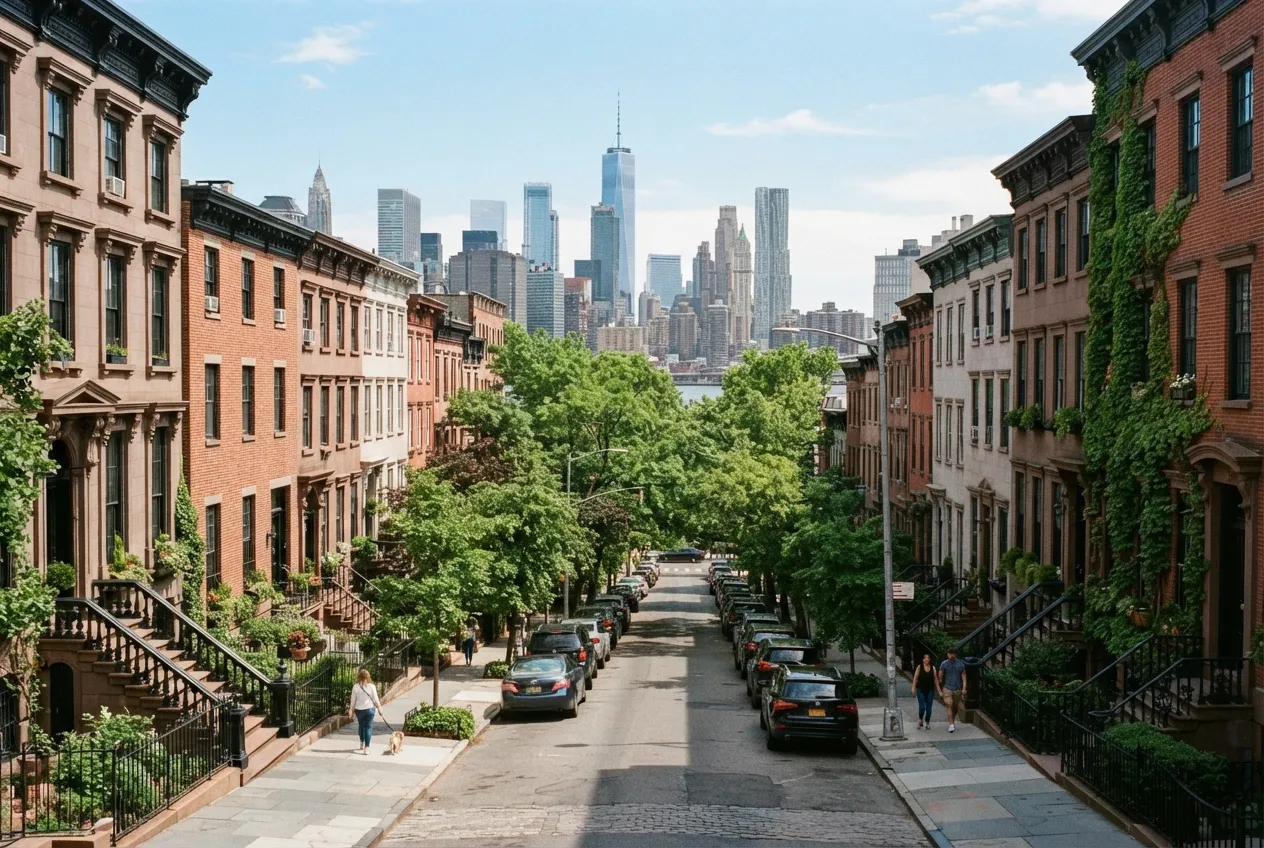
Brooklyn Heights is about 2 miles northwest of our office in Clinton Hill, so our certified technicians can reach the neighborhood easily for chimney sweeps, inspections, repairs and vent cleaning. Much of the housing here is older masonry: brownstone and brick rowhouses, pre-war apartment buildings and a smaller number of standalone houses. These buildings often have several flues, some original and some relined over the years, along with fireplaces that may be working, decorative or sealed off. This page covers what we see most often in Brooklyn Heights homes and how we handle it.
Older masonry chimneys need a careful look
In a typical Brooklyn Heights rowhouse, one chimney stack may hold several flues. Some serve fireplaces on different floors, one may vent the boiler or water heater, and others may have been closed off long ago. Before we sweep or repair anything, we work out which flue serves which appliance or fireplace and what condition each one is in.
The NFPA 211 standard calls for chimneys, fireplaces and vents to be inspected once a year. A Level 1 inspection fits when nothing about the system has changed. A Level 2 inspection is called for when the system changes, such as a new appliance or a switch of fuel, and when a home is sold, which matters in a neighborhood where older houses change hands. A Level 3 inspection is reserved for cases where a hidden hazard can only be reached by opening part of the chimney or the building.
If you plan to start using a fireplace that has sat unused for years, have it inspected first. Old flues can hold debris, nesting material or cracked tile liners that you can't see from the hearth.
Brooklyn weather is hard on brick and mortar
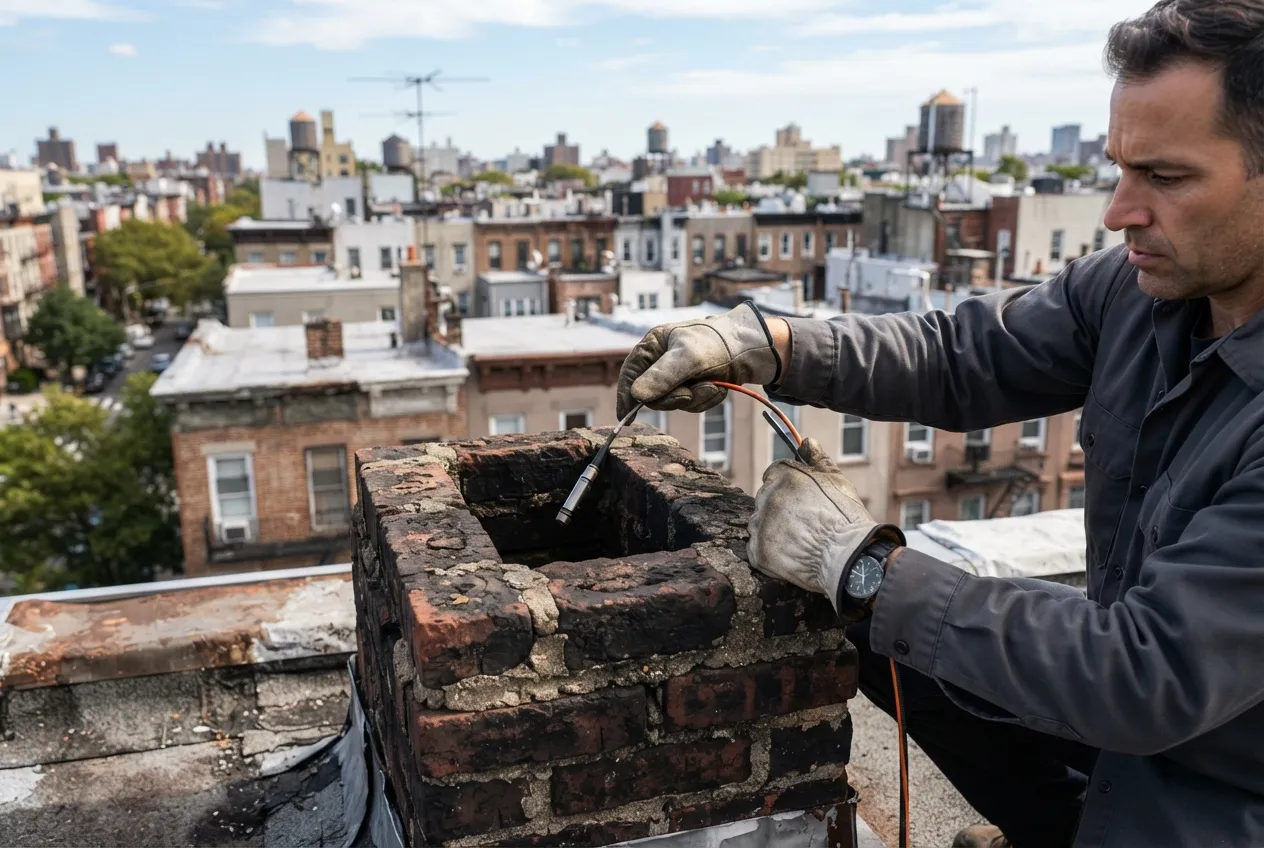
New York winters bring repeated freezing and thawing. When water soaks into brick, mortar joints or a cracked chimney crown and then freezes, it expands and slowly pushes the masonry apart. Nor'easters and summer storms bring wind-driven rain that soaks the parts of a chimney above the roofline, and humid summers keep damp flues smelling musty.
Most chimney damage we find starts with water. A cap keeps rain and animals out of the flue. A sound crown or chase cover sheds water off the top. A breathable waterproofing treatment helps the brick resist soaking while still letting moisture escape. When the masonry has gone too far, repointing or partial rebuilding may be the right fix.
- Crumbling or missing mortar joints
- Brick faces flaking or popping off
- Water stains on ceilings or walls near the chimney
- Rust on the damper or firebox
- A missing or damaged chimney cap
Oil-to-gas conversions and chimney liners
Many older Brooklyn buildings have switched or are switching their boilers from oil to gas. When a New York City building converts from oil to gas, the chimney has to be evaluated as part of the work. A new liner is often needed because gas exhaust produces acidic condensate that can corrode a masonry flue.
Timing matters. New York City's heat season runs from October 1 through May 31, and building owners must keep apartments heated to the city's minimums during that time. If you own a rowhouse with tenants or manage a pre-war building, plan your chimney evaluation and any liner installation well ahead of a conversion so the boiler isn't held up when heat is required.
Time for your annual chimney check?
Dryer vents and air ducts
According to the U.S. Fire Administration, failure to clean is the leading factor contributing to clothes dryer fires in homes. In rowhouses and apartments, a dryer vent may run a long way through walls or ceilings before it reaches the outside, and lint builds up along the way. Clothes taking longer to dry or a laundry room that feels unusually hot are common signs a vent needs cleaning.
We are straightforward about air duct cleaning. The U.S. EPA advises cleaning ducts when there is substantial visible mold growth, vermin, or excessive dust and debris. It also says duct cleaning has not been shown to prevent health problems. We will look at your system and tell you whether cleaning makes sense, and we only use chemical treatments when you understand what they are and agree to them.
Services in Brooklyn Heights and nearby
We offer the following services throughout Brooklyn Heights:
- Chimney sweep
- Chimney inspection
- Chimney repair
- Chimney liner installation
- Chimney cap and chase cover
- Chimney waterproofing
- Fireplace and damper repair
- Chimney rebuilding
- Dryer vent cleaning
- Air duct cleaning
Neighborhoods near Brooklyn Heights
Along with Brooklyn Heights, we regularly work in Downtown Brooklyn, DUMBO, Boerum Hill, Fort Greene and Carroll Gardens. Much of the housing in these neighborhoods is similar: older masonry homes and apartment buildings with chimneys and vents that need the same yearly attention.
Services in Brooklyn Heights
- Chimney Sweep in Brooklyn Heights
- Chimney Inspection in Brooklyn Heights
- Chimney Repair in Brooklyn Heights
- Air Duct Cleaning in Brooklyn Heights
- Chimney Liner Installation in Brooklyn Heights