The short answer
Park Slope homes often need a new chimney liner when the old clay flue is cracked, when the flue is unlined, or when a boiler is converted from oil to gas. Expert Chimney Sweep inspects the flue first, then installs a liner sized for your appliance and fuel so exhaust and condensation stay inside the chimney.
Many Park Slope homes have chimneys built long before modern heating equipment existed. In brownstones, rowhouses and pre-war apartment buildings, the original flue may be unlined, lined with clay tile that has cracked over the decades, or sized for a coal or oil system the building no longer uses. A properly sized, intact liner keeps hot gases and condensation inside the flue and away from the brick, mortar and wood framing around it. Expert Chimney Sweep installs chimney liners for homes and buildings in Park Slope (ZIP 11217), about a mile southwest of our office in Clinton Hill. Our certified technicians start by looking at the flue itself, then recommend a liner that fits your appliance, your fuel and your chimney's condition.
Why Older Park Slope Chimneys Often Need a Liner
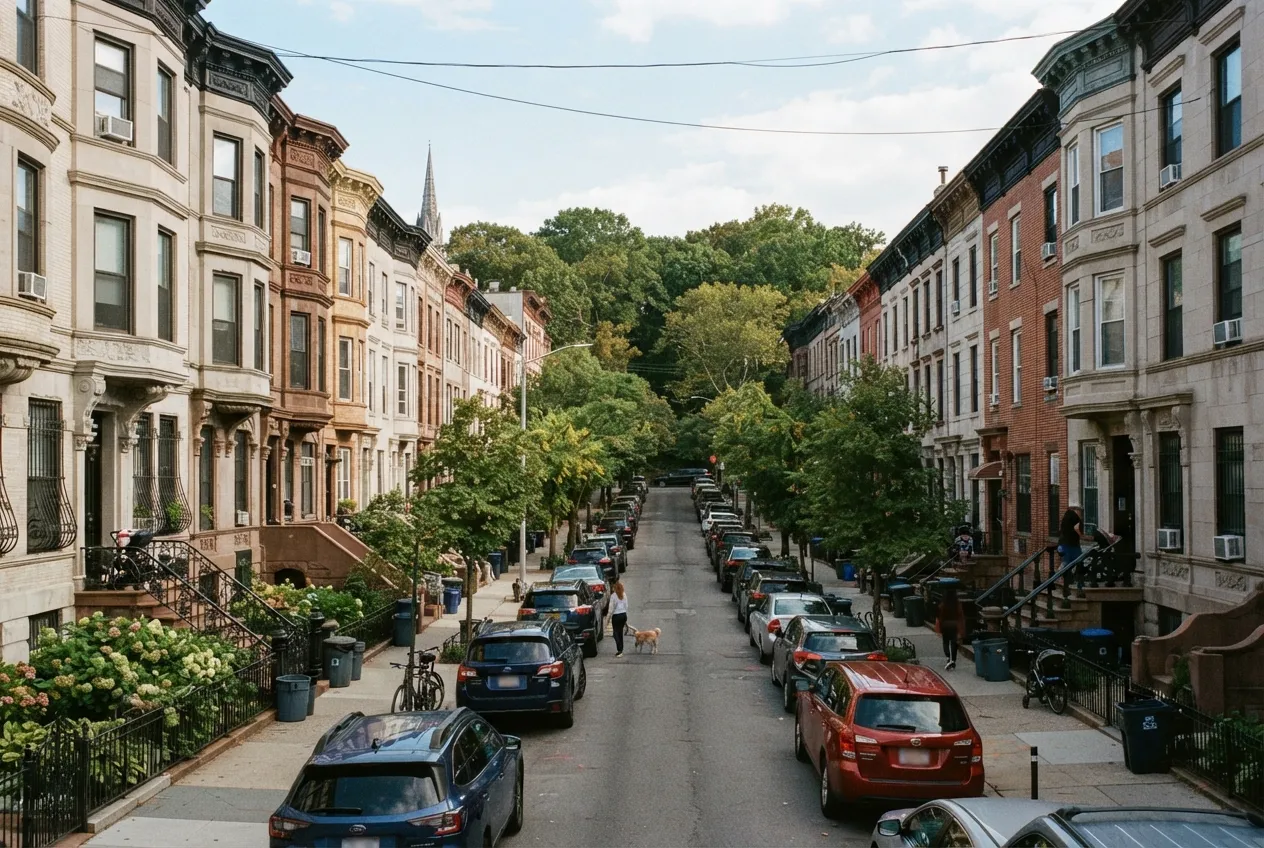
Brownstones and rowhouses in Park Slope share party walls, so a chimney problem rarely stays inside one home. Masonry chimneys from this era were often built with clay tile liners or no liner at all. Over time, freeze-thaw cycles, settling and years of heating exhaust can crack tiles, wash out mortar joints and leave gaps where heat and gases can reach the surrounding structure.
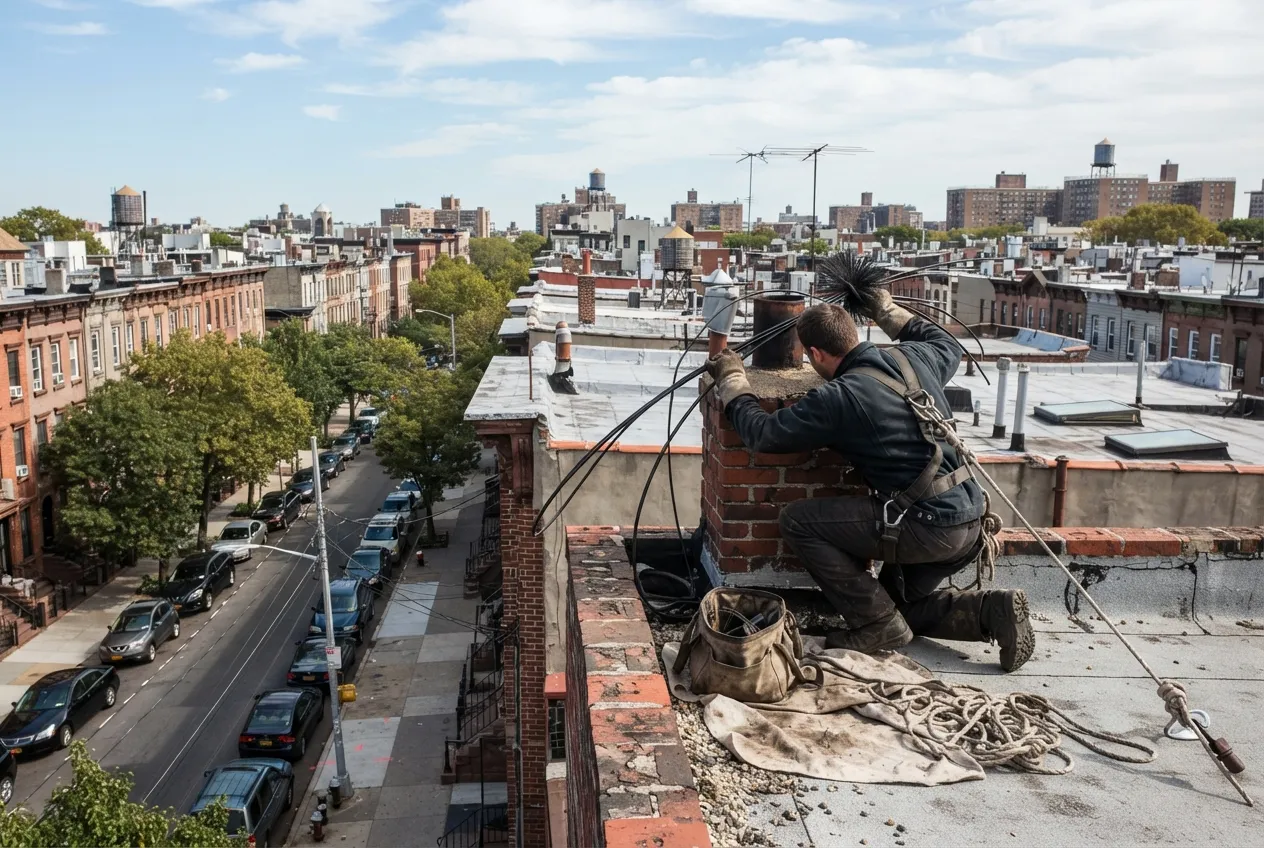
Liner problems usually aren't visible from inside the house. Signs that point to them include flakes of tile or mortar at the base of the flue, white staining or dampness on interior walls near the chimney, crumbling brick at the top of the stack, and drafting trouble with a fireplace or boiler. A camera inspection of the flue is the most reliable way to see what is actually going on.
Oil-to-Gas Conversions and Your Flue
Many Park Slope buildings have moved, or are planning to move, from oil heat to gas. When a New York City building converts its boiler from oil to gas, the chimney has to be evaluated as part of the work. A new liner is often needed because gas exhaust produces acidic condensate that can corrode a masonry flue from the inside.
A flue that worked fine with an oil burner may be the wrong size for a new gas boiler or water heater. If it is too large, exhaust cools before it leaves the chimney, which increases condensation and can weaken draft. We coordinate with your heating contractor so the liner matches the new equipment's venting requirements.
Choosing the Right Liner for Your Home
The right liner depends on what is connected to the chimney and what shape the flue is in. Here are the options we typically discuss with Park Slope homeowners:
- Stainless steel liners: a common choice for gas and oil appliances and for wood-burning fireplaces and stoves, sized to the appliance and run the full height of the flue.
- Insulated stainless liners: help keep exhaust warm in tall or exterior chimneys, which supports draft and reduces condensation.
- Cast-in-place liners: a poured lining that can restore a deteriorated masonry flue and add structural support where the existing tile is badly damaged.
- Clay tile replacement: an option in some masonry chimneys, though it usually involves more demolition than other approaches.
- Separate flues for separate appliances: when a fireplace and a boiler share a chimney, each typically needs its own properly sized flue.
Time for your annual chimney check?
What Installation Involves
We begin with an inspection, including a camera view of the flue, to measure it and document its condition. The NFPA 211 standard describes a Level 2 inspection for situations like a fuel switch, a new appliance or a home sale, and a Level 3 inspection when a hidden hazard can only be reached by opening part of the chimney or building. We'll explain which level your situation calls for before any work starts.
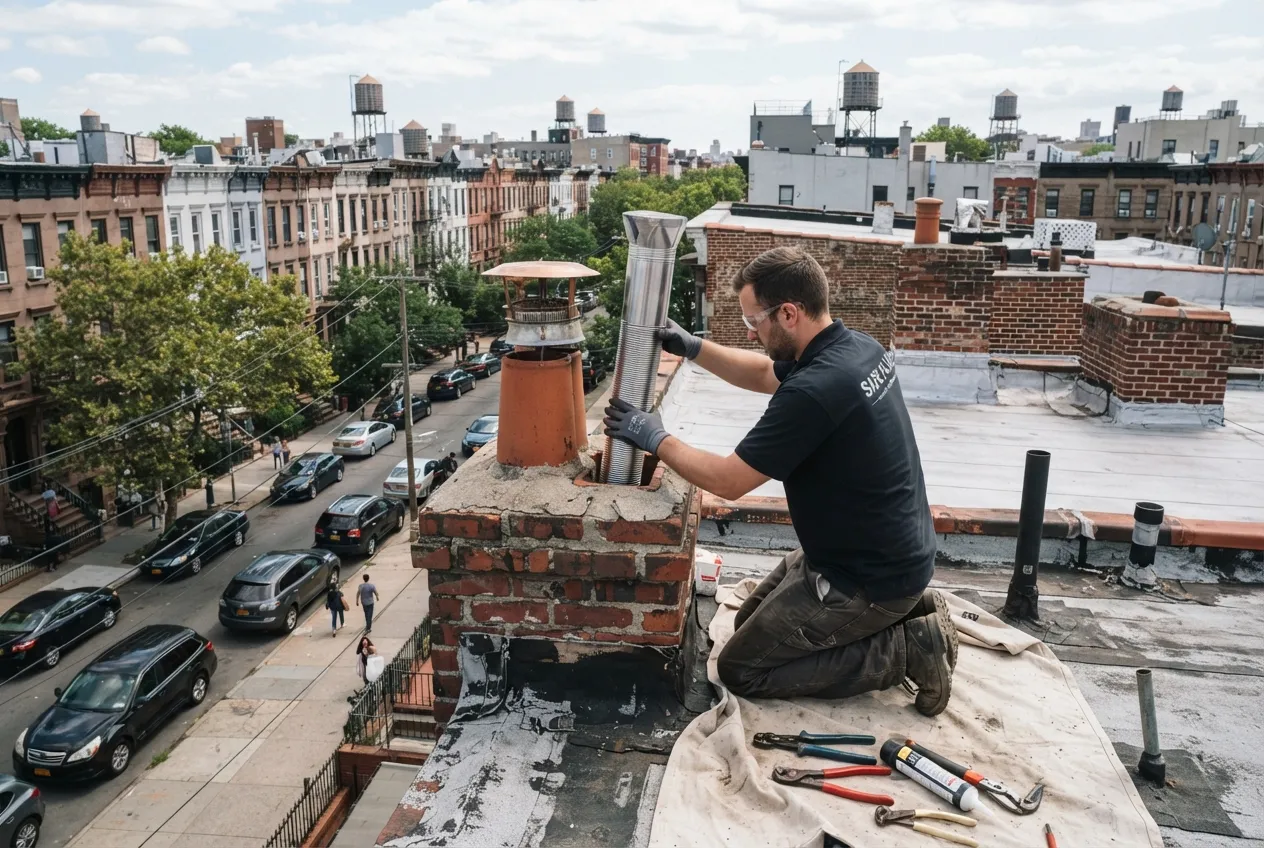
For most stainless installations, the liner is lowered from the roof, connected to the appliance at the bottom and finished with a top plate and cap. Rowhouse roofs in Park Slope are often reached through a roof hatch or bulkhead, so we plan access ahead of time and protect interior floors and finishes along the path. If the masonry at the top of the chimney needs repair, we'll point that out so the new liner isn't sitting in a crown or stack that is breaking down.
Planning Around Heat Season
New York City's heat season runs from October 1 through May 31, when building owners must keep apartments heated to the city's minimum temperatures. If you own a multi-family brownstone or a small apartment building, a liner project that takes the boiler offline is easiest to schedule in late spring or summer.
Once your liner is in, keep up with yearly inspections. The NFPA 211 standard calls for chimneys, fireplaces and vents to be inspected once a year. We also serve nearby Prospect Heights, Carroll Gardens, Fort Greene, Clinton Hill and Downtown Brooklyn.
More services in Park Slope
- Chimney Sweep in Park Slope
- Chimney Inspection in Park Slope
- Chimney Repair in Park Slope
- Air Duct Cleaning in Park Slope