The short answer
A chimney liner is needed when the existing flue is cracked, missing, or the wrong size for the appliance it serves, or when a building converts from oil to gas. In Brooklyn Heights brownstones and pre-war buildings, we inspect the chimney first. Then we install a properly sized liner so exhaust leaves the home safely.
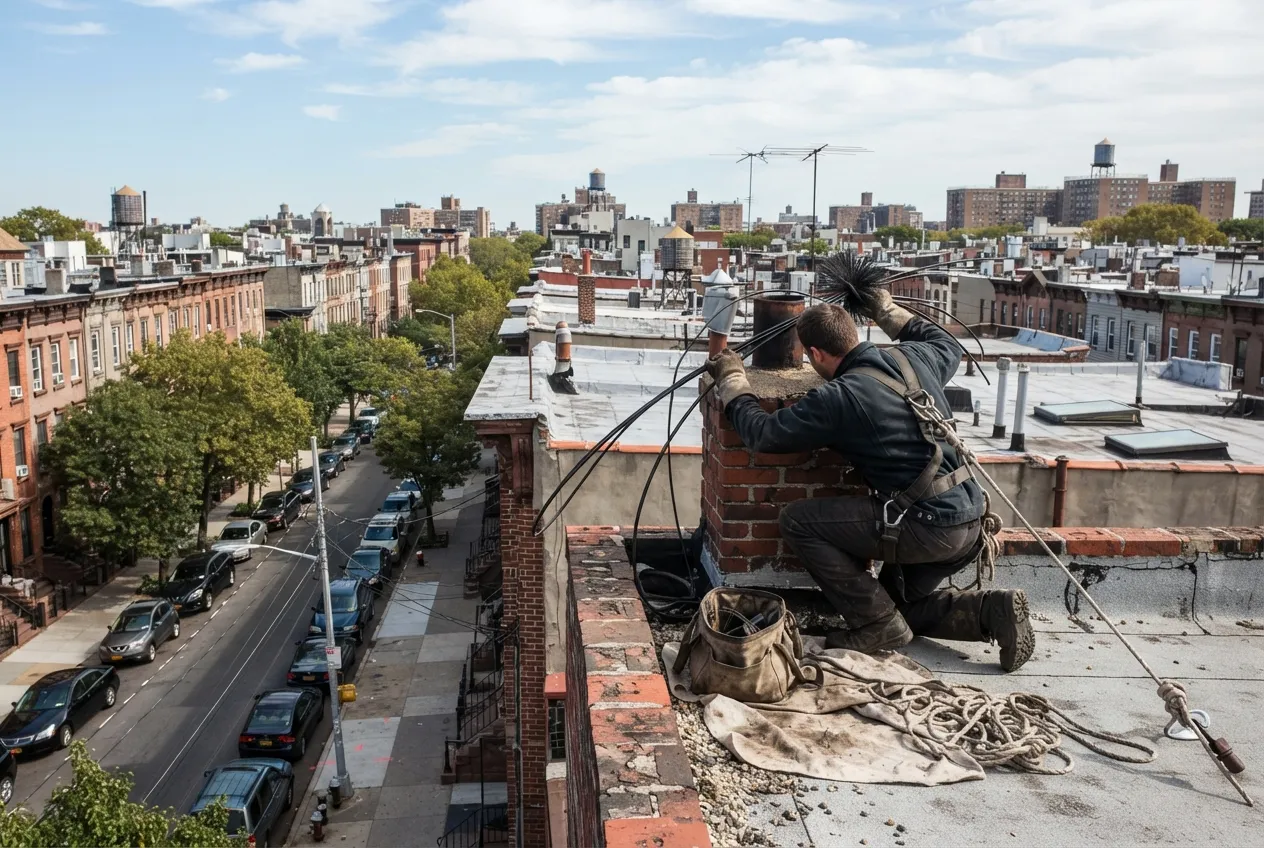
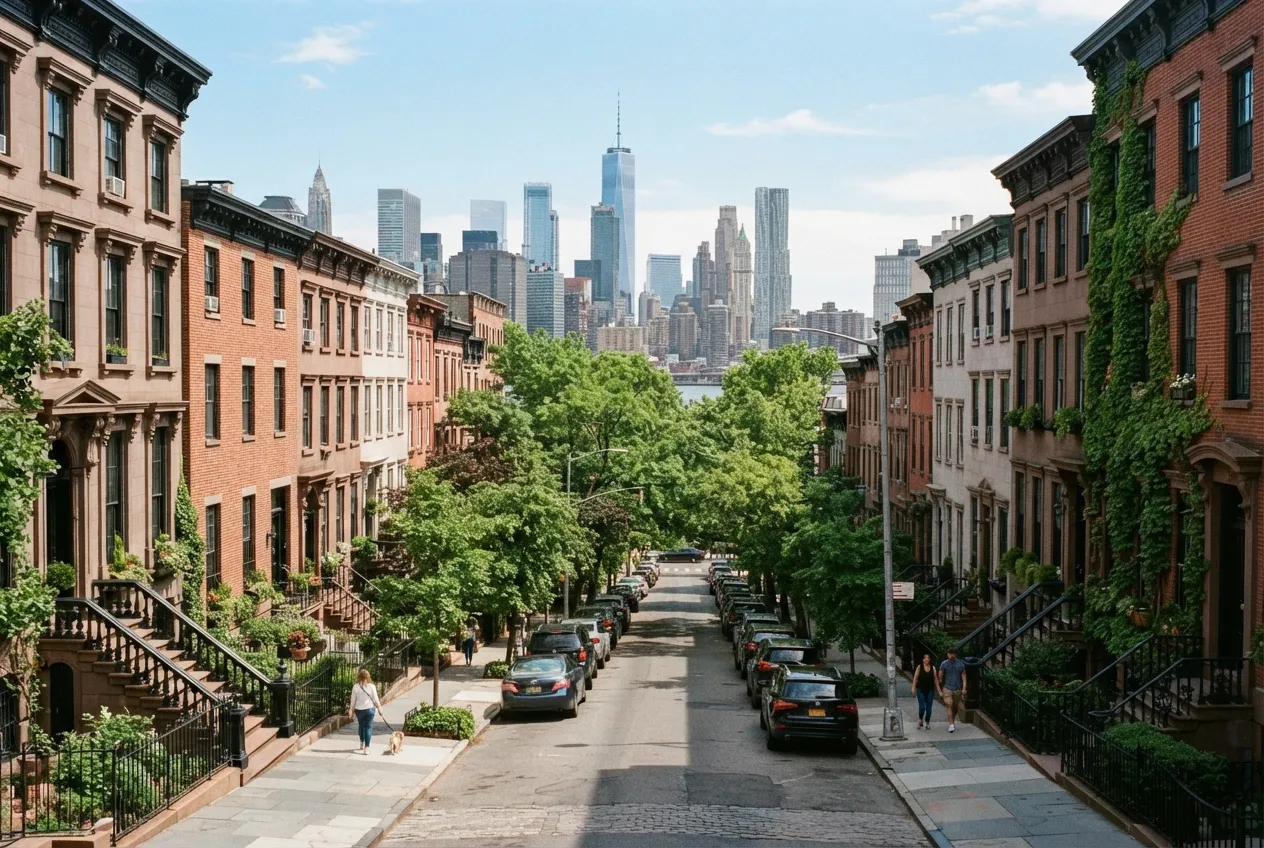
Many homes in Brooklyn Heights were built long before modern boilers, furnaces and water heaters existed. Their masonry chimneys were designed for coal and wood, often with clay tile flues or no liner at all. When those chimneys now vent a gas boiler, an oil burner or a fireplace that sees regular use, the original flue may no longer be safe. Expert Chimney Sweep installs chimney liners in brownstones, rowhouses and pre-war apartment buildings throughout Brooklyn Heights. Our certified technicians work out of our Clinton Hill office, about two miles away.
Why Older Brooklyn Heights Chimneys Need Liners
Rowhouses and brownstones in Brooklyn Heights often share party walls. Many have several flues running side by side through one chimney stack. Over many decades, mortar joints erode and clay tiles crack, and some flues were never lined in the first place. A damaged flue can let heat, smoke and carbon monoxide move into the brick, into an adjoining flue, or into the living space.
A liner gives exhaust a continuous, sealed path to the top of the chimney. It also protects the masonry from heat and from the moisture and acids that combustion gases leave behind. Common signs that a flue needs attention include:
- Pieces of tile, brick or mortar showing up in the fireplace or at the base of the boiler flue
- White staining or damp spots on walls near the chimney
- A smoky or musty smell, or weak draft when the fireplace or appliance runs
- An inspection that found cracked tiles, gaps or a missing liner
- A new boiler, furnace or water heater, or a switch from oil to gas
Oil-to-Gas Conversions in Brooklyn Heights Buildings
When a New York City building switches its boiler from oil to gas, the chimney has to be evaluated as part of the conversion. A new liner is often required because gas exhaust produces acidic condensate, which can corrode an unlined or clay-lined masonry flue. Newer equipment may also produce cooler exhaust that does not draft well in a large, old flue originally sized for an oil or coal burner.
Timing matters. The city's heat season runs from October 1 through May 31, and during that period building owners must keep apartments heated to the city's minimum temperatures. If you own a brownstone with tenants or a multi-unit pre-war building, schedule the conversion and liner work outside heat season when you can. If that isn't possible, plan the work carefully to avoid gaps in heat.
How Liner Installation Works
Every job starts with an inspection. The NFPA 211 standard calls for chimneys to be inspected once a year. A Level 2 inspection is the usual step when a system changes, such as a new appliance or a fuel switch, or when a home is sold. Our technicians use a camera to see the full length of the flue before recommending a liner. A typical installation follows these steps:
- Inspect the chimney and confirm which appliances vent into each flue
- Clean the flue and remove loose debris or obstructions
- Measure the flue and size the liner to match the appliance's venting needs
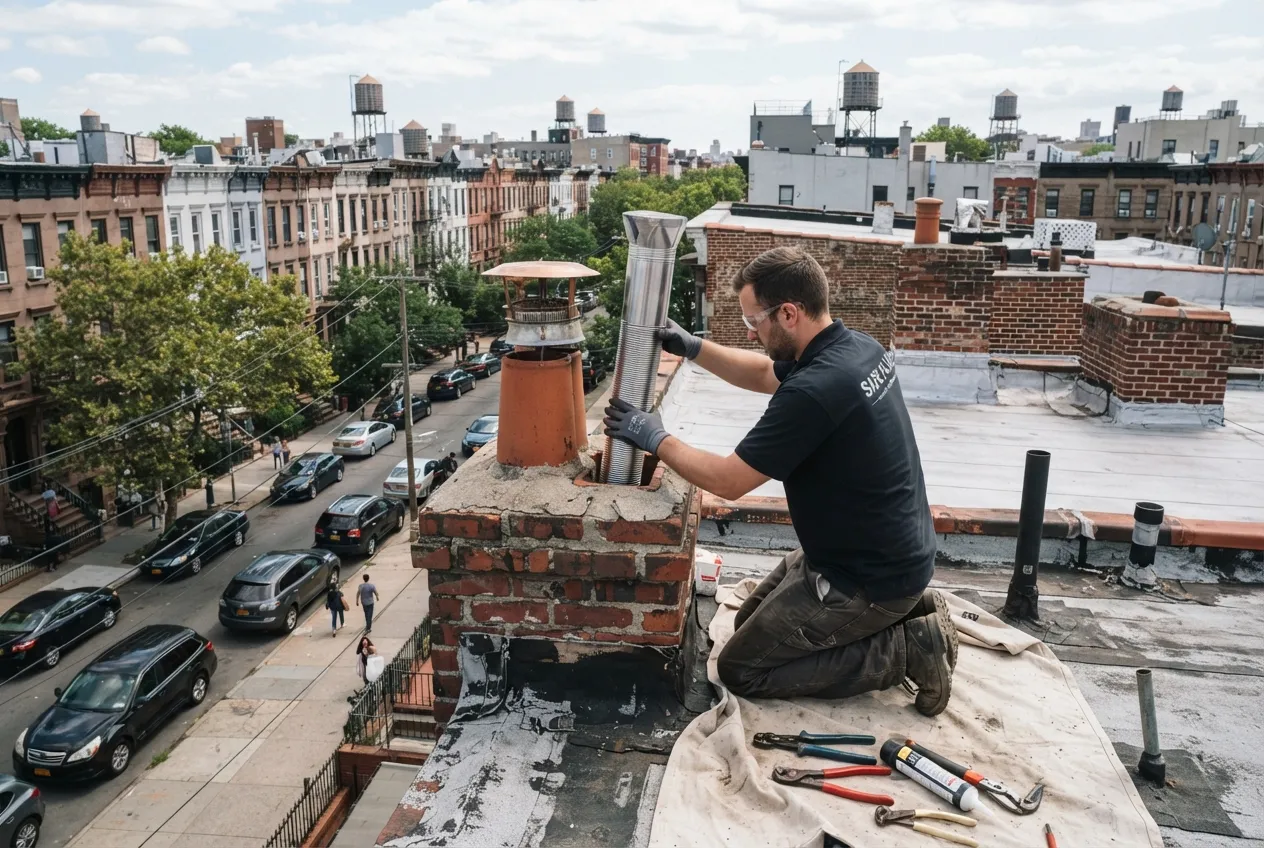
- Lower the liner from the roof and connect it at the base
- Install a top plate and cap to keep out rain and animals
- Test the draft and walk you through the finished work
Time for your annual chimney check?
Choosing the Right Liner for Your Chimney
Most liners we install are stainless steel, either flexible or rigid, matched to the fuel and the appliance. Gas, oil and wood each place different demands on a liner, so we choose the material and diameter based on what will actually vent through the flue. An oversized liner can cause poor draft and condensation, and an undersized one can restrict exhaust.
A parlor-floor fireplace in a brownstone may need a liner sized to its firebox opening. When one chimney serves both a boiler and a water heater, we review each appliance's venting needs before installing anything. We explain the options in plain terms and recommend only what your chimney and equipment require.
Serving Brooklyn Heights and Nearby Neighborhoods
Brooklyn Heights is a short trip from our Clinton Hill office. We also install chimney liners in Downtown Brooklyn, DUMBO, Boerum Hill, Fort Greene and Carroll Gardens. In attached buildings, reaching the roof often means coordinating with neighbors or a building manager. We can help you plan for that when you book.
More services in Brooklyn Heights
- Chimney Sweep in Brooklyn Heights
- Chimney Inspection in Brooklyn Heights
- Chimney Repair in Brooklyn Heights
- Air Duct Cleaning in Brooklyn Heights