The short answer
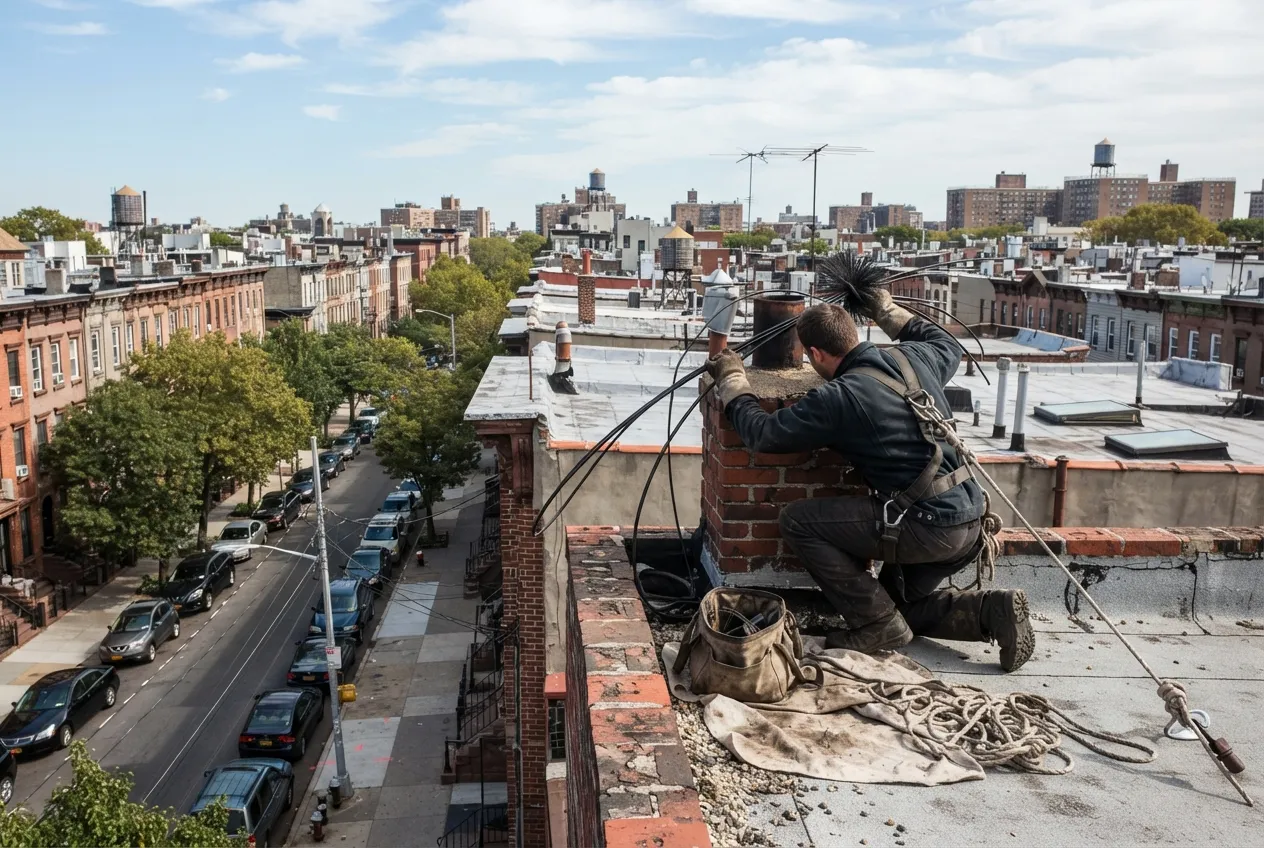
Yes, Expert Chimney Sweep serves Fort Greene and the 11205 ZIP code from our office about a mile away in Clinton Hill. We sweep, inspect, repair, reline and rebuild chimneys and clean dryer vents and air ducts for brownstones, rowhouses and pre-war apartment buildings.
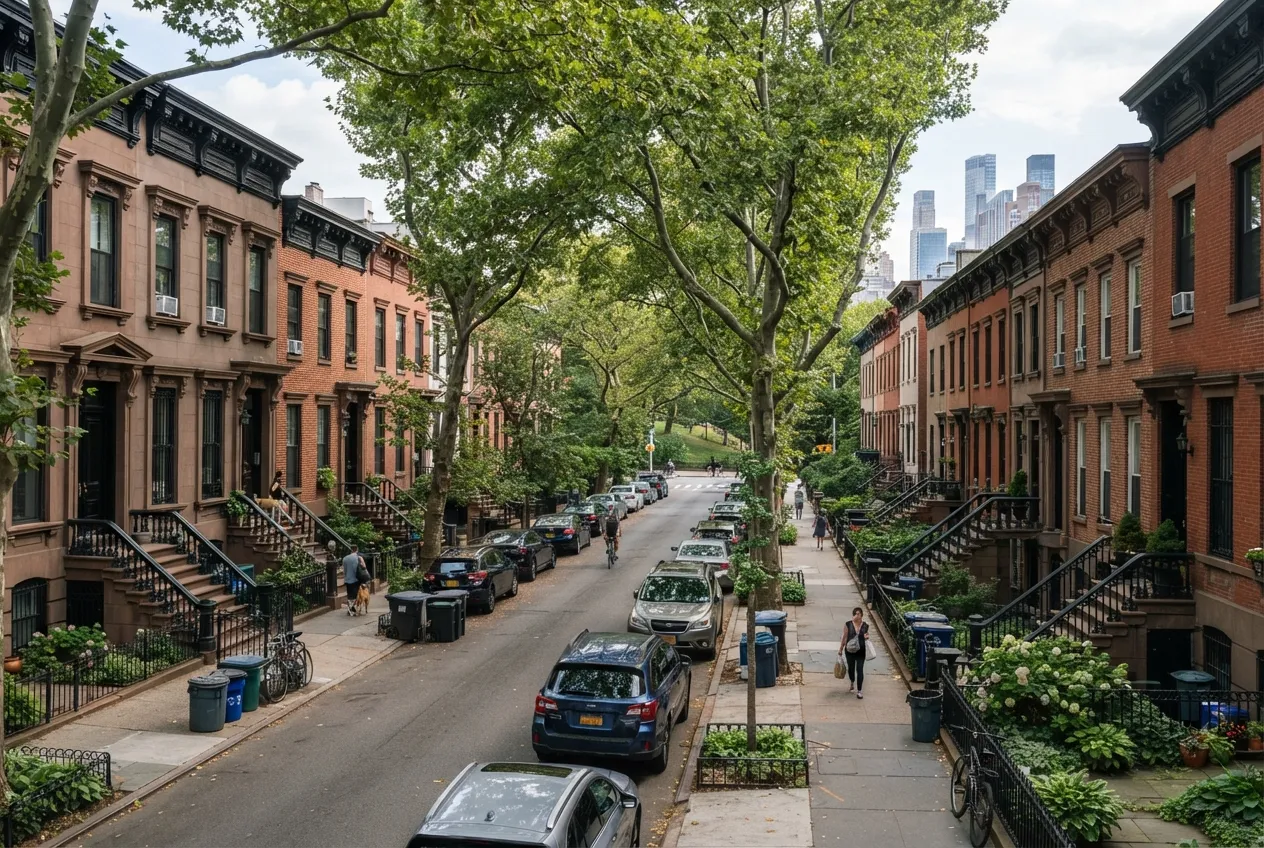
Fort Greene is about a mile northwest of our Clinton Hill office, so our technicians work in the neighborhood regularly. We handle chimney sweeping, inspections, repairs, liners, caps and chase covers, waterproofing, fireplace and damper work, and full rebuilds, along with air duct and dryer vent cleaning, for homes and buildings in the 11205 ZIP code. Much of the housing here is older masonry: brownstones and rowhouses with original fireplaces, and pre-war apartment buildings with tall boiler flues. Those chimneys have their own needs, and this page explains what we look for and how we work.
What We Find in Brownstone and Rowhouse Chimneys
Older rowhouses often have several fireplaces feeding one chimney stack, with each flue separated by brick. After many decades of heat, moisture and settling, the mortar between those flues can wear thin, clay tiles can crack, and some flues were never lined at all. A fireplace that was closed off long ago may look ready to use from the room, but no one may have checked what is above the damper in years.
Because these homes share walls with their neighbors, a chimney problem is rarely just a cosmetic issue. Our certified technicians check each flue on its own, note which ones are active, and tell you plainly which fireplaces are safe to use, which need repair, and which should stay closed.
How Brooklyn Weather Wears Down Masonry
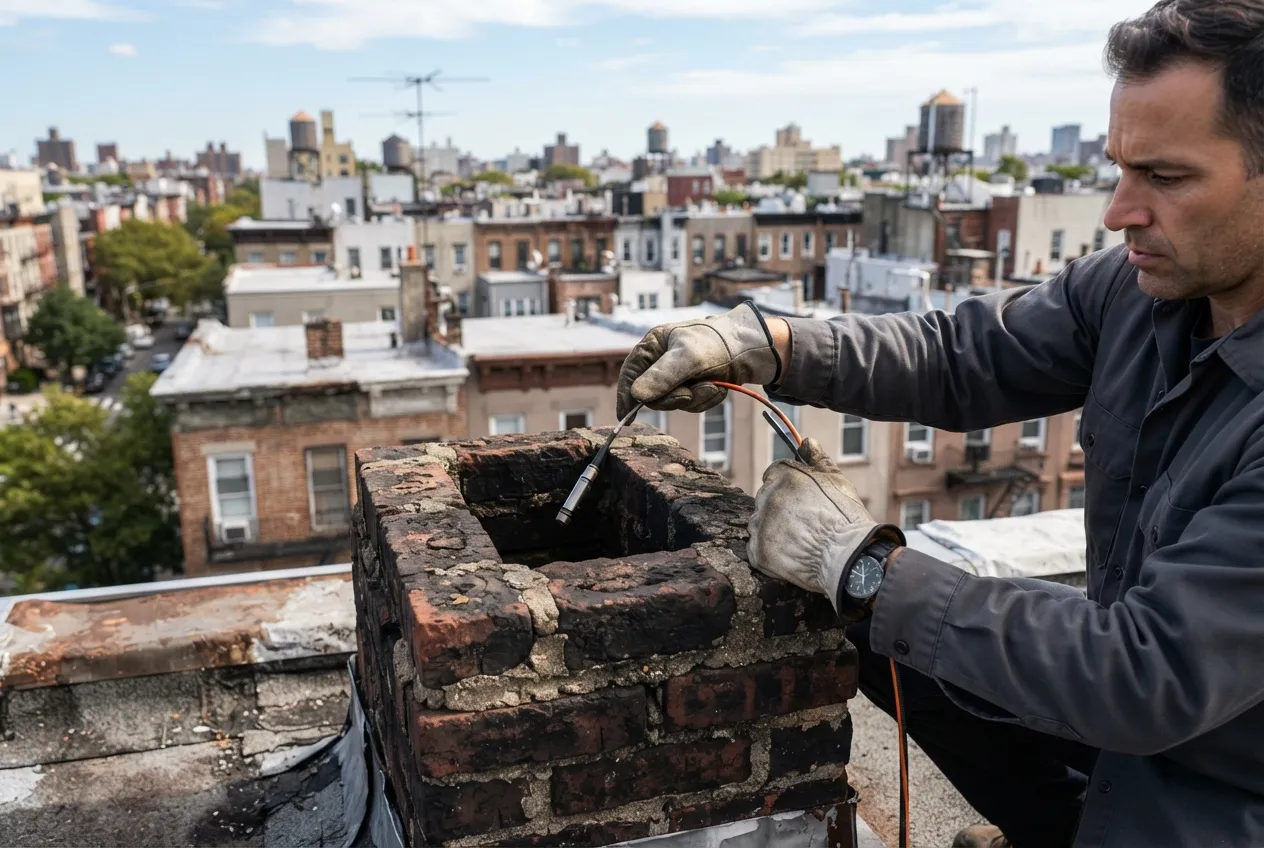
Fort Greene chimneys deal with the full range of New York weather. In winter, water soaks into brick and mortar, freezes, expands and thaws again, loosening joints a little more each cycle. Coastal storms and nor'easters push rain sideways into crowns and flashing. Humid summers can draw a smoky, sour odor out of a fireplace that has creosote buildup.
Rooftop chimneys on attached homes also take a lot of wind, which is hard on caps and loose bricks near the top. Signs it is time to have someone look:
- Crumbling mortar, loose bricks or white staining on the chimney
- Water stains on the ceiling or wall near the fireplace
- Pieces of tile or masonry falling into the firebox
- A damper that sticks, will not close, or lets in drafts
- Smoke that drifts into the room instead of drawing up
- A strong smell from the fireplace in summer
Boiler Flues, Gas Conversions and Heat Season
Many pre-war apartment buildings and converted brownstones in the neighborhood vent a boiler through a masonry chimney. When a New York City building converts its boiler from oil to gas, the chimney has to be evaluated as part of the job. A new liner is often needed, because gas exhaust produces acidic condensate that can eat away at an unlined or worn masonry flue.
New York City's heat season runs from October 1 through May 31, and building owners must keep apartments heated to the city's minimums during that time. A blocked or failing flue in January is a hard problem to solve quickly, so we recommend booking boiler chimney inspections and liner work in late summer or early fall.
Time for your annual chimney check?
Dryer Vents and Air Ducts
According to the U.S. Fire Administration, failure to clean is the leading factor contributing to clothes dryer fires in homes. In rowhouses and apartments, dryer vents often run long distances through walls or ceilings before reaching the outside, which gives lint more places to collect. If drying takes longer than it used to or the laundry area feels hot, the vent should be checked.
For air ducts, we follow the U.S. EPA's approach. Cleaning makes sense when there is substantial visible mold, signs of rodents or insects, or heavy dust and debris coming from the vents. The EPA also notes that duct cleaning has not been shown to prevent health problems, so we will tell you honestly whether your system needs it, and we are careful about chemical treatments.
Our Approach in Fort Greene and Nearby
The NFPA 211 standard calls for chimneys, fireplaces and vents to be inspected once a year. A Level 1 inspection fits when nothing has changed. A Level 2 inspection is called for when you buy or sell a home, add a new appliance, or switch fuels. A Level 3 inspection is used only when a hidden hazard has to be reached by opening part of the chimney or wall. We explain which level applies before starting and show you photos of what we find.
Along with Fort Greene, we regularly work in Clinton Hill, Downtown Brooklyn, DUMBO, Boerum Hill and Prospect Heights.
ZIP codes we serve
- 11205
Services in Fort Greene
- Chimney Sweep in Fort Greene
- Chimney Inspection in Fort Greene
- Chimney Repair in Fort Greene
- Air Duct Cleaning in Fort Greene
- Chimney Liner Installation in Fort Greene