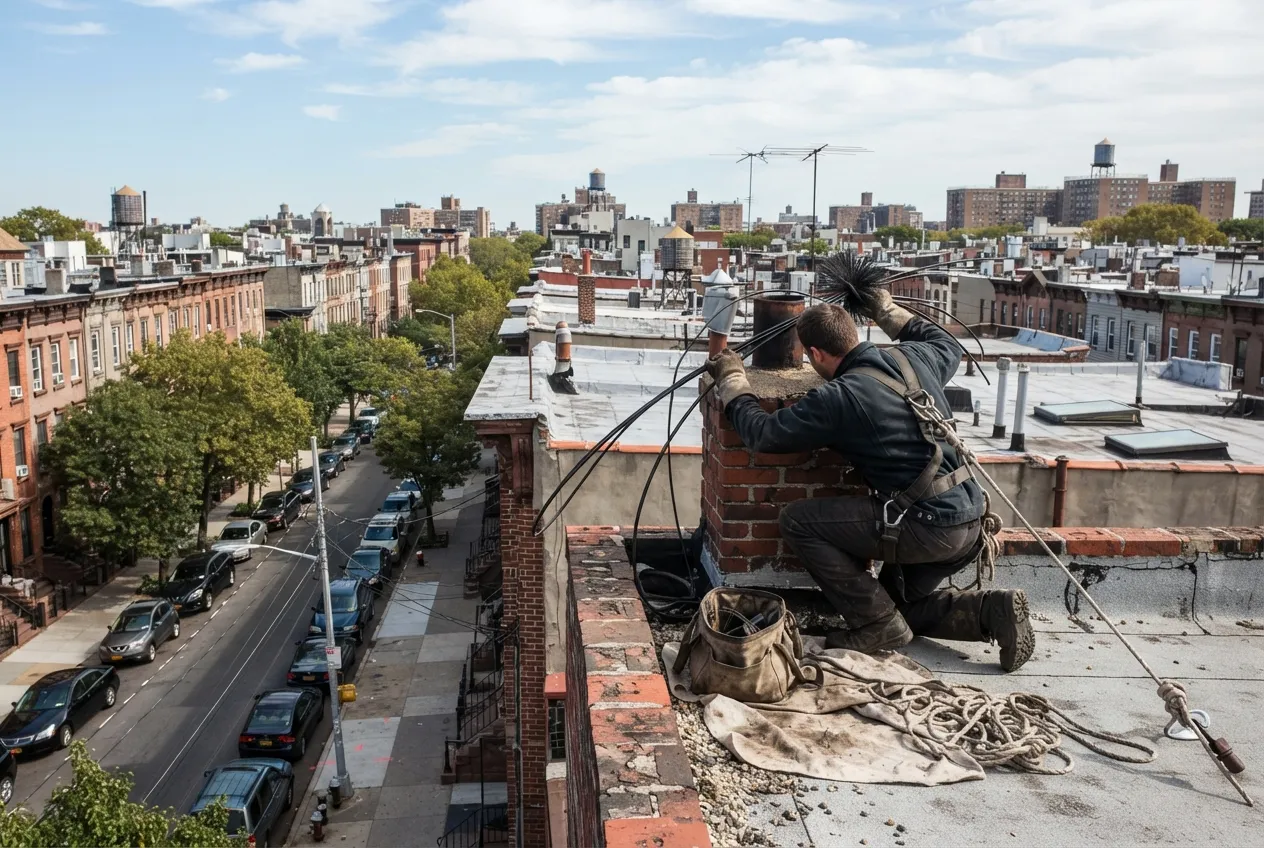
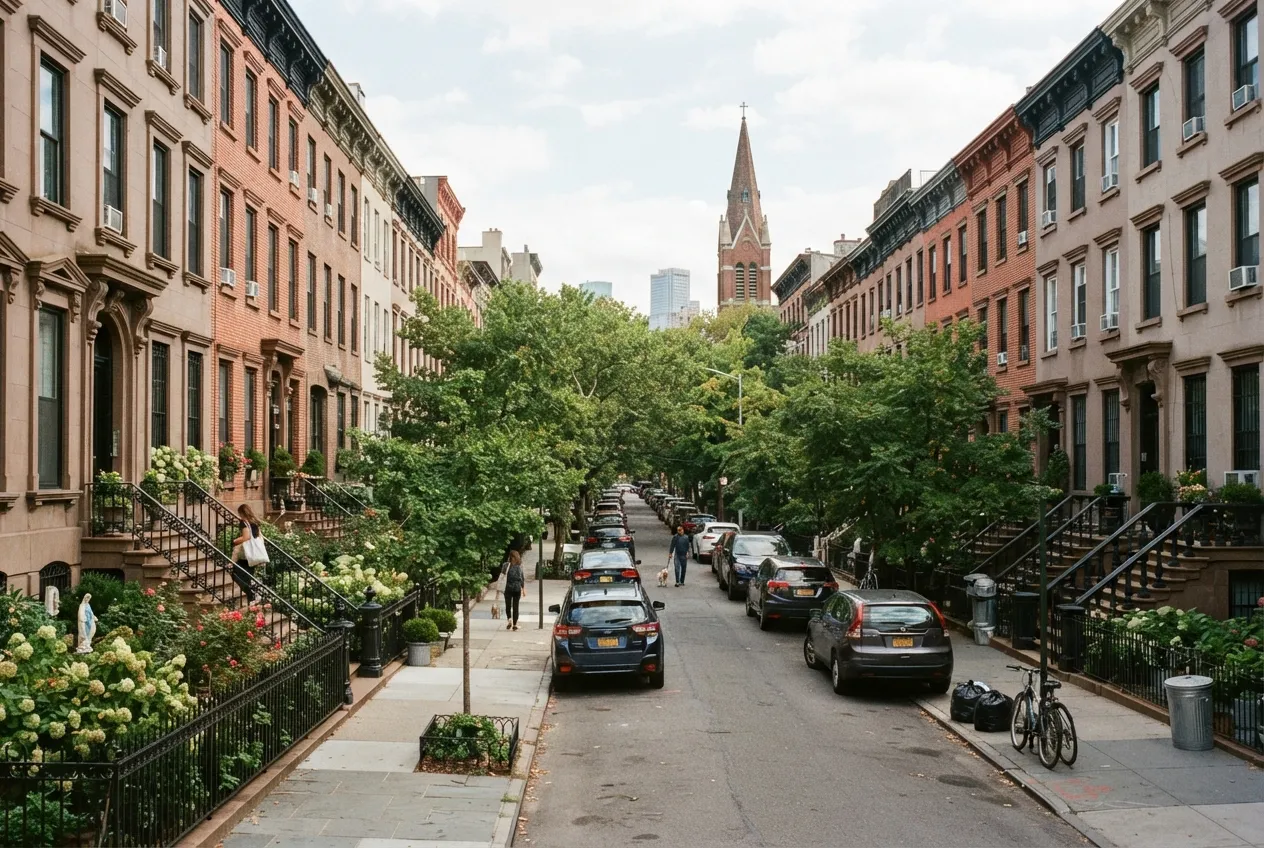
The short answer
Carroll Gardens brownstones and rowhouses often have cracked clay tile flues or unlined brick chimneys, and oil-to-gas boiler conversions in New York City frequently require a new liner. Expert Chimney Sweep inspects the flue, sizes a liner to your appliance, and installs it from the roof.
Many Carroll Gardens homes were built long before modern venting standards, and their chimneys show it. Original clay tile liners crack, mortar joints wear out, and some flues were never lined at all. A properly sized chimney liner protects the masonry, keeps exhaust moving up and out, and lets your boiler, water heater, furnace or fireplace vent the way it was designed to. Expert Chimney Sweep installs liners in brownstones, rowhouses and pre-war apartment buildings throughout ZIP code 11231, about 2 miles west of our office in Clinton Hill.
Why Older Carroll Gardens Chimneys Need Liners
The brownstones and brick rowhouses that line much of the neighborhood typically have tall, narrow masonry chimneys, often built into shared party walls. Over many decades of heating seasons, the original terra cotta flue tiles can crack or shift, and the mortar between them erodes. Some older chimneys have no liner at all, only bare brick.
A damaged or missing liner lets heat, moisture and combustion gases reach the brick and the framing around it. In attached homes, that can affect the house next door too. A new liner creates a continuous, sealed path from the appliance to the top of the chimney.
Oil-to-Gas Conversions in Brooklyn Buildings
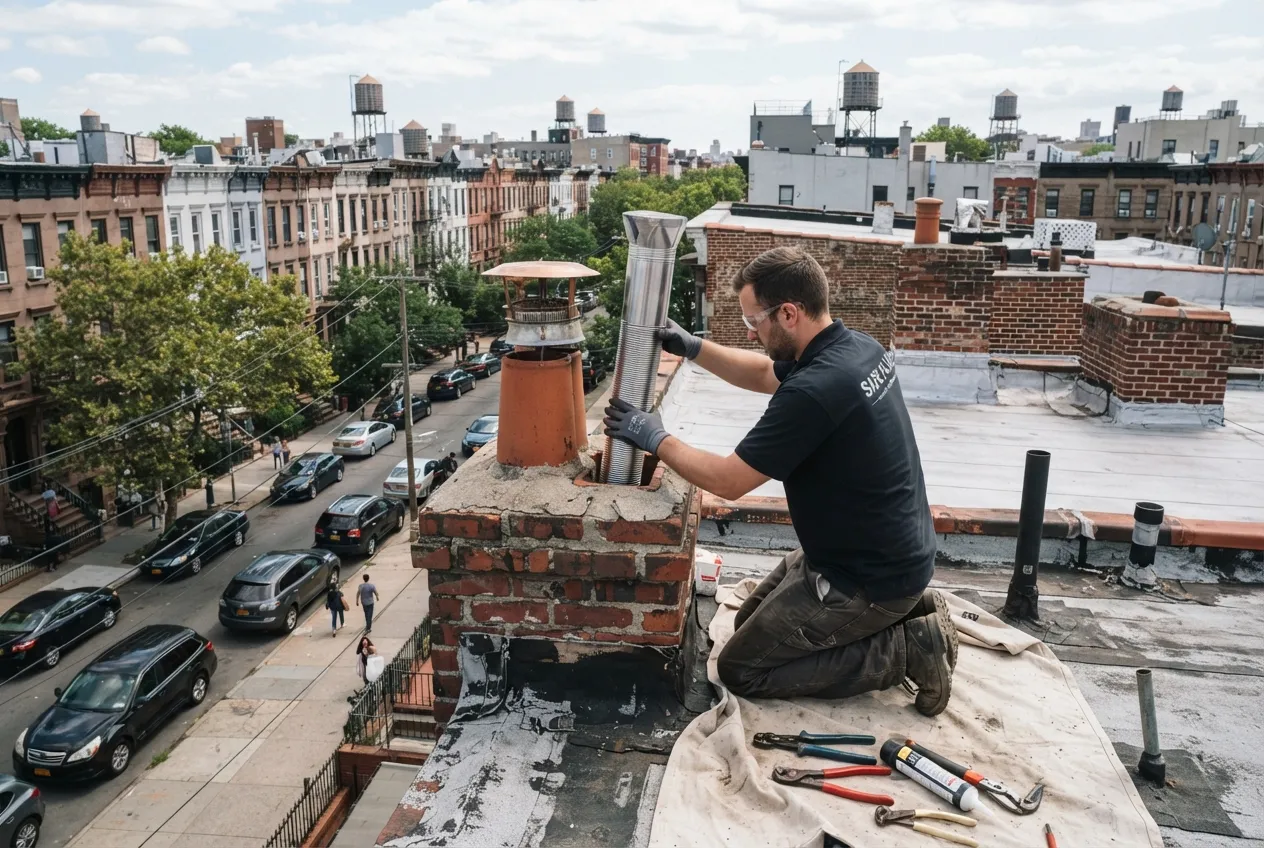
When a New York City building converts its boiler from oil to gas, the chimney has to be evaluated as part of the work. A new liner is often needed, because gas exhaust produces acidic condensate that can corrode a masonry flue that handled oil for years.
If you are planning a conversion in a Carroll Gardens brownstone or small apartment building, bring us in early. We inspect the flue, determine whether it can be reused, and size a liner to the new equipment so your heating contractor is not left waiting on the chimney.
Matching the Liner to Your Appliance
No single liner fits every chimney. The right choice depends on what is venting into the flue, the size and shape of the chimney, and the condition of the masonry.
An oversized flue can let exhaust cool and condense before it leaves the chimney, while an undersized one can restrict draft. We measure before we recommend anything.
- Stainless steel liners for gas and oil boilers, furnaces and water heaters, sized to the appliance's output
- Insulated stainless steel liners for wood-burning fireplaces and stoves, which help draft and reduce heat transfer to the brick
- Liners suited to the acidic condensate produced by gas appliances
- Separate liners when more than one appliance needs its own flue
Time for your annual chimney check?
How a Liner Installation Works
The NFPA 211 standard calls for a Level 2 inspection when a system changes, such as a new appliance or a switch of fuel, and a liner job usually falls into that category. Our certified technicians start there and walk you through each step.
Rooftop access on attached homes can be tight. We work carefully around neighboring roofs and shared chimney stacks.
- Camera inspection of the full flue to document cracks, gaps, blockages and the condition of any existing liner
- Measurement of the flue and review of the appliance specifications
- Cleaning and clearing the flue so the new liner runs without obstruction
- Installation from the roof, with connections made at the top and at the appliance
- A chimney cap to keep out rain, debris and animals
- A final check of draft and connections, with photos of the finished work
Plan Around Heat Season
New York City's heat season runs from October 1 through May 31, when building owners must keep apartments heated to the city's minimum temperatures. If you own a multi-unit building, a liner job that takes the boiler offline is easiest to schedule between June and September. If a problem turns up in winter, we plan the work to keep downtime as short as we can.
Once the liner is in, keep up with yearly inspections. NFPA 211 calls for chimneys, fireplaces and vents to be inspected once a year, which helps catch loose connections, debris or damage early.
Serving Carroll Gardens and Nearby Neighborhoods
We install chimney liners across Carroll Gardens and in nearby Park Slope, Brooklyn Heights, Downtown Brooklyn, DUMBO and Boerum Hill. Whether you have a single-family brownstone or a pre-war apartment building, we explain what we find and what the liner needs to do before any work begins.
More services in Carroll Gardens
- Chimney Sweep in Carroll Gardens
- Chimney Inspection in Carroll Gardens
- Chimney Repair in Carroll Gardens
- Air Duct Cleaning in Carroll Gardens