The short answer
Chimney waterproofing seals the brick, crown and flashing so rain and snow can't soak into the masonry and cause cracking, leaks and interior stains. We inspect first, repair the spots water gets through, then apply a breathable masonry repellent and clean up fully before we leave.
Brick and mortar look solid, but they soak up water like a sponge. In Brooklyn, rain, snow and repeated freeze-thaw cycles drive that moisture deeper into the chimney every winter. Once inside, it cracks mortar joints, flakes the faces off bricks, rusts dampers and stains the ceiling and walls next to the chimney. Chimney waterproofing stops the problem at the source. Our certified technicians inspect the chimney, fix the weak spots that let water in, and apply a vapor-permeable water repellent that keeps rain out while letting trapped moisture escape. The goal is a dry chimney that keeps working safely without damaging the rest of your house. Below is what we look for, what the job includes and how a visit works.
Signs you need it
Water damage in a chimney usually shows up inside the house before anyone notices it on the roof. If you see any of the following, have the chimney looked at before the next wet season makes it worse.
- White, chalky staining on the brick, which means water is moving through the masonry and leaving salts behind as it dries
- Water, small puddles or rust streaks in the firebox or on the damper after a storm
- Brick flakes, crumbled mortar or loose debris landing in the firebox
- A strong smoky or creosote smell on humid or rainy days, when moisture mixes with deposits in the flue
- Stained, bubbling or peeling paint on the ceiling or wall beside the chimney
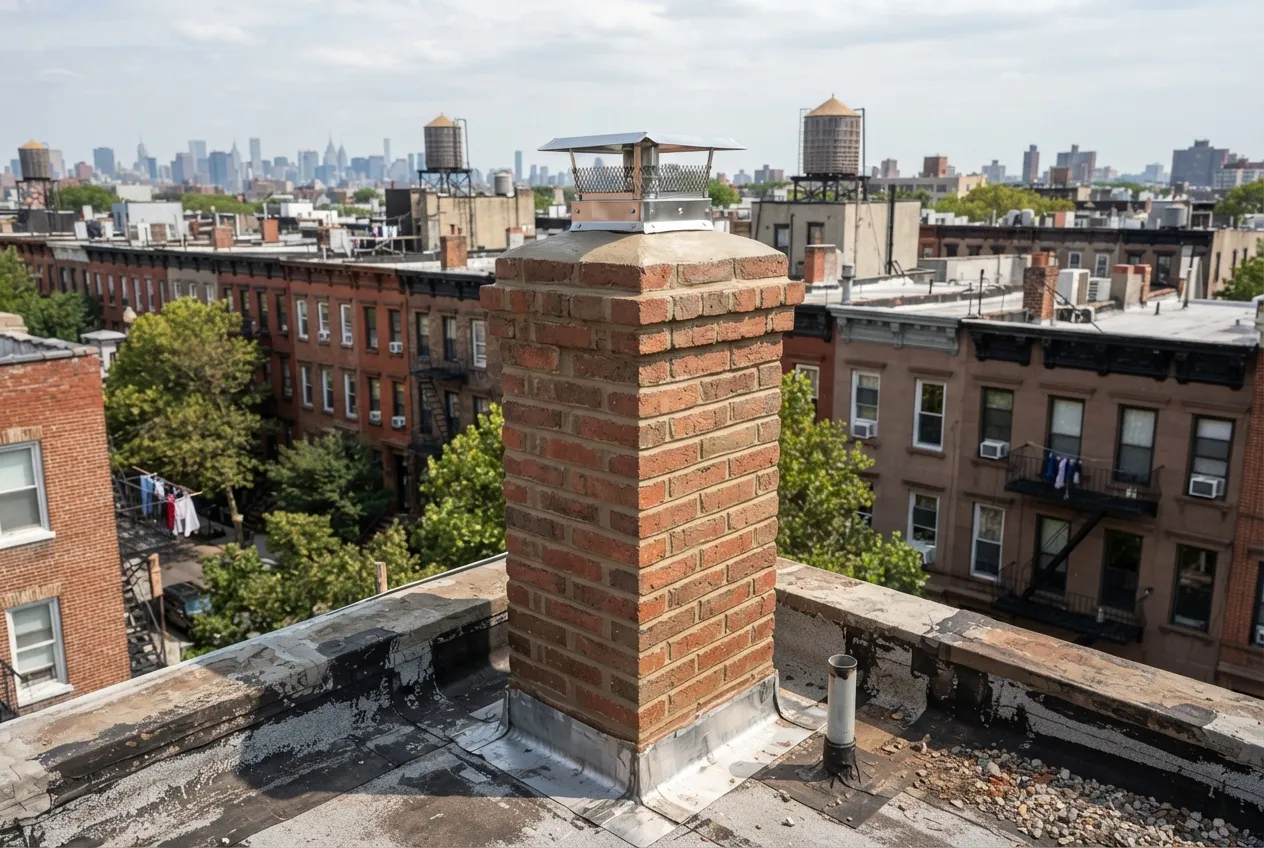
- Brick faces popping off, open mortar joints or a cracked crown you can see from the street
What's included
Waterproofing only works if the chimney is sound underneath. Sealing over cracked mortar or a broken crown just traps the water inside. That is why every waterproofing job starts with an inspection and includes the following:
Larger repairs, such as repointing whole sections of brick, rebuilding a crown or replacing flashing, are quoted separately so you can decide before any of that work starts.
- Visual inspection of the chimney exterior, crown, cap and flashing, plus the firebox and damper inside
- Cleaning the masonry surface so the repellent soaks in evenly
- Checking brick and mortar joints for cracks, gaps and flaking, with photos of what we find
- Sealing hairline cracks in the crown, or recommending a rebuild if it is too far gone
- Checking the flashing where the chimney meets the roof and resealing small gaps
- Confirming a chimney cap is in place to keep rain and animals out of the flue
- Applying a vapor-permeable water repellent made for masonry, never a paint or film that traps moisture
- Photos of the problem areas and the finished work
How our crew works on the roof and in your home
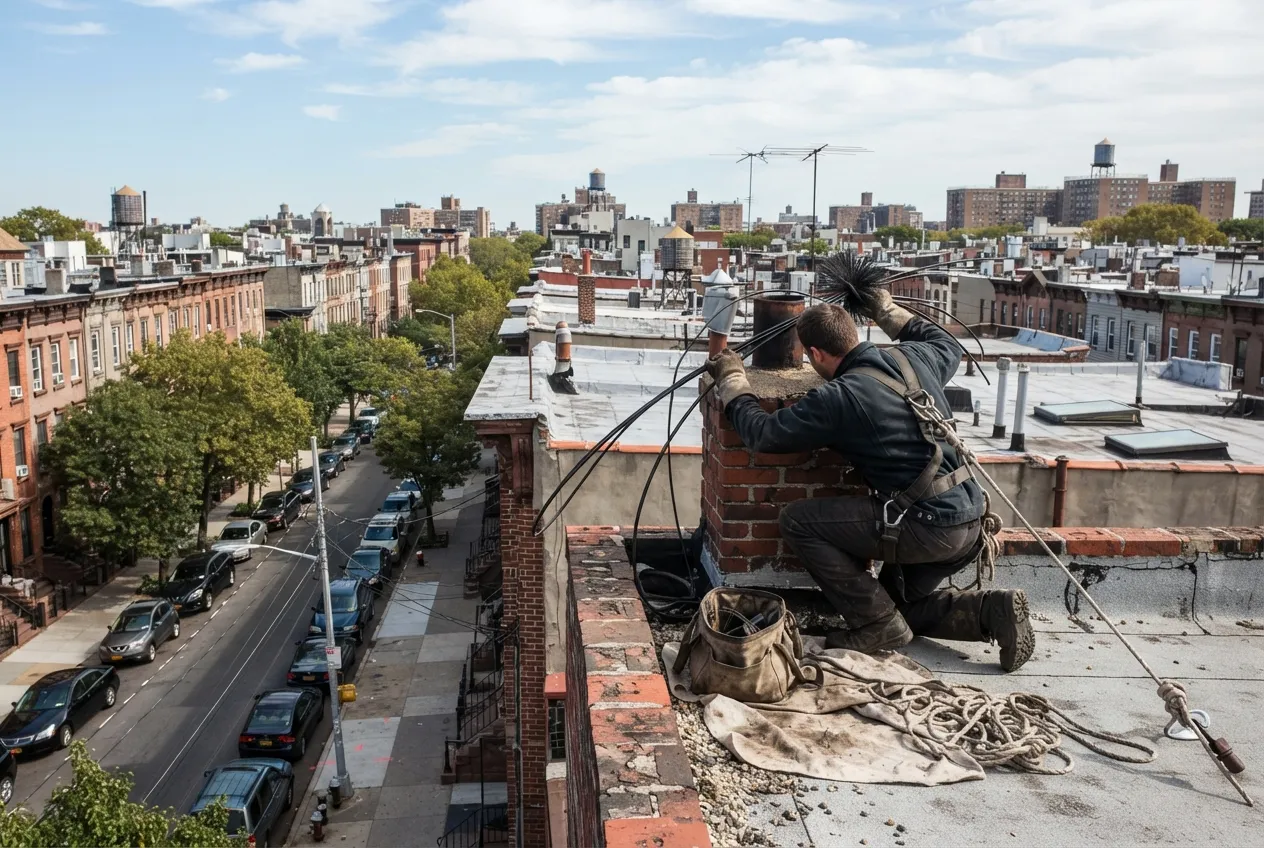
Most of the work happens on the roof. The crew sets up safe access with ladders and fall protection, protects the roofing around the chimney, and works around the stack one side at a time. The repellent goes on with a low-pressure sprayer until the brick is fully saturated, while windows, siding and neighboring surfaces are covered to keep overspray off them.
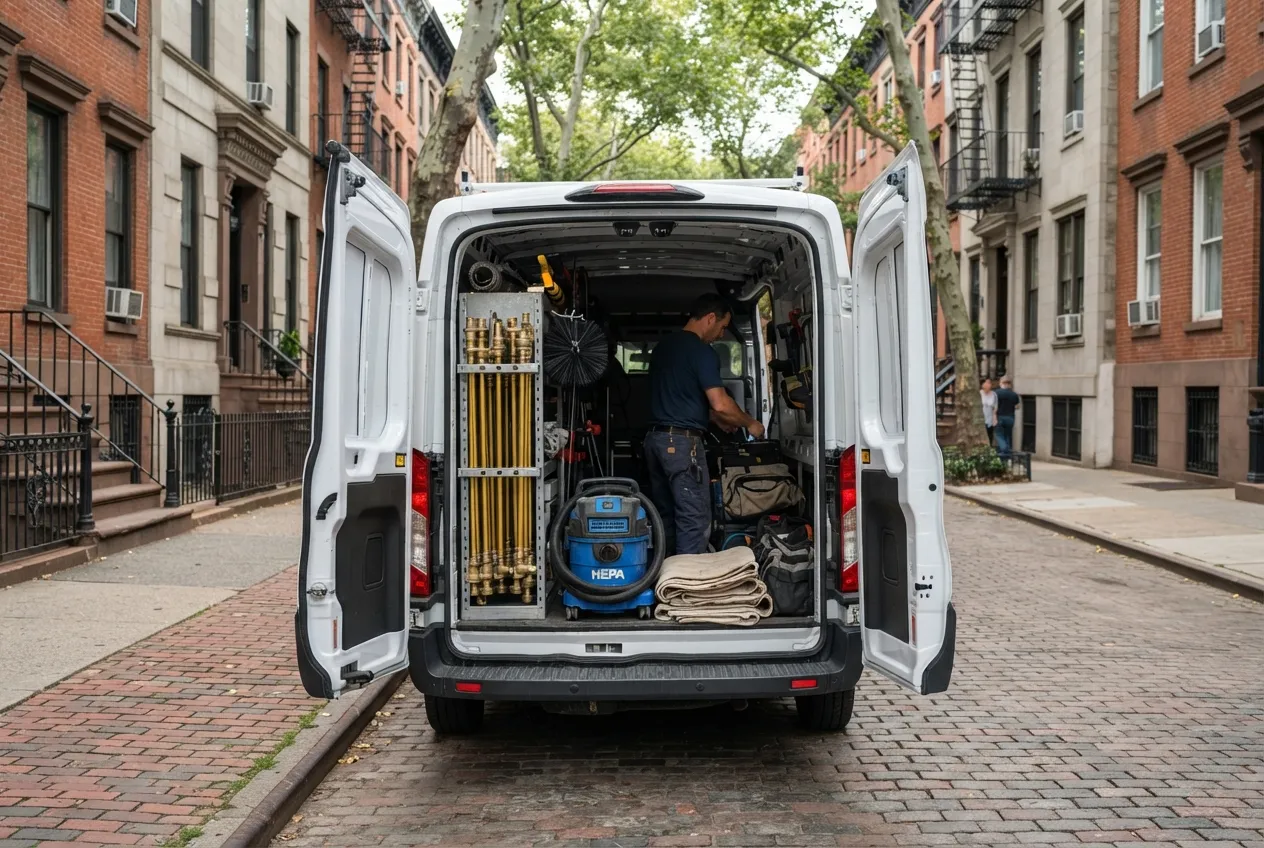
Inside, we lay drop cloths from your door to the fireplace and cover furniture near the hearth. When we need to check the flue for water damage, we run HEPA vacuums at the firebox opening so soot doesn't drift into the room. If heavy buildup is hiding the flue walls, we clear it with rotary brushes first. A camera lets us see cracked flue tiles, failed mortar joints and water tracking down the inside of the chimney without opening any walls.
Repellent needs dry brick and a dry forecast, so we schedule around the weather. Many owners book in late summer or early fall so the chimney is sealed before New York City's heat season starts on October 1 and the fireplace or boiler is in daily use.
Time for your annual chimney check?
The standard we follow
The NFPA 211 standard calls for chimneys, fireplaces and vents to be inspected once a year, and that yearly inspection is the best time to catch water damage early. Chimney professionals use three inspection levels. Level 1 covers a chimney when nothing has changed. Level 2 applies when the system changes, such as a new appliance or a switch of fuel, or when the home is sold. Level 3 is used when a hidden hazard can only be reached by opening part of the chimney or building.
Moisture can also come from inside the flue. When a New York City building converts its boiler from oil to gas, the chimney has to be evaluated as part of the work, and a new liner is often needed because gas exhaust produces acidic condensate that can corrode a masonry flue. Exterior waterproofing does not fix that, so we will tell you if your flue needs attention too.
What affects the price
Every chimney is different, so we price the job after seeing it. You get a written quote before any work begins. The main factors are:
- Chimney height and how hard it is to reach the roof safely
- The size of the chimney and how much brick surface needs treatment
- Condition of the masonry, crown and flashing, and how much repair is needed first
- Fuel type, since gas and oil appliances bring their own moisture and liner concerns
- Flue size and condition, especially if water has already damaged the liner
- How much soot or creosote buildup has to be cleared before the flue can be inspected
- Whether a camera inspection is needed
How a visit works
When you book, tell us what you have noticed: stains, leaks, smells or damaged brick. Photos help. We will set a time on a day with a dry forecast.
On arrival, the technicians protect your floors and furniture, then inspect the chimney from the firebox up and from the roof down. We show you photos of what we found, explain what is letting water in and give you a written quote. If the chimney only needs minor sealing, we can usually waterproof it the same visit. If it needs larger repairs, those come first, and the repellent goes on once the new mortar or crown has cured.
When the work is done, we vacuum the work area, fold up the drop cloths and walk you through the finished photos. After that, a yearly inspection lets us check that the repellent and flashing are still holding up.