
What Chimney and Air Duct Work Costs, and Why
Serving Brooklyn and nearby cities.
- Diagnosis before any repair
- Written price up front
- Written price before we start
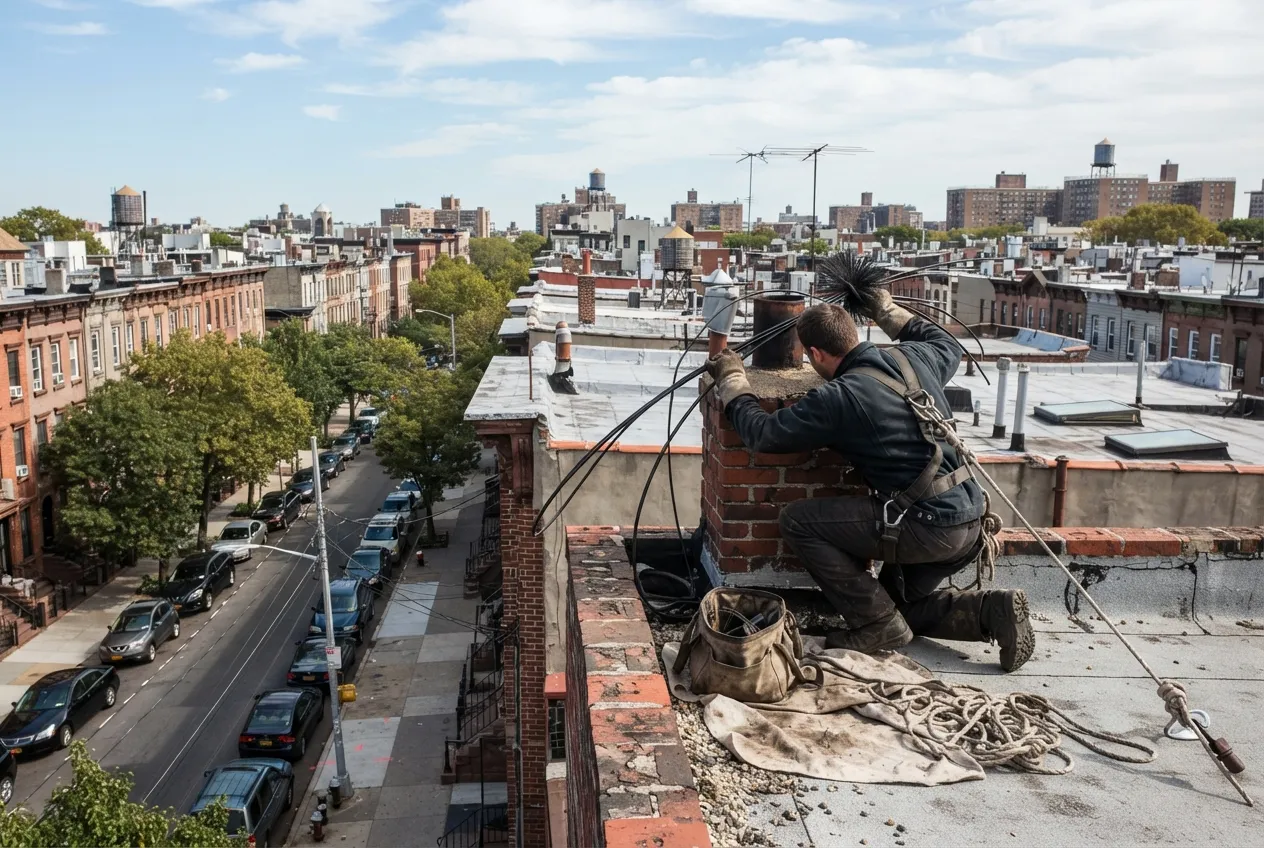
Most people want to know what a chimney sweep or duct cleaning will cost before anything else, and that's a fair question. The honest answer is that the price depends on the chimney, fireplace, or duct system in front of us. A short flue with light soot on a house with easy roof access is a very different job from a tall flue on a brownstone with a steep slate roof and heavy creosote. This page explains what drives the cost of each service we offer, so you know what to expect when we give you a written price.
What affects the price of a chimney sweep
A sweep removes soot and creosote from the flue, smoke chamber, and firebox so the system drafts properly and is less likely to catch fire. The time and equipment it takes vary from house to house.
- Height and roof access: a tall chimney, a steep or slate roof, or a roof we can only reach through a building hatch takes more setup and safety gear.
- Fuel type: wood-burning fireplaces and stoves build up creosote, while oil and gas flues collect different deposits, such as soot and scale from a boiler or furnace.
- Flue size and shape: a large, rectangular, or offset flue needs different brushes and more time than a standard round liner.
- Amount of buildup: light, powdery soot sweeps out easily, but heavy or glazed creosote can take specialized tools and several passes.
- Condition: cracked flue tiles, loose mortar, or debris like nests can slow the work and may need attention before the chimney is safe to use.
Inspections: Level 1 versus Level 2 with a camera
The NFPA 211 standard calls for chimneys, fireplaces, and vents to be inspected once a year. What an inspection involves, and what it costs, depends mostly on which level you need.
A Level 1 inspection is for a chimney that hasn't changed since it was last checked. The technician examines the readily accessible parts of the chimney, fireplace, and flue to confirm they're sound and clear. It's often done along with a sweep.
A Level 2 inspection is called for when the system changes, such as a new appliance or a switch to a different fuel, or when the home is being sold. It includes a camera run through the full length of the flue, so it takes longer and uses more equipment. You get a written report along with photos or video of what we found.
A Level 3 inspection is needed only when a hidden hazard has to be reached by opening part of the chimney or building. We'll explain why before recommending one, and it's priced separately.
Repairs, liners, and masonry work
Repair pricing depends on what's wrong and how hard it is to reach. Replacing a damper, a chimney cap, or a chase cover is a contained job. Repointing mortar, waterproofing masonry, or rebuilding a chimney above the roofline involves more materials, staging, and time on site.
Liner installation depends on the flue's size and shape, how straight it runs, which appliance it serves, and what liner material that appliance needs. In New York City, converting a boiler from oil to gas requires the chimney to be evaluated, and a new liner is often needed because gas exhaust produces acidic condensate that can corrode a masonry flue. If you're planning a conversion, have the chimney looked at early so the liner is part of the plan instead of a surprise.
Timing matters too. The city's heat season runs from the start of October through the end of May, when building owners must keep apartments heated, so boiler and chimney work gets busy in the fall. Scheduling in the warmer months usually gives you more flexibility.
Air duct and dryer vent cleaning
Duct cleaning cost comes down to how many vents and returns the system has, how long and complicated the runs are, how dirty the ducts are, and how easy it is to reach the furnace or air handler. A system with many registers and an air handler in a tight closet takes more time than a compact one.
Apartments and co-ops add their own steps: building approvals, elevator reservations, limited work hours, and protecting shared hallways. We ask about these ahead of time so the price reflects the real job.
Dryer vents depend on the length of the run, the number of bends, and where the vent exits, whether through a wall, the roof, or a shared building shaft. The U.S. Fire Administration identifies failure to clean as the leading factor in home clothes dryer fires, so a long or hard-to-reach vent is worth cleaning thoroughly.
Why we give a written price after seeing the job
We don't quote a flat price over the phone, because we'd either have to pad it to cover unknowns or change it once we arrive. Instead, a certified technician looks at the chimney, ducts, or vent, explains what we see, and gives you a written price before work starts. If we find something during the job that changes the scope, we stop and talk with you first.
You've likely seen very cheap whole-house duct cleaning ads. These offers often cover a quick pass on a few vents. Once the crew is inside, extra charges appear for additional registers, returns, main trunk lines, or chemical treatments. The EPA warns consumers to research the process before responding to very cheap offers and to be careful with chemical treatments. It recommends duct cleaning when there's substantial visible mold, vermin, or excessive dust and debris, and notes that cleaning hasn't been shown to prevent health problems. If your ducts don't need cleaning yet, we'll tell you.
FAQ
Common questions
Can you give me a price over the phone?
We can talk through your situation and explain what usually affects the cost, but we give a firm written price only after a technician sees the chimney, ducts, or vent.
Why does a Level 2 inspection cost more than a Level 1?
A Level 2 inspection includes a camera run through the entire flue and a written report with images, so it takes more time and equipment than a Level 1 visual check.
Does a gas or oil chimney cost less to sweep than a wood-burning one?
Not necessarily. Each fuel leaves different deposits, and the price depends more on access, flue size, and the amount of buildup than on fuel type alone.
Why do apartment and co-op jobs sometimes cost more?
Building approvals, elevator scheduling, restricted work hours, and protecting shared spaces add time and coordination that a single-family house usually doesn't require.
What happens if you find another problem during the job?
We stop, show you what we found, and explain your options. No additional work happens unless you approve it.
Do I need my air ducts cleaned?
Following EPA guidance, cleaning makes sense when there's substantial visible mold, signs of vermin, or excessive dust and debris. If none of those apply, we'll tell you.
Schedule a chimney or vent visit
Tell us what you're noticing and where you are in Brooklyn. We'll set a time, inspect the system, show you what we find, and give you a written price before any work begins.