The short answer
If your fireplace smokes, drafts poorly, lets in cold air, or has cracked or flaking brick in the firebox, it likely needs a damper or firebox repair. Expert Chimney Sweep inspects the full system, shows you what we find, and repairs dampers, firebox masonry and smoke chambers in Brooklyn and nearby areas.
A fireplace that smokes into the room, a damper that won't close, or a firebox with loose and crumbling brick are common problems in Brooklyn homes, especially in older rowhouses and brownstones where the masonry has been through decades of heating seasons. Expert Chimney Sweep repairs fireboxes, smoke chambers and dampers so your fireplace draws properly, seals when it's not in use, and burns safely. Our certified technicians start by finding out why the problem is happening, then explain what they found and what it will take to fix it before any repair work begins.
Signs you need fireplace or damper repair
Most fireplace problems announce themselves gradually. A damper gets harder to move, a little smoke rolls out when a fire starts, or you notice grit on the hearth that wasn't there last month. These signs are worth taking seriously, because a firebox with gaps in the mortar can let heat reach the wood framing around it, and a damper that doesn't seal wastes heat all winter.
If you notice any of the following, it's time to have the fireplace looked at:
- Smoke spilling into the room, or a smoke or creosote smell, especially on humid days
- Poor draft: fires that are hard to start or that die down quickly
- Brick flakes, mortar crumbs or other debris collecting in the firebox
- A damper handle that sticks, won't fully open, or won't fully close
- Cold air or drafts coming down the chimney when the fireplace isn't in use
- White staining on the firebox or face brick, which usually points to moisture moving through the masonry
- Water or damp spots in the firebox after rain
- Scratching, chirping or other animal noises in the chimney
What's included in a fireplace and damper repair visit
Every repair starts with an inspection so we fix the actual cause rather than just the symptom. A damper that won't close might be rusted, warped or blocked by debris, and smoke problems can come from the damper, the smoke chamber or the flue itself. Here's what a typical visit covers:
- Inspection of the firebox, damper, smoke chamber and visible flue
- Testing the damper's opening, closing and seal
- Cleaning and freeing a stuck damper, or replacing a damaged damper plate or assembly
- Installing a top-sealing damper at the chimney crown when a throat damper can't be repaired
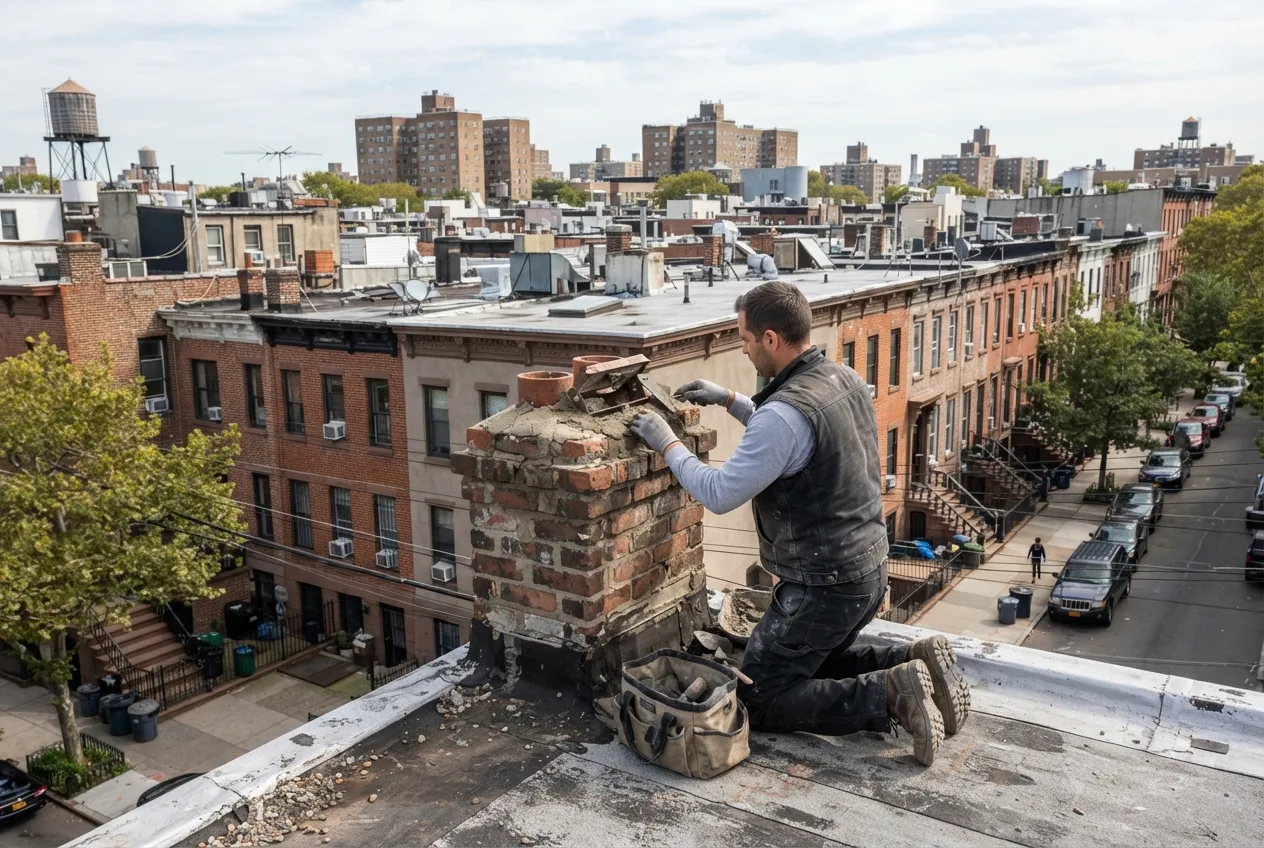
- Repointing cracked or missing mortar joints in the firebox
- Replacing cracked or spalled firebrick
- Checking the smoke chamber for rough, open or deteriorated surfaces
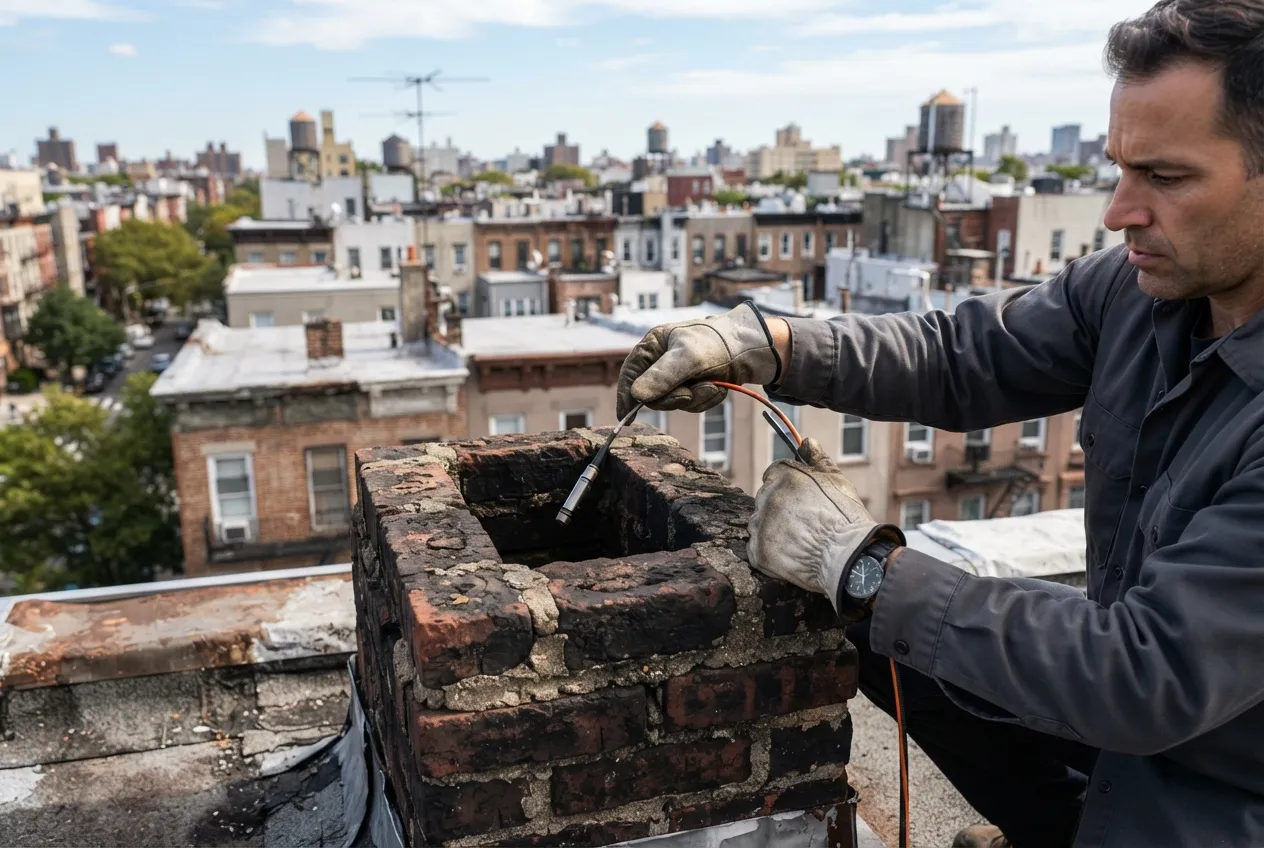
- Camera inspection of the flue where hidden damage is suspected
- Photos and a plain-language explanation of what we found and recommend
How our crew works inside your home and on the roof
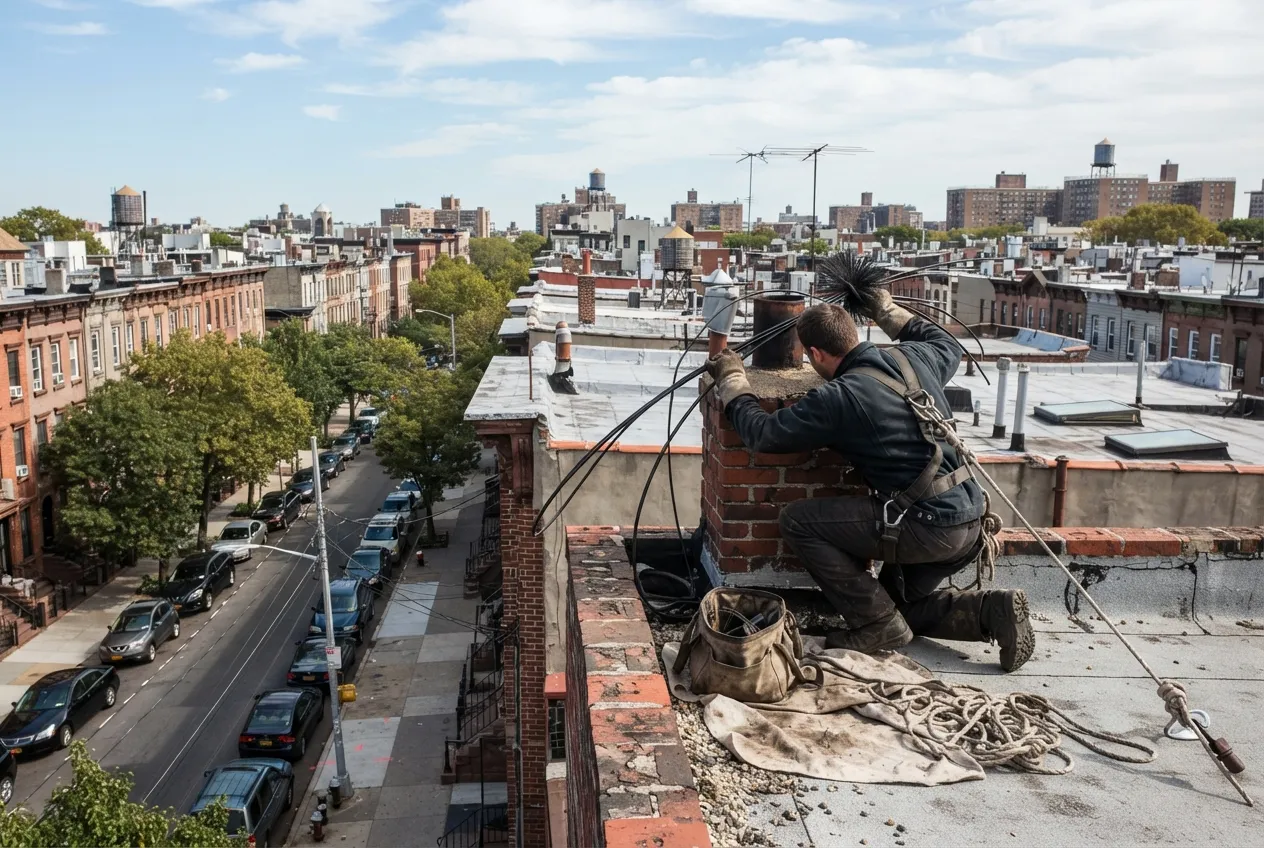
Fireplace work can be messy, so we treat your living space with care. Before starting, the crew lays drop cloths from the door to the hearth and covers the area around the fireplace. A HEPA vacuum runs during cleaning and repair to capture soot, ash and mortar dust before it can settle on your floors and furniture. Where the flue needs cleaning to get a clear look at the damper and smoke chamber, we use rotary brushes sized to the flue.
When we need to see what's happening higher up, a camera inspection lets us check the flue lining and smoke chamber without opening walls. On the roof, the crew checks the crown, cap and top of the flue, since many damper and water problems start there. If we recommend a top-sealing damper, it's mounted on the flue at the top and operated by a cable down to the firebox. When we leave, we vacuum the work area and walk you through how the damper should operate.
Time for your annual chimney check?
The standard we follow
Our inspections and repairs follow the NFPA 211 standard, which calls for chimneys, fireplaces and vents to be inspected once a year. Chimney professionals use three inspection levels. A Level 1 inspection is appropriate when nothing about the system has changed. A Level 2 inspection is called for when the system changes, such as a new appliance or a switch of fuel, or when the home is sold. A Level 3 inspection is used when a hidden hazard has to be reached by opening part of the chimney or building.
Most fireplace and damper repairs begin with a Level 1 or Level 2 inspection. If we find signs of a problem we can't reach, we'll explain why a deeper inspection may be needed before recommending it.
What affects the cost of fireplace and damper repair
Every fireplace is different, so we quote after seeing the system. The main factors are:
- Chimney height and how easy the roof is to reach safely
- Fuel type: wood-burning, gas logs or a converted fireplace
- Flue size and the condition of the liner and smoke chamber
- How much soot and creosote buildup has to be cleaned before repairs
- Whether the existing damper can be repaired or needs replacing, and which type fits
- How much firebox brick and mortar needs repair
- Whether a camera inspection or additional repair is needed
How a visit works
When you contact us, we'll ask what you're noticing and how the fireplace is used so the crew arrives prepared. On the day of the visit, the technicians protect the work area, inspect the system, and show you photos of what they find. You'll get a clear explanation of the problem and the recommended repair before any work starts.
Simple fixes, like freeing a stuck damper or minor mortar repair, can often be handled during the same visit. Larger jobs, such as replacing firebrick or installing a top-sealing damper, may be scheduled for a follow-up visit. Once the work is done, we clean up and show you how to use the damper properly.