The short answer
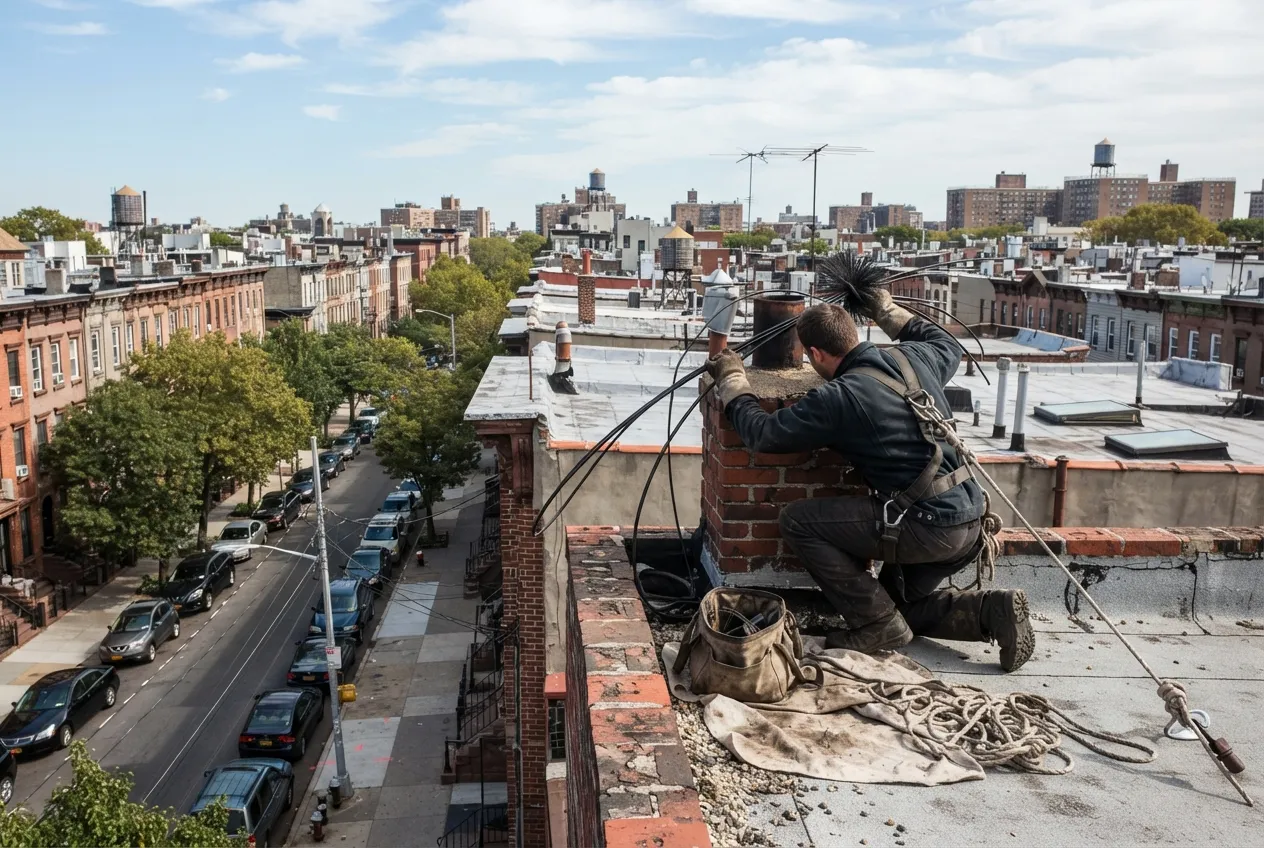
Clinton Hill chimneys should be inspected once a year, as the NFPA 211 standard calls for, and more closely when you change fuel, add an appliance or sell the home. Our certified technicians work out of our Clinton Hill office and match the inspection level to your building and what has changed in it.
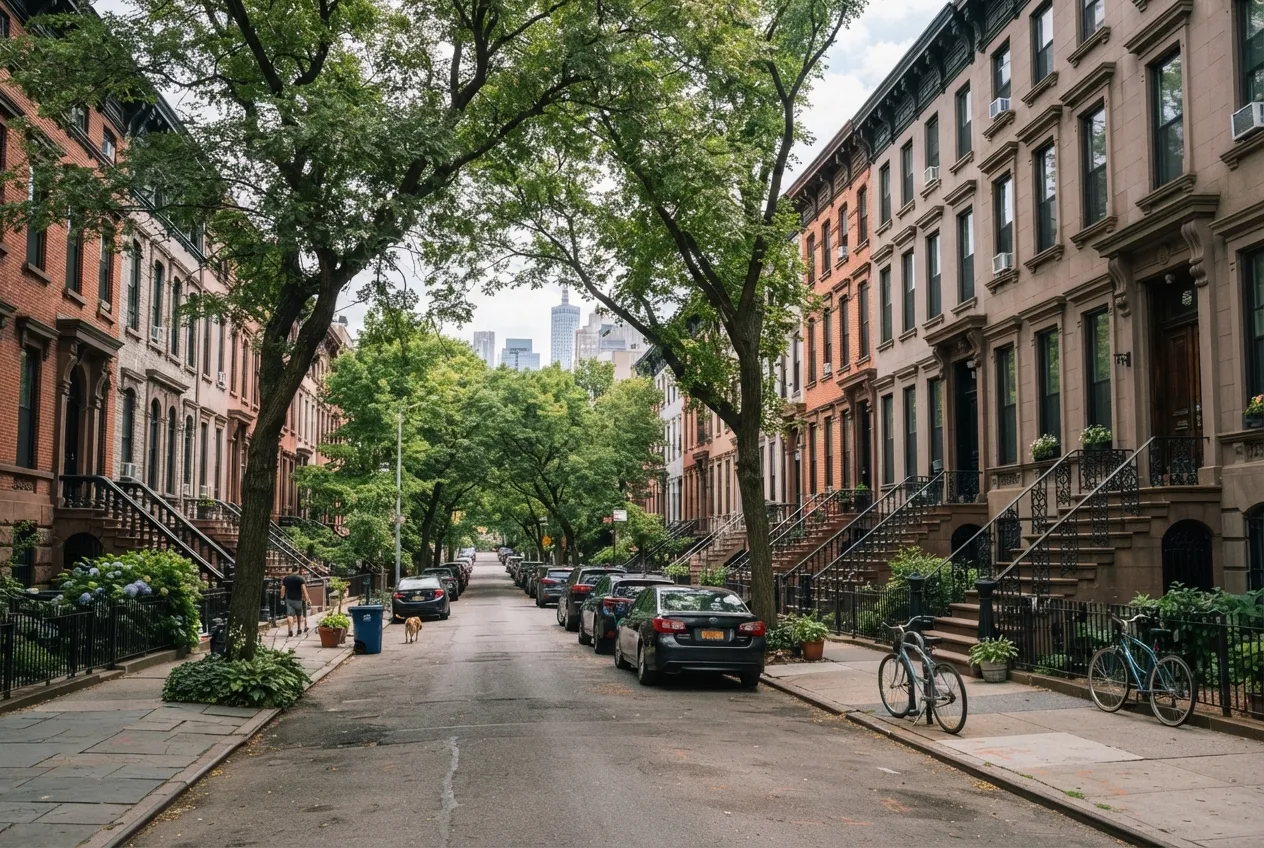
Clinton Hill has brownstones, rowhouses, pre-war apartment buildings and a few detached homes. Many have masonry chimneys that have vented coal, oil, gas, wood or some mix of these over the years. Each change leaves its mark inside the flue. Mortar wears, liners crack, and old fireplaces get closed off and forgotten. A chimney inspection shows you what condition the system is in before you light a fire, run a boiler through another winter, or buy or sell a building. Our office is at 419 Waverly Ave, right here in Clinton Hill, so neighborhood chimneys are the ones we look at most often.
Why yearly inspections matter for Clinton Hill homes
The NFPA 211 standard calls for chimneys, fireplaces and vents to be inspected once a year. That matters here because many neighborhood chimneys are old masonry stacks that have served more than one heating system. A flue built for one appliance may not be the right size or material for the one connected to it now.
Brownstones and rowhouses often have several flues in one shared stack. Some serve the boiler or water heater, some serve fireplaces on upper floors, and some have been abandoned. In attached homes, cracks or blockages can affect more than one living space. A yearly inspection confirms each flue is clear, sound and connected to what you think it is.
Which inspection level do you need?
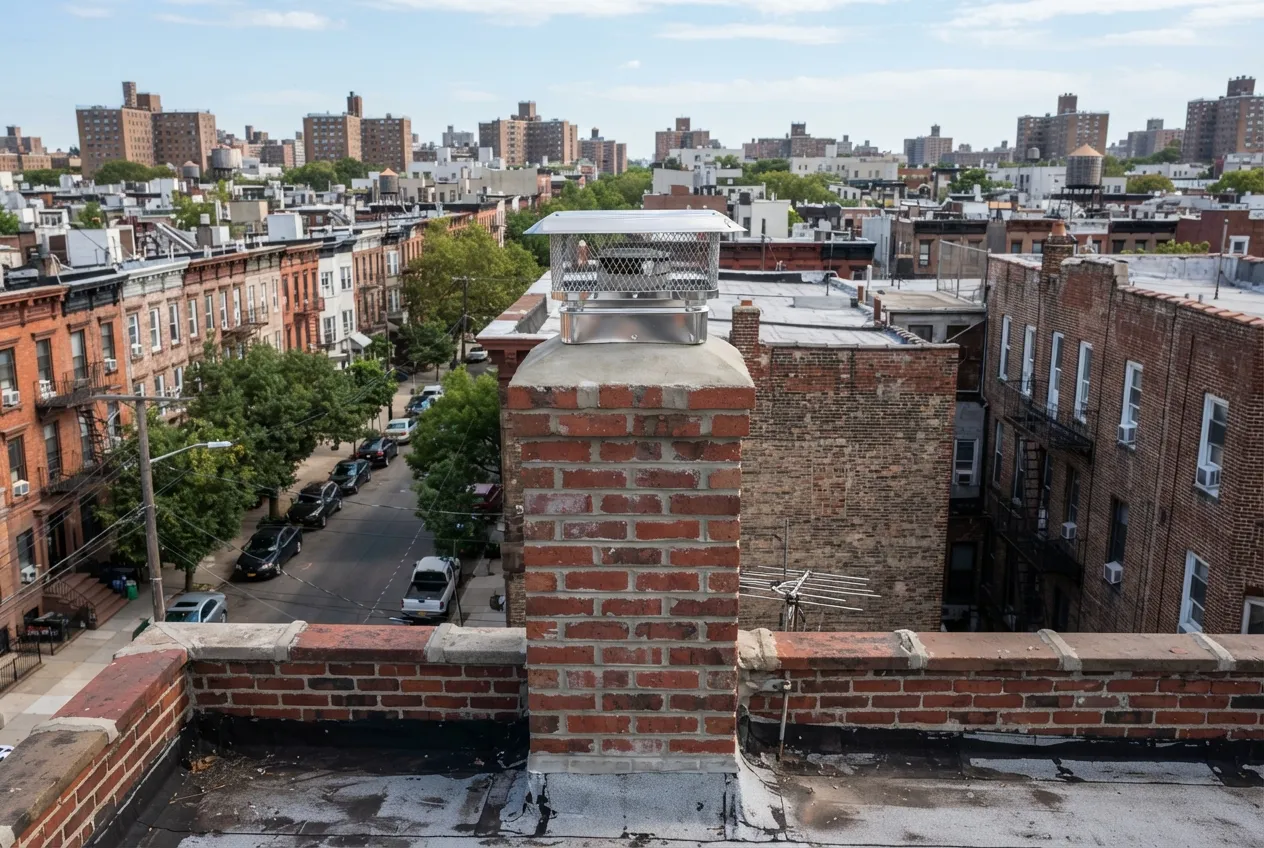
Chimney professionals use three inspection levels. We recommend the one that fits your situation, not the most extensive one by default.
- Level 1: For a chimney you have been using without changes. We check the readily accessible parts of the chimney, firebox, damper and connections, and look for blockages and combustible deposits.
- Level 2: For when something changes, such as a new boiler, water heater or insert, a switch of fuel, or the sale of the home. It includes a camera inspection of the flue's interior and a look at accessible areas like the attic, basement and roof.
- Level 3: For when a hidden hazard is suspected and the only way to reach it is to open part of the chimney or building. We recommend this only when earlier findings point to it.
Oil-to-gas conversions and chimney liners
Many Brooklyn buildings have moved from oil heat to gas. When a New York City building converts its boiler from oil to gas, the chimney has to be evaluated as part of the work. Gas exhaust produces acidic condensate that can corrode a masonry flue, so a new liner is often needed.
If you are planning a conversion, or one was done before you owned the building, an inspection shows whether the flue has a suitable liner and whether there is existing damage. We explain what we find in plain terms so you can plan the next step with your heating contractor.
Time for your annual chimney check?
What our technicians look at
Our certified technicians check the parts of the system that tend to cause trouble in older Clinton Hill buildings:
- Flue liners for cracks, gaps, missing sections and corrosion
- Creosote and soot buildup in fireplace flues
- Blockages from nests, fallen masonry or debris
- Damper operation and firebox condition
- Connector pipes from boilers and water heaters
- Crown, cap, flashing and exterior brick and mortar where accessible
- Signs of water getting into the chimney or the walls around it
Timing your inspection around heat season
New York City's heat season runs from October 1 through May 31. During that time, building owners must keep apartments heated to the city's minimum temperatures. If you own a multi-unit building, finding a flue problem in the middle of winter can leave you choosing between repairs and keeping tenants warm. Late spring and summer are good times to inspect, because any needed repairs can be finished before October.
Homeowners who use a fireplace benefit from the same timing. You will know the chimney is ready before the first cold night.
From our Clinton Hill office we also serve Fort Greene, Prospect Heights, South Williamsburg, Downtown Brooklyn and DUMBO. Homes there are much like the ones here: masonry chimneys, shared stacks and heating systems that have changed over time.
More services in Clinton Hill
- Chimney Sweep in Clinton Hill
- Chimney Repair in Clinton Hill
- Air Duct Cleaning in Clinton Hill
- Chimney Liner Installation in Clinton Hill