The short answer
A chimney inspection in South Williamsburg checks the flue, liner, masonry, and appliance connections so you know whether your fireplace or heating system can vent safely. The NFPA 211 standard calls for an inspection once a year. You also need a more detailed inspection when you change appliances or fuel, or when you buy or sell a home.
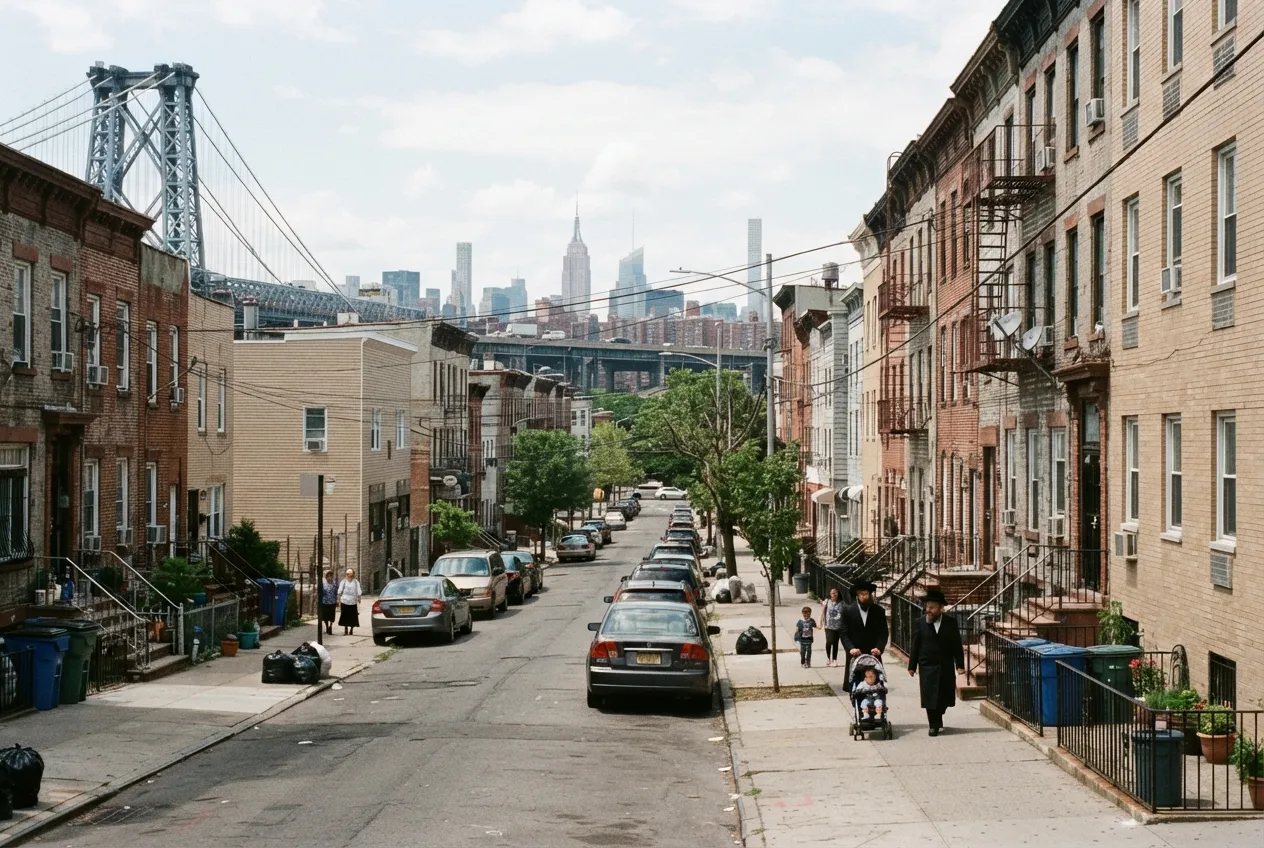
Housing in South Williamsburg ranges from older brick rowhouses and walk-ups to pre-war apartment buildings and newer construction. Many of these buildings have a masonry chimney that has vented a fireplace, a boiler, a water heater, or all three for decades. A chimney inspection tells you whether that system is safe to use now and what needs attention before it becomes a bigger problem. Expert Chimney Sweep sends certified technicians from our Clinton Hill office, about a mile south, to homes and buildings throughout ZIP code 11249.
What We Check During a Chimney Inspection
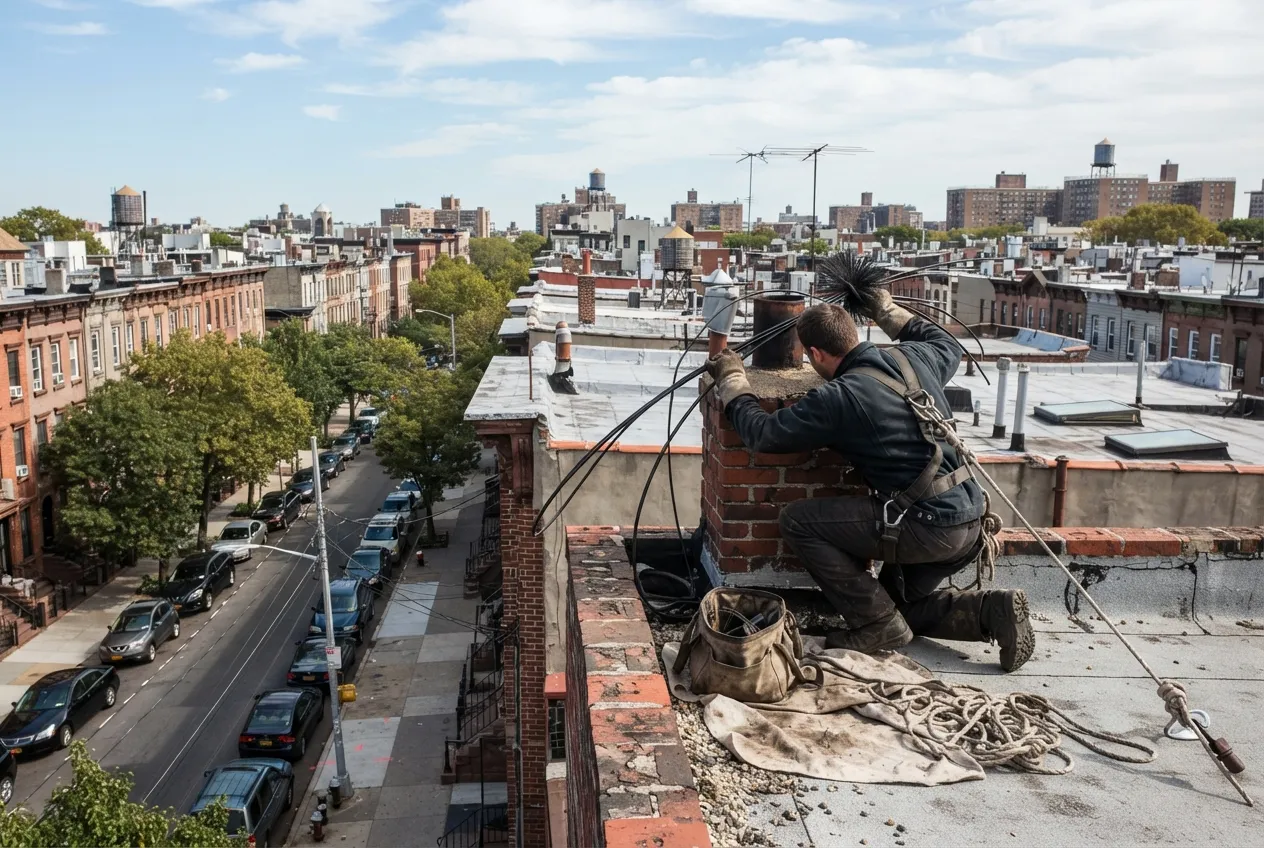
We look at the chimney as a whole system, from the cap at the top to the appliance or fireplace at the bottom. In older brick buildings, problems often build slowly. Mortar washes out, a crown cracks, or a clay liner shifts. None of this is obvious from inside the apartment.
If a boiler or water heater vents into the chimney, we check that connection as carefully as the flue itself. Poor venting can push exhaust back into the living space instead of carrying it out.
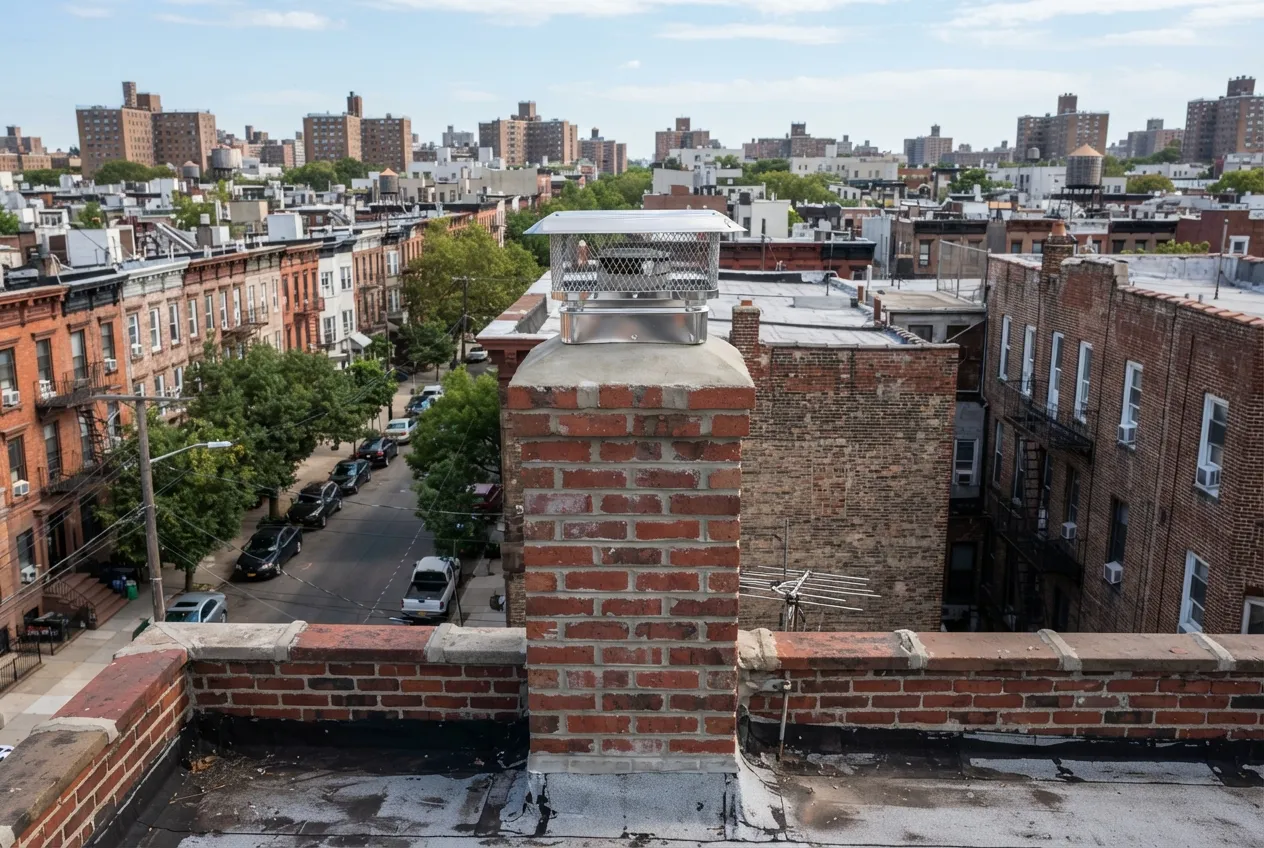
- Chimney cap, crown, and flashing where the chimney meets the roof
- Exterior brick and mortar joints for cracks, spalling, or gaps
- Flue liner condition, including cracks, missing sections, or corrosion
- Creosote and soot buildup in wood-burning fireplaces
- Blockages from debris, nests, or fallen masonry
- Damper, smoke chamber, and firebox in working fireplaces
- Connector pipes and draft from boilers and water heaters
Which Inspection Level Your Building Needs
The NFPA 211 standard calls for chimneys, fireplaces, and vents to be inspected once a year. Chimney professionals use three inspection levels, and the right one depends on what has happened since the last inspection.
When you call, tell us about recent work or a pending sale, and we'll recommend a level. We won't push you into a deeper inspection the situation doesn't call for.
- Level 1: For a chimney that's in regular use when nothing about the system has changed. It covers the readily accessible parts of the chimney and appliance.
- Level 2: When the system changes, such as a new boiler, a new stove, or a switch of fuel, or when the home is sold. It usually includes a camera scan of the flue interior.
- Level 3: When a suspected hidden hazard can only be reached by opening part of the chimney or the building, such as a wall or chase.
Oil-to-Gas Conversions and Flue Liners
Some buildings in South Williamsburg still have oil boilers, and owners often consider converting to gas. When a New York City building converts its boiler from oil to gas, the chimney has to be evaluated as part of the work.
A new liner is often needed. Gas exhaust produces acidic condensate that can corrode a masonry flue that handled oil exhaust without trouble for years. During a conversion inspection, we check whether the existing flue can handle the new appliance. If it can't, we explain the liner options so you can plan the conversion with your heating contractor.
Time for your annual chimney check?
Scheduling Around Heat Season
New York City's heat season runs from October 1 through May 31. During those months, building owners must keep apartments heated to the city's minimum temperatures. If a chimney problem forces a boiler shutdown in January, tenants lose heat and the owner has an urgent problem.
For that reason, we suggest that owners of apartment buildings and multi-family rowhouses schedule inspections in late spring or summer. That leaves time to do any liner, masonry, or cap repairs before the boiler is running every day. Homeowners with wood-burning fireplaces benefit from the same timing, since the first fire of the season is not when you want to find a blocked flue.
What Happens After the Inspection
After the inspection, we walk you through what we found in plain language. We point out which issues are safety concerns and which can wait. You get a written summary of the findings, along with photos or camera images when we scanned the flue, so you have a record for your own files, a buyer, or your heating contractor.
If cleaning or repair is needed, we explain the options and let you decide. We also serve nearby Clinton Hill, Fort Greene, Bedford-Stuyvesant, Downtown Brooklyn, and DUMBO, so owners with properties in more than one neighborhood can schedule inspections together.
More services in South Williamsburg
- Chimney Sweep in South Williamsburg
- Chimney Repair in South Williamsburg
- Air Duct Cleaning in South Williamsburg
- Chimney Liner Installation in South Williamsburg