The short answer
Yes, Park Slope chimneys should be inspected once a year, as the NFPA 211 standard calls for. That applies whether you burn wood in a brownstone fireplace or vent a gas boiler through an old masonry flue. Book a deeper Level 2 inspection when you change appliances or fuel, or when you buy or sell a home.
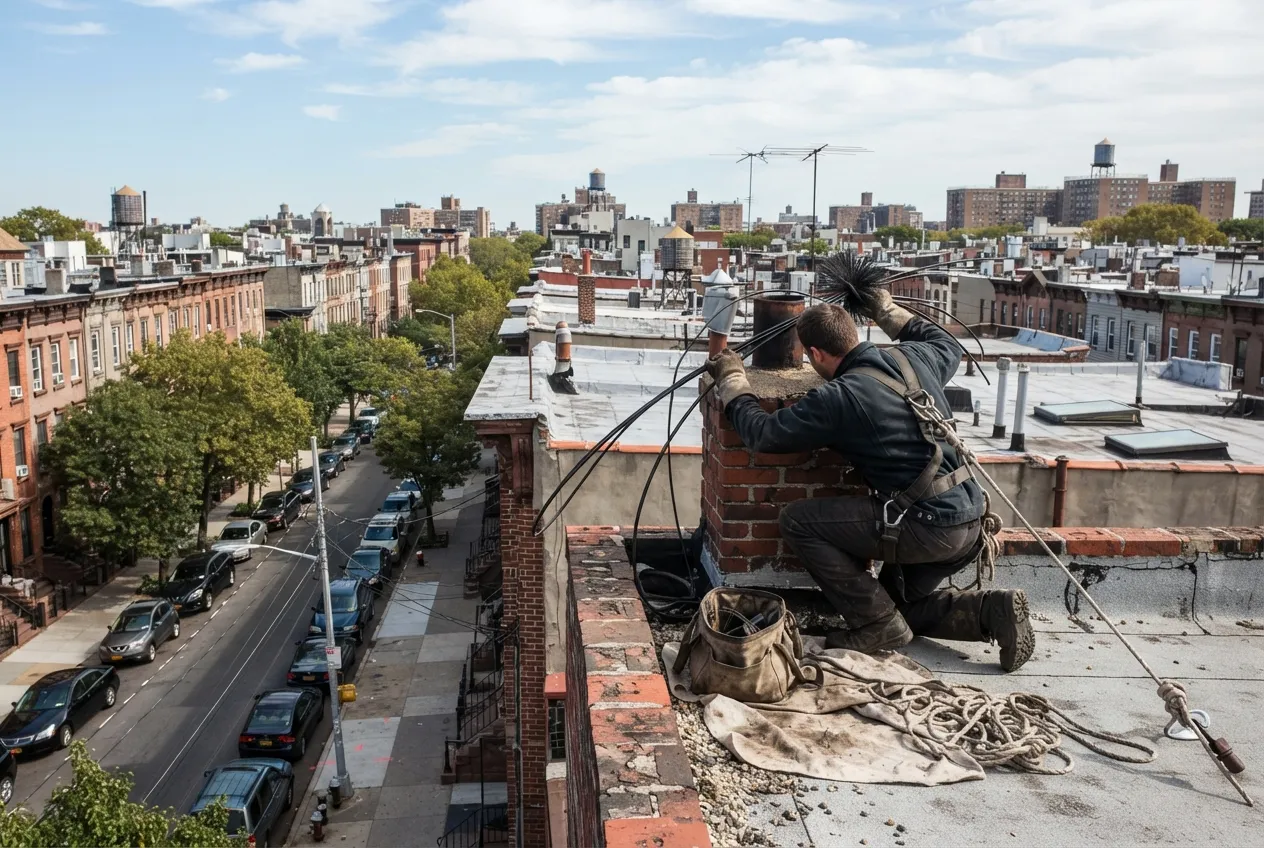
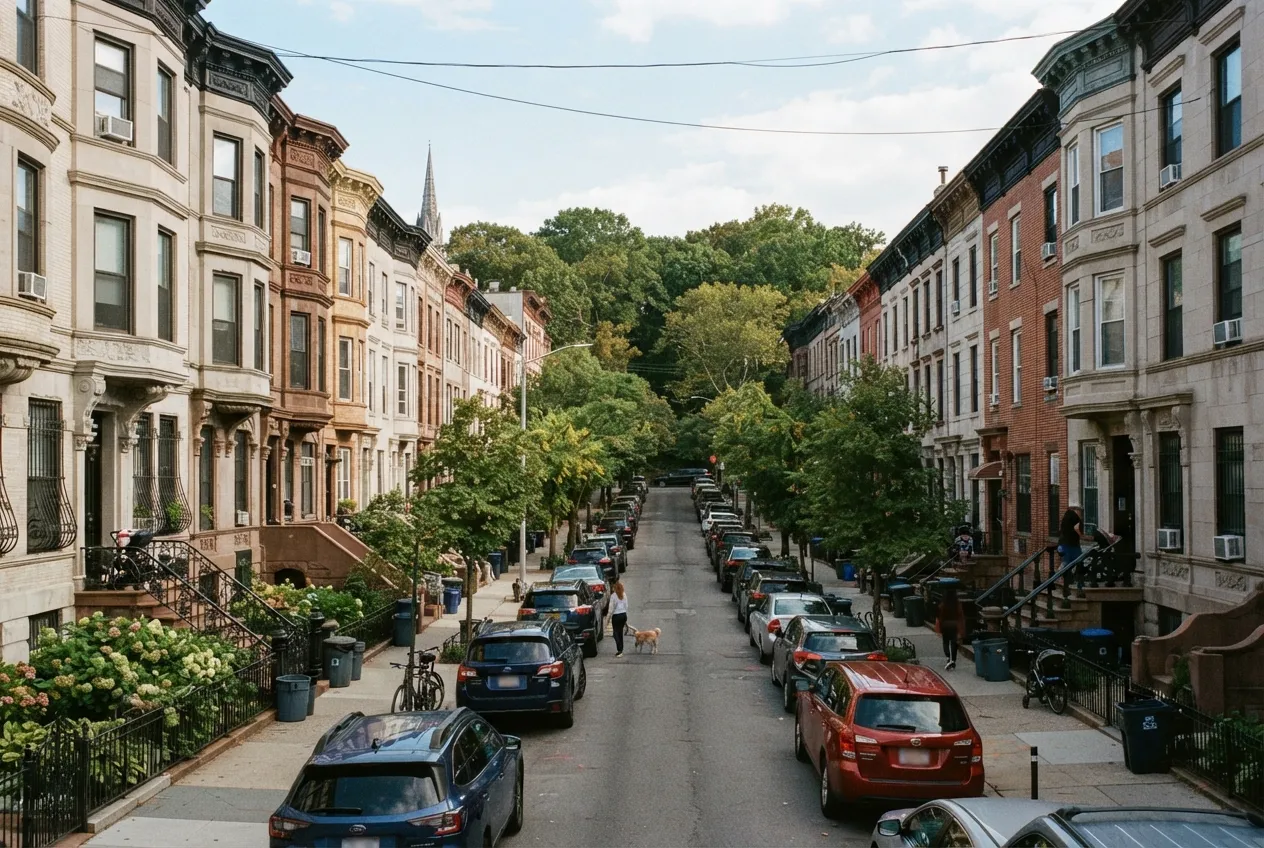
Many Park Slope brownstones and rowhouses have chimneys that have outlived several heating systems. A single masonry stack may have vented coal, then oil, then gas, and each change leaves its mark inside the flue. From the street, the brick can look fine while the liner, mortar joints or smoke chamber tell a different story. A chimney inspection shows you the actual condition of the system so you can use your fireplace or run your boiler with confidence. Our certified technicians work out of our Clinton Hill office, about a mile from Park Slope. We inspect fireplaces, boiler and furnace flues, and vents in homes across ZIP code 11217.
Why Older Park Slope Chimneys Need a Yearly Look
The NFPA 211 standard calls for chimneys, fireplaces and vents to be inspected once a year. That schedule matters even more in a neighborhood built mostly of older masonry. In a typical brownstone or rowhouse, several flues often run side by side in one stack. One may serve a parlor-floor fireplace, another a bedroom fireplace that hasn't been used in decades, and another the boiler in the cellar. Over time, mortar between flues can deteriorate, which lets smoke or exhaust move where it shouldn't.
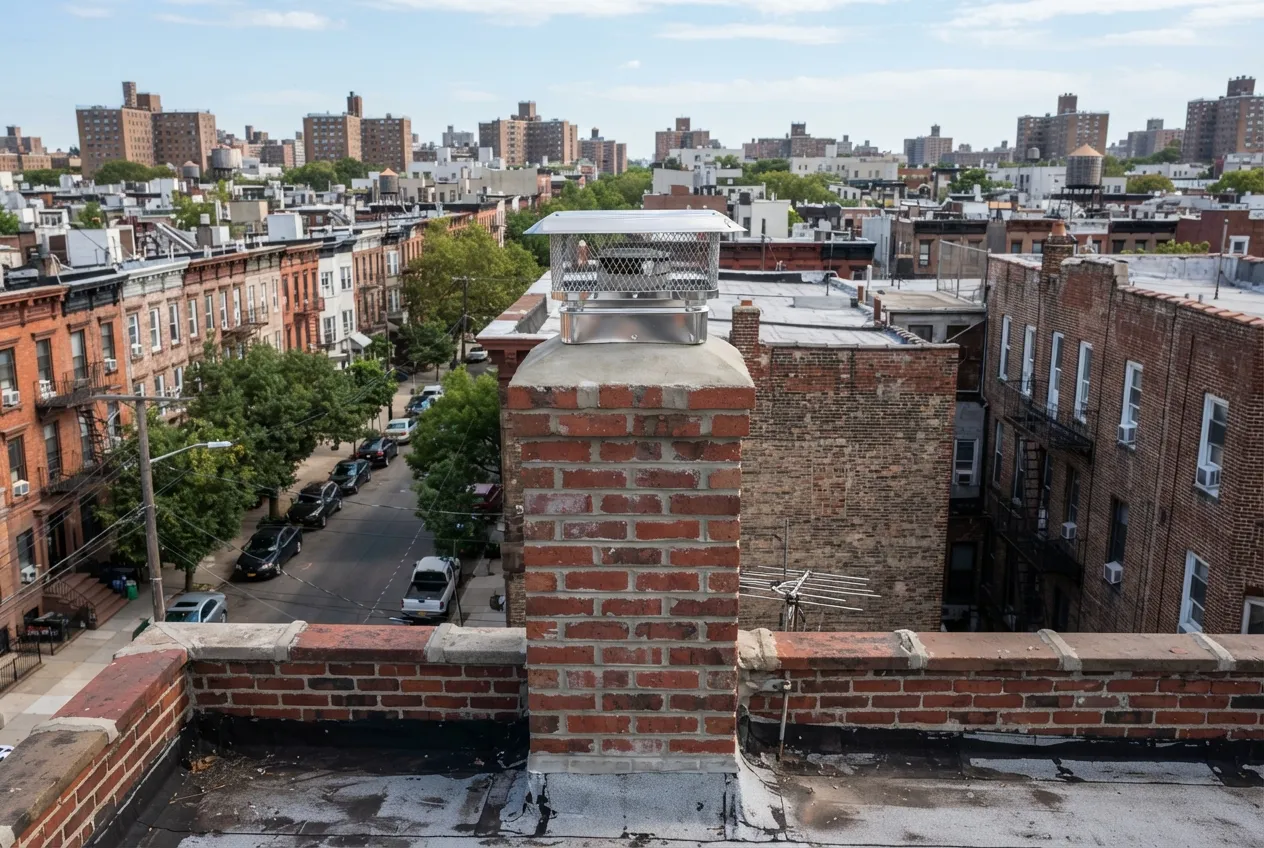
Attached homes also share walls and rooflines with their neighbors. Crown cracks, loose flashing and failing caps can let water into the masonry. That damage often shows up first as stains or crumbling plaster inside, sometimes far from the fireplace itself. A yearly inspection catches these problems while they are still small repairs.
Choosing the Right Inspection Level
Chimney professionals use three inspection levels. We'll recommend the one that fits your situation and explain why before any work begins.
- Level 1: For a chimney you use the same way as last year, with no changes to the appliance or fuel. We check the accessible parts of the chimney, the firebox and the connections.
- Level 2: For when something changes, such as a new boiler, a new insert or a switch of fuel. It's also the right choice when a home is being bought or sold, which is common with Park Slope brownstones and co-op buildings. It includes a closer look at the full length of the flue, usually with a camera.
- Level 3: Only when a hidden hazard has to be reached by opening part of the chimney or the building. It is not routine, and we'll tell you plainly if we think it's warranted.
Converting a Boiler from Oil to Gas
Many Park Slope homes and small apartment buildings have converted, or are planning to convert, their heating from oil to gas. When a New York City building makes that switch, the chimney has to be evaluated as part of the work. A new liner is often needed. Gas exhaust produces acidic condensate, and over time that condensate can corrode a masonry flue that handled oil exhaust for years without trouble.
If you're planning a conversion, schedule the chimney inspection early. That gives your heating contractor clear information about the flue before the new equipment goes in, rather than a surprise partway through the job.
Time for your annual chimney check?
Timing Your Inspection Around Heat Season
New York City's heat season runs from October 1 through May 31. During those months, building owners must keep apartments heated to the city's minimum temperatures. For owners of brownstones with rental units and for small buildings, a chimney problem in January is more than an inconvenience. It can leave tenants without heat while repairs wait.
Late summer and early fall are good times to inspect, before the boiler runs full-time and before you light the first fire. If we find something that needs repair, there's time to handle it before the cold sets in.
What We Check During a Visit
Every inspection covers the parts of the system that matter most in older Brooklyn masonry. Afterward, we walk you through what we found, in plain terms.
- Firebox, damper and smoke chamber condition
- Flue liner cracks, gaps, missing sections or corrosion
- Creosote and soot buildup in wood-burning flues
- Boiler and water heater connectors and how they meet the chimney
- Crown, cap, flashing and exterior brick and mortar where accessible
- Signs of water entry, animal nesting or blockages
More services in Park Slope
- Chimney Sweep in Park Slope
- Chimney Repair in Park Slope
- Air Duct Cleaning in Park Slope
- Chimney Liner Installation in Park Slope