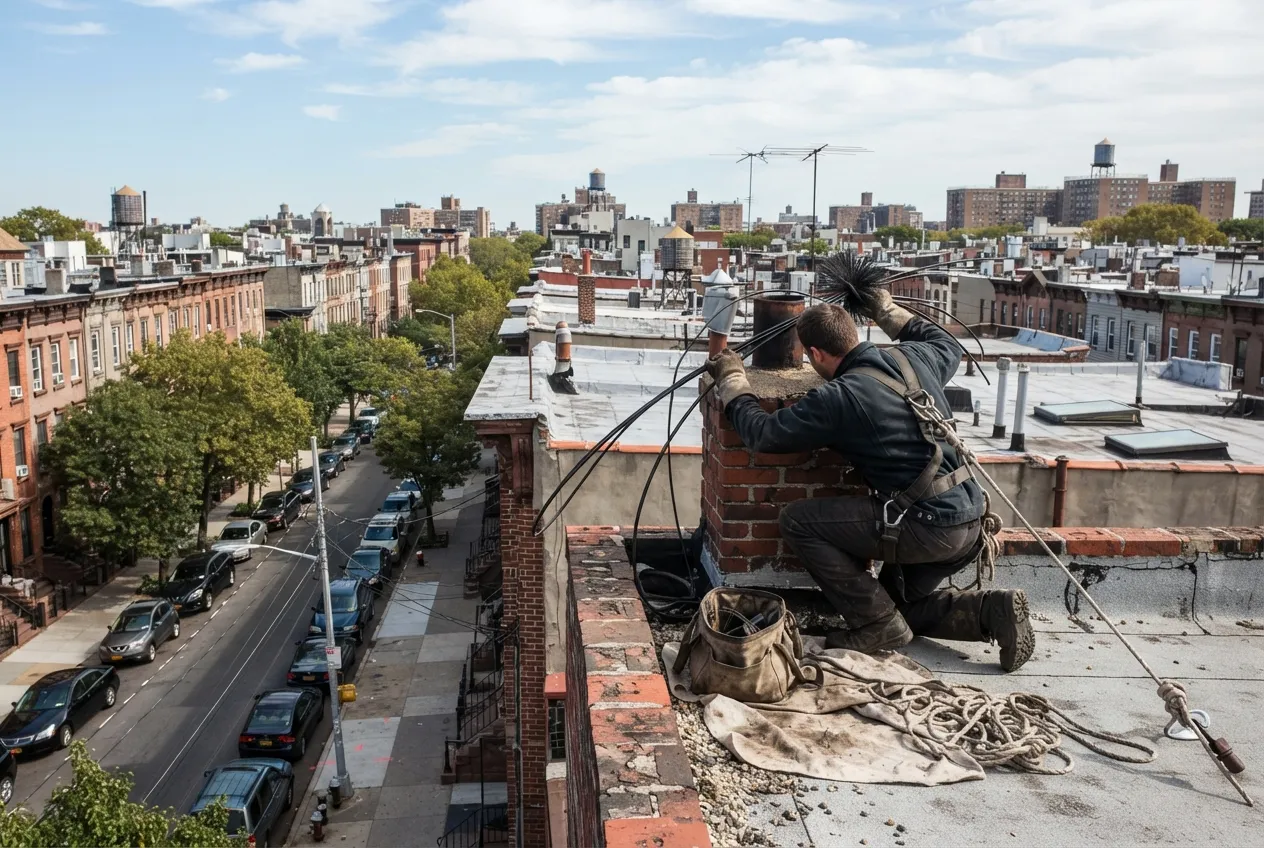
The short answer
Carroll Gardens chimneys should be inspected once a year, as the NFPA 211 standard calls for, even if the flue only vents a boiler or water heater. Book a more detailed Level 2 inspection when you buy or sell a home, add a new appliance, or convert from oil to gas.
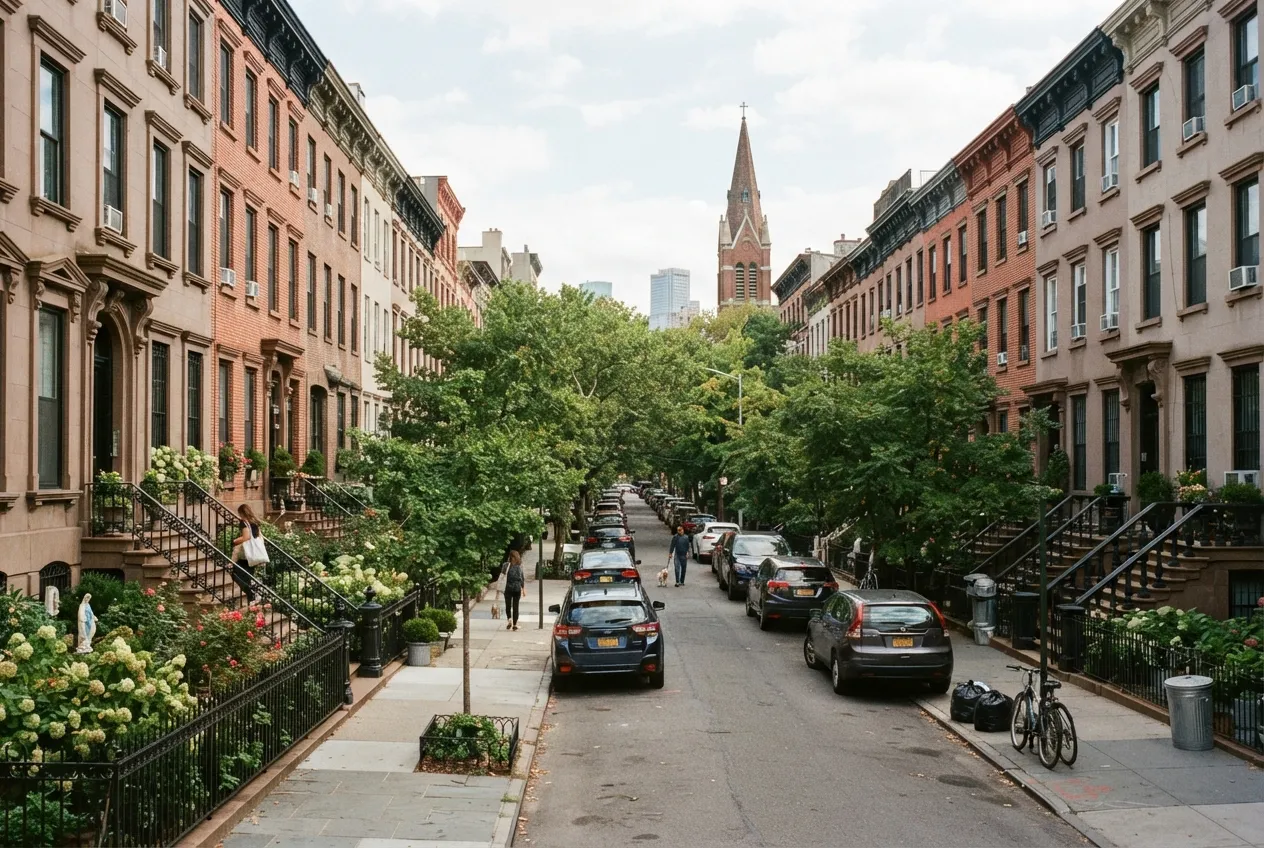
Most homes in Carroll Gardens are brownstones, rowhouses and pre-war apartment buildings, and their chimneys have usually outlasted several owners and several heating systems. A fireplace closed off long ago, a flue shared by a boiler and a water heater, a liner no one remembers installing: these are the open questions a chimney inspection answers. Expert Chimney Sweep's certified technicians come from our office in Clinton Hill, about 2 miles away, to inspect chimneys throughout the 11231 ZIP code. We tell you plainly what condition your system is in and what, if anything, it needs.
Why a Yearly Inspection Matters in Carroll Gardens
The NFPA 211 standard calls for chimneys, fireplaces and vents to be inspected once a year. That applies whether you burn wood every weekend or your chimney does nothing but carry exhaust from the boiler in the basement. A venting chimney does most of its work during New York City's heat season, from October 1 through May 31. During those months, building owners must keep apartments heated to the city's minimum temperatures. If you own a two- or three-family brownstone with tenants, a blocked or failing flue in January is a serious problem, and it is far easier to find one in early fall.
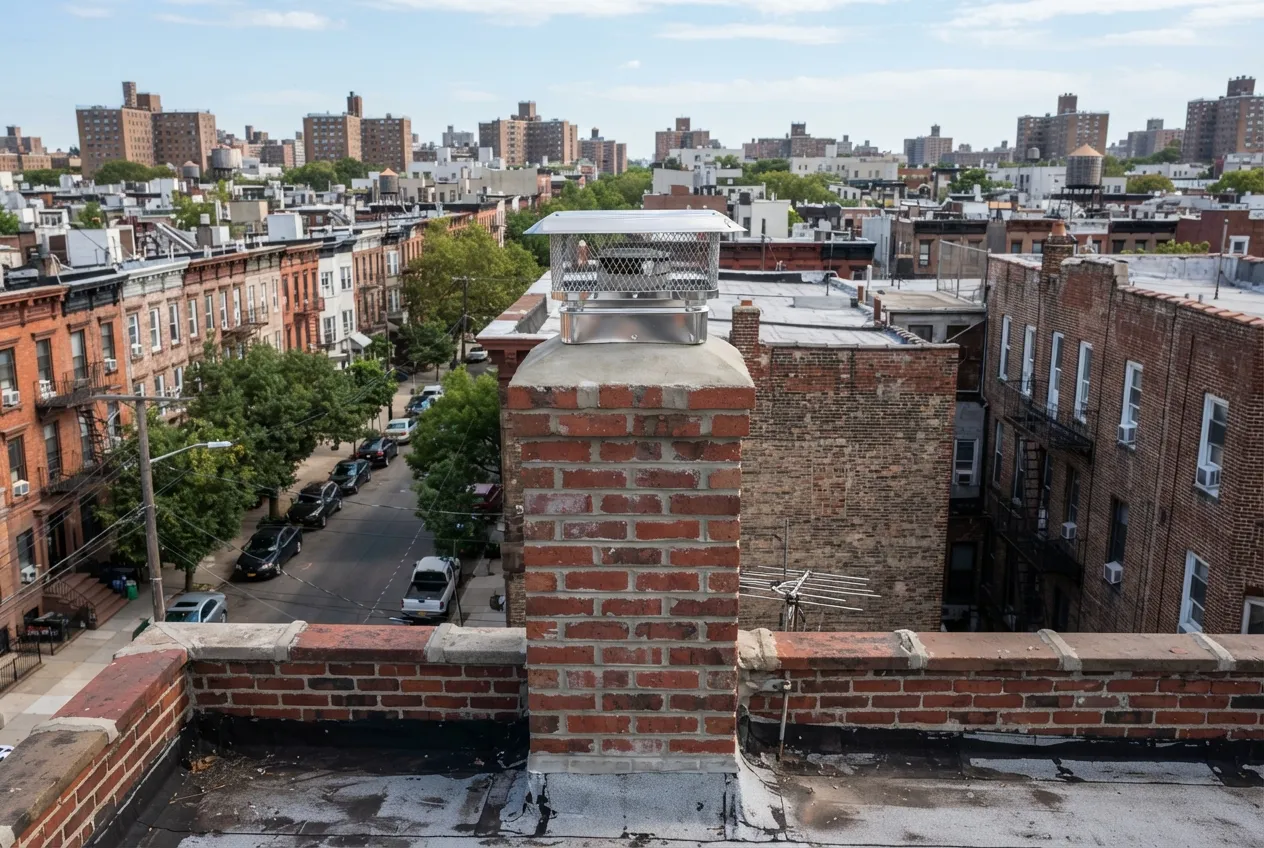
Older masonry chimneys in attached rowhouses also bring their own concerns. Worn mortar joints, a cracked crown or loose flashing can let water into the brick and the walls around it. Gaps inside an unlined or deteriorated flue can let exhaust travel where it shouldn't. Many of these problems can't be seen from the street or from inside the living room.
Choosing the Right Inspection Level
Chimney professionals use three inspection levels. We'll help you figure out which one fits your situation before we arrive.
- Level 1: For a chimney that's in regular use and hasn't changed. We check the accessible parts of the chimney, the fireplace or appliance connection, and look for obstructions and buildup.
- Level 2: Needed when the system changes, such as a new boiler, water heater or fireplace insert, or a switch from one fuel to another. It's also the right choice when a home is being bought or sold. We examine the full length of the flue, usually with a camera, along with accessible attic, basement and roof areas.
- Level 3: Used when a hidden hazard has to be reached by opening part of the chimney or the building, such as a section of wall around a suspected crack. We only recommend this when earlier findings point to it.
Oil-to-Gas Conversions and Flue Liners
Many Carroll Gardens buildings once heated with oil and have since switched, or are planning to switch, to gas. When a New York City building converts its boiler from oil to gas, the chimney has to be evaluated as part of the work. Gas exhaust produces acidic condensate that can corrode a masonry flue, so a new liner is often needed. If you're planning a conversion, schedule the inspection early. Then the liner question is settled before the new boiler is ready to fire, not after.
Time for your annual chimney check?
What We Check During the Visit
Every inspection covers the chimney from the firebox or appliance connection up to the cap, as far as the level allows.
- Crown, cap, brickwork and mortar joints above the roofline
- Flashing where the chimney meets the roof
- Firebox, damper and smoke chamber on working fireplaces
- Flue liner condition, including cracks, gaps and missing sections
- Creosote, soot and debris buildup, plus nests or other blockages
- Connector pipes from boilers and water heaters
- Signs of water damage on ceilings and walls near the chimney
Carroll Gardens and Nearby Neighborhoods
Afterward, we walk you through what we found, show you photos, and explain which items need attention now and which can wait. Besides Carroll Gardens, we inspect chimneys in Park Slope, Brooklyn Heights, Downtown Brooklyn, DUMBO and Boerum Hill, all a short trip from our Clinton Hill office.
More services in Carroll Gardens
- Chimney Sweep in Carroll Gardens
- Chimney Repair in Carroll Gardens
- Air Duct Cleaning in Carroll Gardens
- Chimney Liner Installation in Carroll Gardens