The short answer
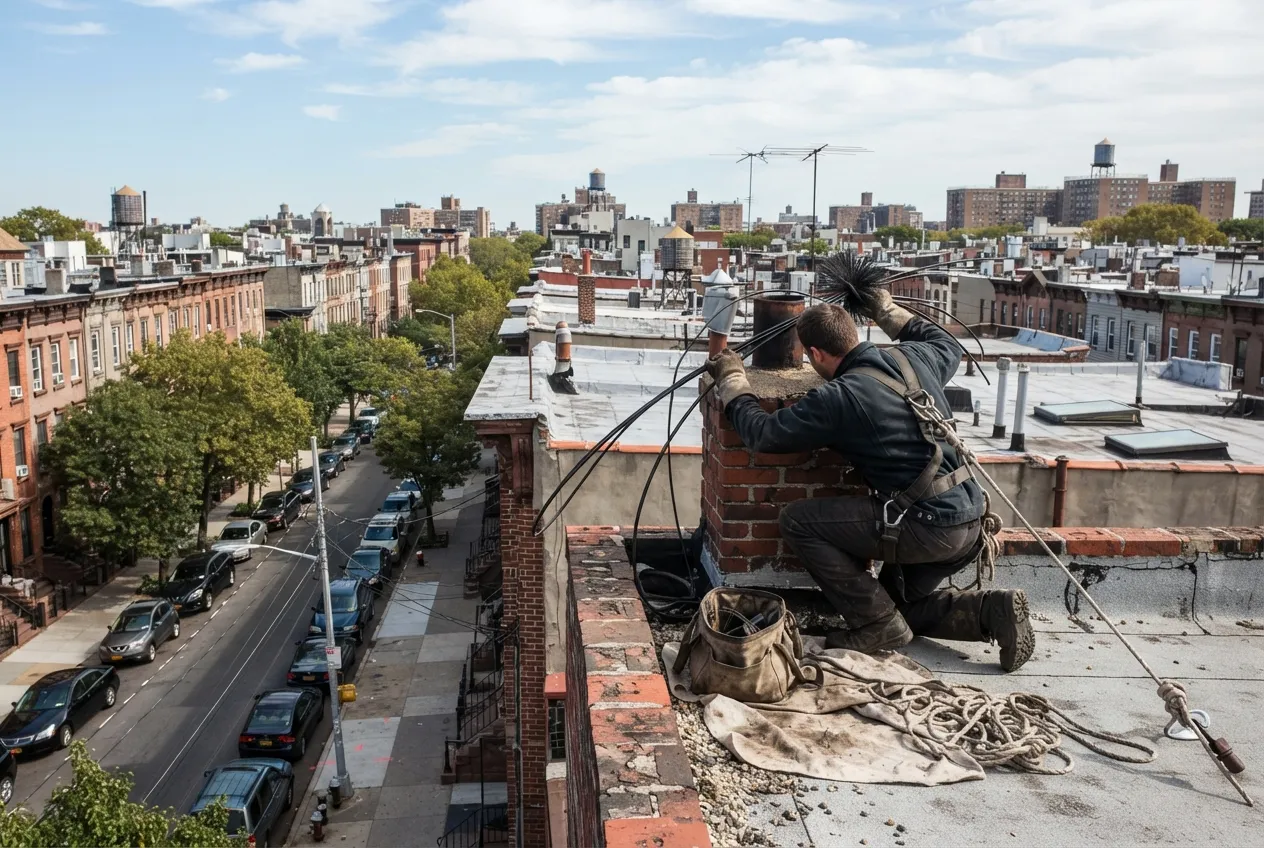
The NFPA 211 standard calls for chimneys, fireplaces and vents to be inspected once a year, and Fort Greene homes are no exception. Most homeowners need a Level 1 inspection. A Level 2 is called for when you change appliances or fuel, or when the home is sold, and a Level 3 only when a hidden hazard has to be reached by opening part of the chimney or building.
Many Fort Greene homes have chimneys that have been in service for generations. Brownstones and rowhouses often have several flues in one stack, and pre-war apartment buildings may vent a central boiler through a tall masonry chimney. Problems usually start where you can't see them: inside the flue, at the crown, or where a liner meets the appliance. Expert Chimney Sweep inspects chimneys throughout Fort Greene and ZIP code 11205 from our office in Clinton Hill, about a mile southeast. Our certified technicians tell you what condition your chimney is in, what needs attention now, and what can wait.
Why Fort Greene Chimneys Need a Close Look
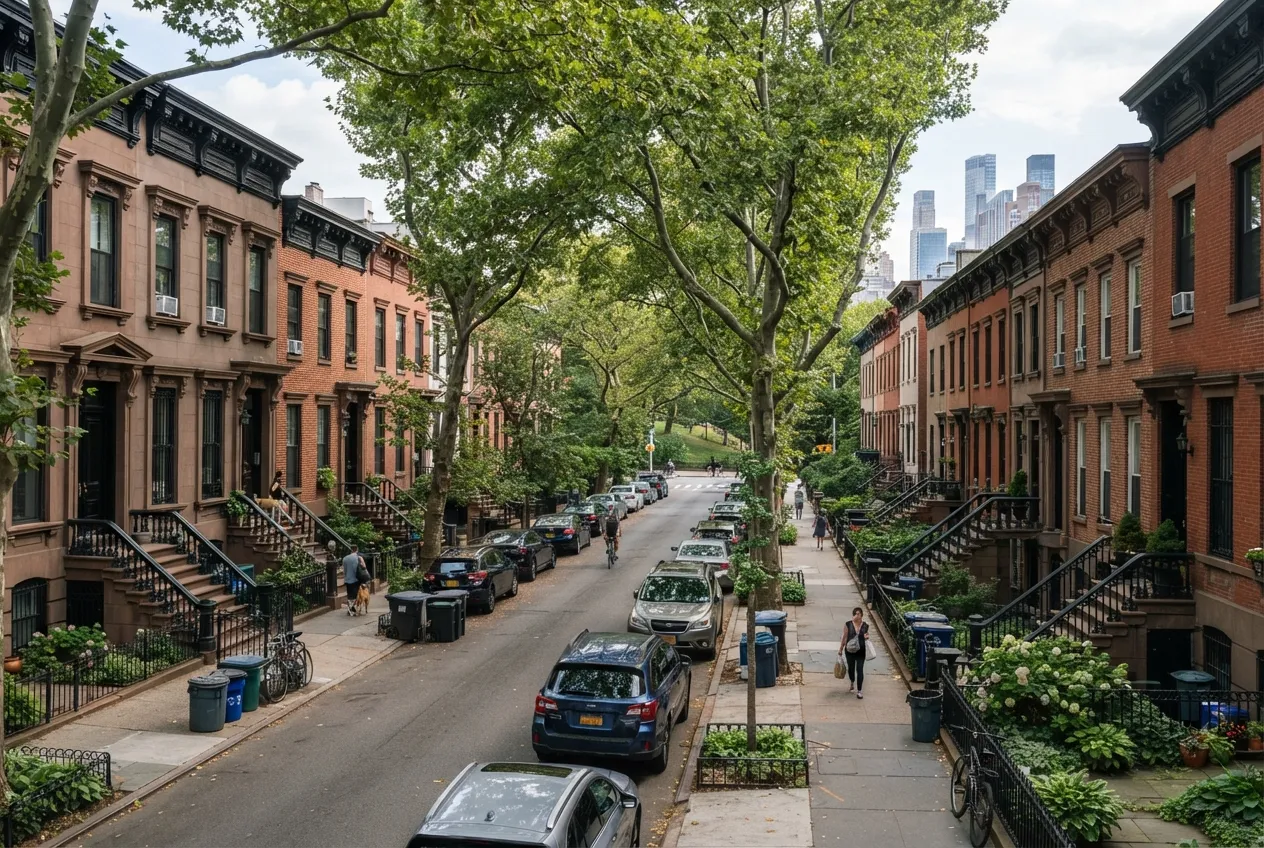
Fort Greene's housing is mostly attached masonry: brownstones, brick rowhouses and pre-war apartment buildings. In attached homes, a chimney often sits in a party wall or shares a stack with flues serving other floors or units. A crack or gap in one flue can let smoke or exhaust move where it shouldn't. That is why we check each flue separately and note which appliance or fireplace it serves.
Many older brownstones have decorative fireplaces that were closed off decades ago and later reopened. Others have had their heating system replaced more than once. Each change can leave a flue that is the wrong size, unlined, or partly blocked. An inspection shows whether the chimney still fits the way the home is heated today.
Which Inspection Level Your Home Needs
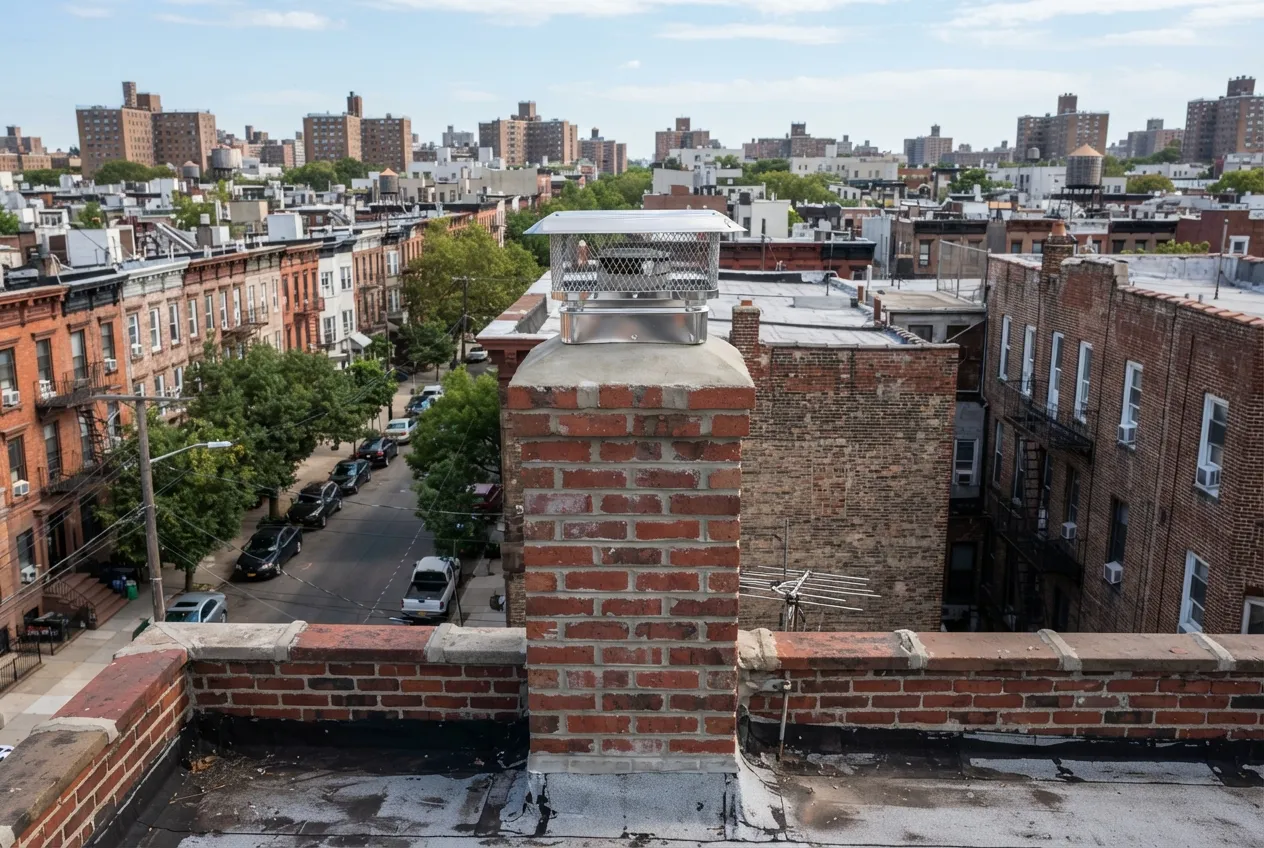
Chimney professionals use three inspection levels. We recommend the one that fits your situation, not the most extensive one by default.
- Level 1: For a chimney in regular use when nothing about the system has changed. We examine the accessible parts of the chimney exterior and interior, the firebox, the damper and the connections, and check for blockages and combustible deposits.
- Level 2: Required when the system changes, such as a new boiler or stove or a switch from oil to gas, and when a home is sold. It adds a camera scan of the flue's interior and a look at accessible areas like attics and basements.
- Level 3: Needed only when a hidden hazard has to be reached by opening part of the chimney or building, such as removing a section of wall or chimney. We discuss this with you before any work begins.
Oil-to-Gas Conversions and Chimney Liners
Many Brooklyn brownstones and apartment buildings have switched or are planning to switch from oil heat to gas. When a New York City building converts its boiler from oil to gas, the chimney has to be evaluated as part of the work. A new liner is often needed because gas exhaust produces acidic condensate that can corrode a masonry flue from the inside.
If you are planning a conversion, schedule the inspection early. Our findings help you and your heating contractor plan the liner work before the new equipment goes in, so the chimney doesn't hold up the project.
Time for your annual chimney check?
Timing Your Inspection Around Heat Season
New York City's heat season runs from October 1 through May 31. During those months, building owners must keep apartments heated to the city's minimum temperatures. If you own a multi-unit building in Fort Greene, finding a boiler chimney problem in January can leave tenants without heat while repairs are made.
Late spring and summer are the easiest times to inspect. Boilers and fireplaces are usually idle, so there is time to schedule repairs before October. For homeowners with a wood-burning fireplace, an inspection in the off-season also means the chimney is ready on the first cold night.
What You Get After the Inspection
When we finish, we walk you through what we found in plain language. We point out any deposits, cracked flue tiles, loose or missing mortar, damaged crowns or caps, and problems with dampers or connector pipes. When the inspection includes a camera scan, we show you the images so you can see the conditions yourself.
We separate urgent safety issues from routine maintenance. If cleaning is all your chimney needs, we tell you. If repairs are needed, we explain why and what they involve, so you can decide on next steps without pressure.
More services in Fort Greene
- Chimney Sweep in Fort Greene
- Chimney Repair in Fort Greene
- Air Duct Cleaning in Fort Greene
- Chimney Liner Installation in Fort Greene