The short answer
Fort Greene homeowners should have each chimney swept as needed and inspected once a year, as the NFPA 211 standard calls for. Expert Chimney Sweep's certified technicians clean fireplace and boiler flues in the neighborhood's brownstones, rowhouses and pre-war buildings and report on the chimney's condition.
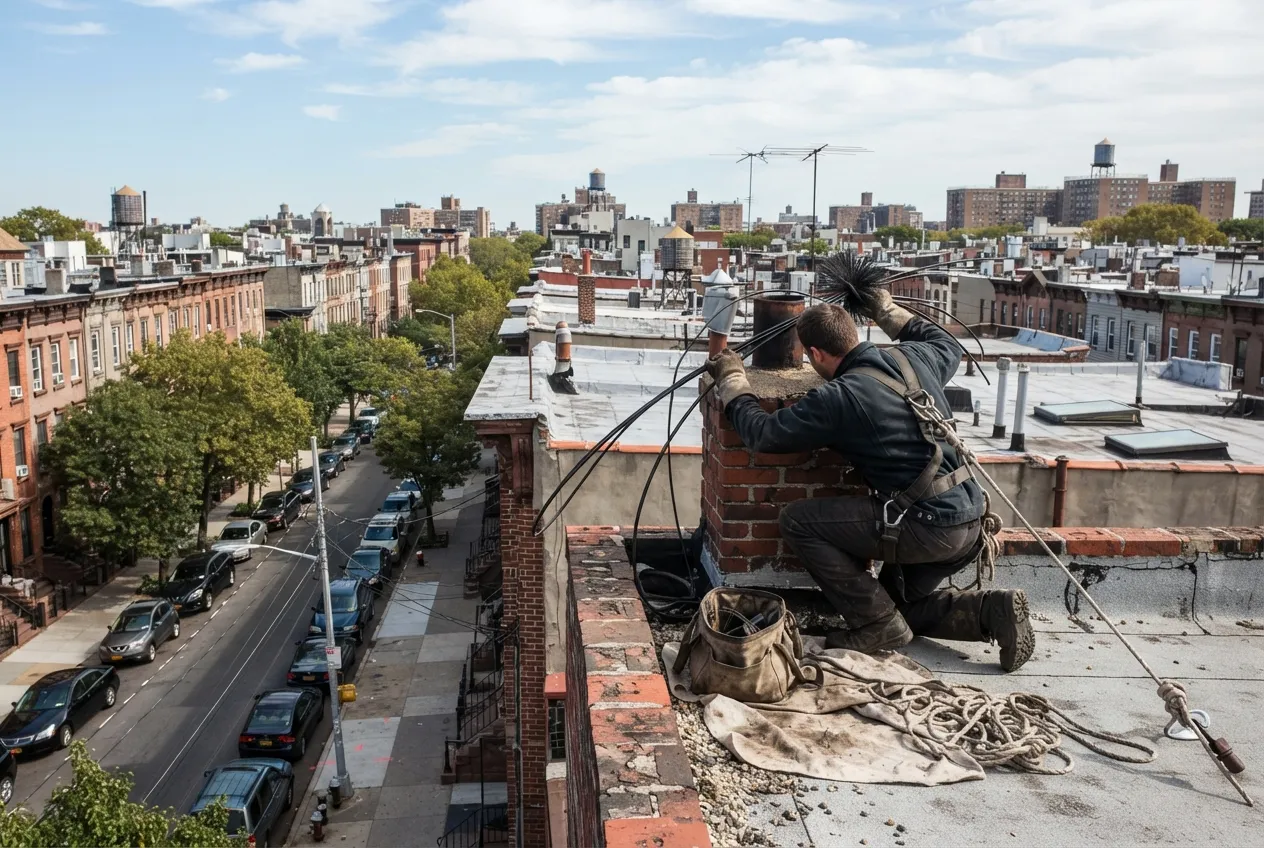
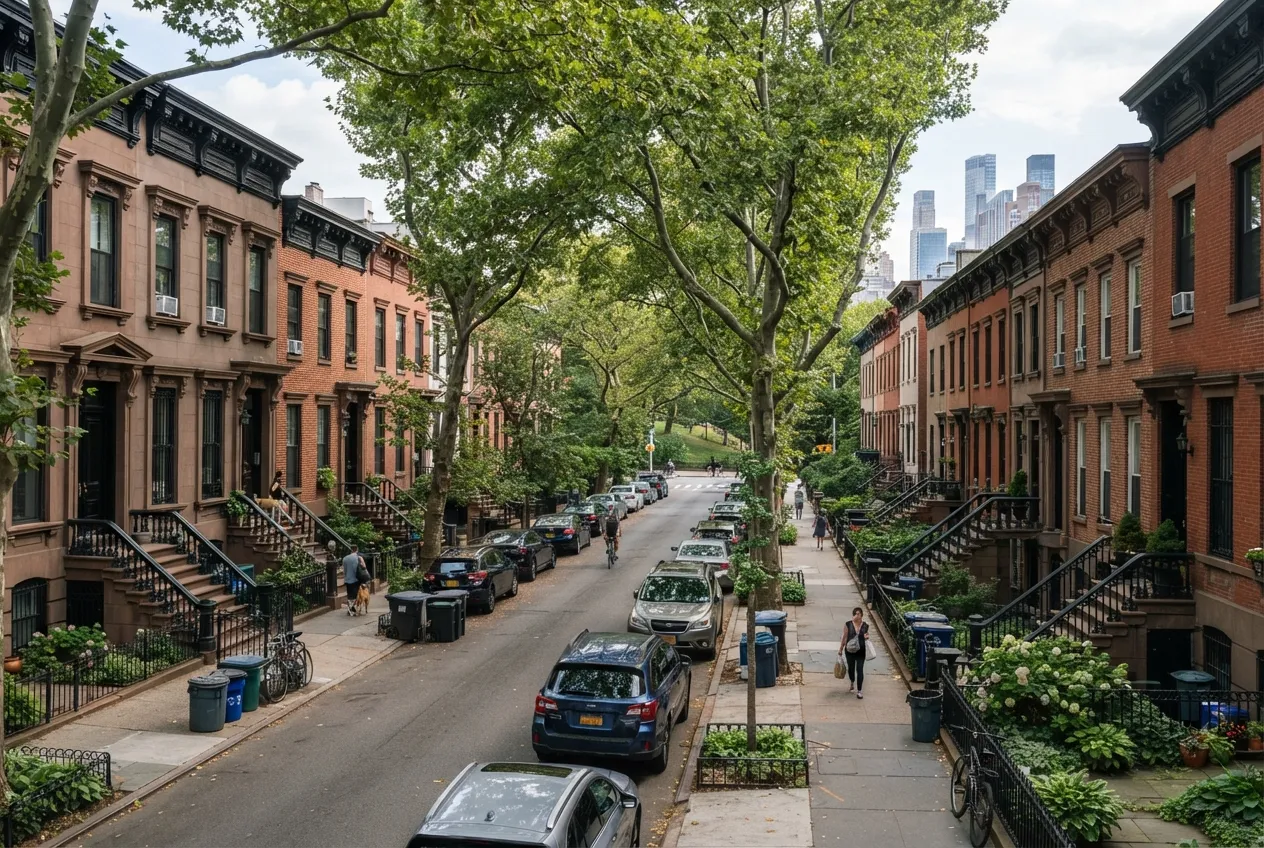
Fort Greene's brownstones, rowhouses and pre-war apartment buildings were mostly built when every room might have had a fireplace and the building's heat ran up a tall masonry chimney. Many of those flues still work today, whether they serve a wood-burning fireplace in a parlor or a gas or oil boiler in the cellar. Expert Chimney Sweep cleans and inspects chimneys throughout Fort Greene (ZIP 11205), about a mile from our office in Clinton Hill. Our certified technicians remove soot and creosote, check the flue and masonry, and explain what they find in plain terms so you can decide what, if anything, needs to happen next.
What a Chimney Sweep Covers in a Fort Greene Home
A sweep removes buildup from the inside of the flue so smoke and exhaust can leave the house the way they should. In a wood-burning fireplace, that buildup is mostly creosote, a tar-like byproduct of burning wood that can ignite if it gets thick enough. In a flue that serves a boiler or water heater, the concern is more often soot, debris and blockages that can push exhaust back into the home.
When we sweep a chimney, we protect the room first, then clean the flue from the firebox and, where it's safe and practical, from the roof. While we're there, we look at the parts that affect safety:
- Firebox, smoke chamber and damper
- Flue liner condition, including cracks, gaps or missing sections
- Chimney crown, cap and exterior masonry visible from the roof
- Connections between heating appliances and the chimney
- Signs of water entry, animal nests or fallen debris
Why Older Brooklyn Chimneys Need Regular Attention
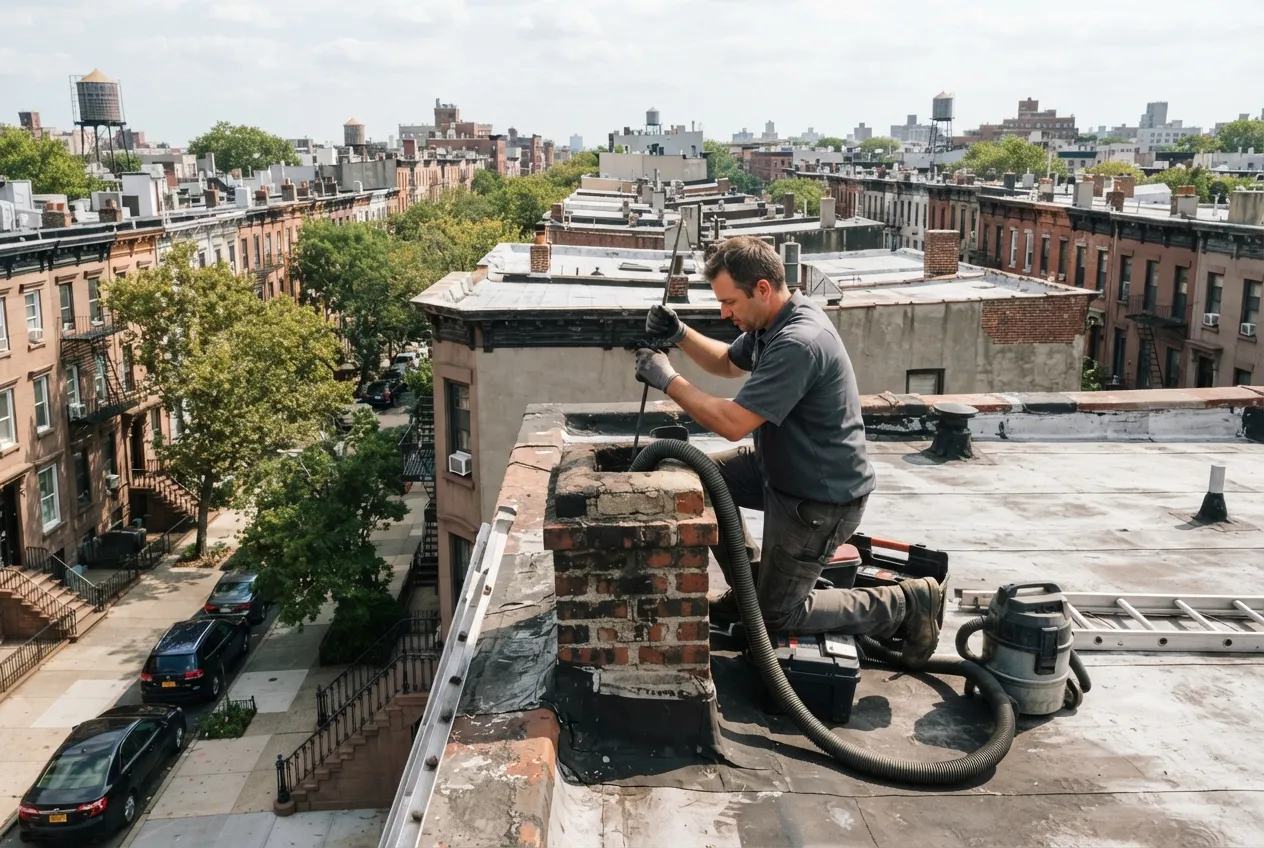
Many chimneys in Fort Greene's rowhouses and brownstones are tall, narrow and shared by several flues running side by side through party walls. Over a long life, mortar between flue tiles can wear away, and some older chimneys were built with no liner at all. A clean flue makes these problems much easier to see.
Rowhouse roofs also mean neighbors' chimneys sit close to yours. Loose bricks, a deteriorated crown or a missing cap can let rain and animals in, and moisture inside the chimney speeds up masonry damage. Catching these issues during a routine sweep is usually simpler than dealing with them after a leak shows up on a ceiling.
Inspection Levels and the Yearly Schedule
The NFPA 211 standard calls for chimneys, fireplaces and vents to be inspected once a year. Chimney professionals use three inspection levels. A Level 1 inspection fits when nothing about the system has changed. A Level 2 inspection applies when the system changes, such as a new appliance or a switch of fuel, or when the home is sold. A Level 3 inspection is used when a hidden hazard has to be reached by opening part of the chimney or building.
For most Fort Greene homeowners, a yearly sweep and Level 1 inspection is the starting point. If you're buying or selling a brownstone, replacing a boiler, or planning to use a fireplace that has sat unused for a long time, ask about a Level 2 inspection, which typically includes a camera look inside the flue.
Time for your annual chimney check?
Oil-to-Gas Conversions and Flue Liners
Some buildings in the neighborhood still heat with oil, and many owners are switching to gas. When a New York City building converts its boiler from oil to gas, the chimney has to be evaluated as part of the work. A new liner is often needed, because gas exhaust produces acidic condensate that can corrode a masonry flue.
If a conversion is on your calendar, we can sweep and inspect the chimney beforehand so you and your heating contractor know the flue's condition early, rather than discovering a liner problem in the middle of the project.
When to Schedule a Sweep in Fort Greene
New York City's heat season runs from October 1 through May 31, when building owners must keep apartments heated to the city's minimum temperatures. For owners of multi-unit rowhouses and small apartment buildings, that makes late summer and early fall a practical time to have boiler chimneys checked, before the heating system runs every day.
Homeowners who use a wood-burning fireplace often book before the first cold snap as well. You should also call if you notice a smoky smell, smoke coming into the room, falling debris, water stains near the chimney, or animal sounds in the flue. We also serve nearby Clinton Hill, Downtown Brooklyn, DUMBO, Boerum Hill and Prospect Heights.
More services in Fort Greene
- Chimney Inspection in Fort Greene
- Chimney Repair in Fort Greene
- Air Duct Cleaning in Fort Greene
- Chimney Liner Installation in Fort Greene