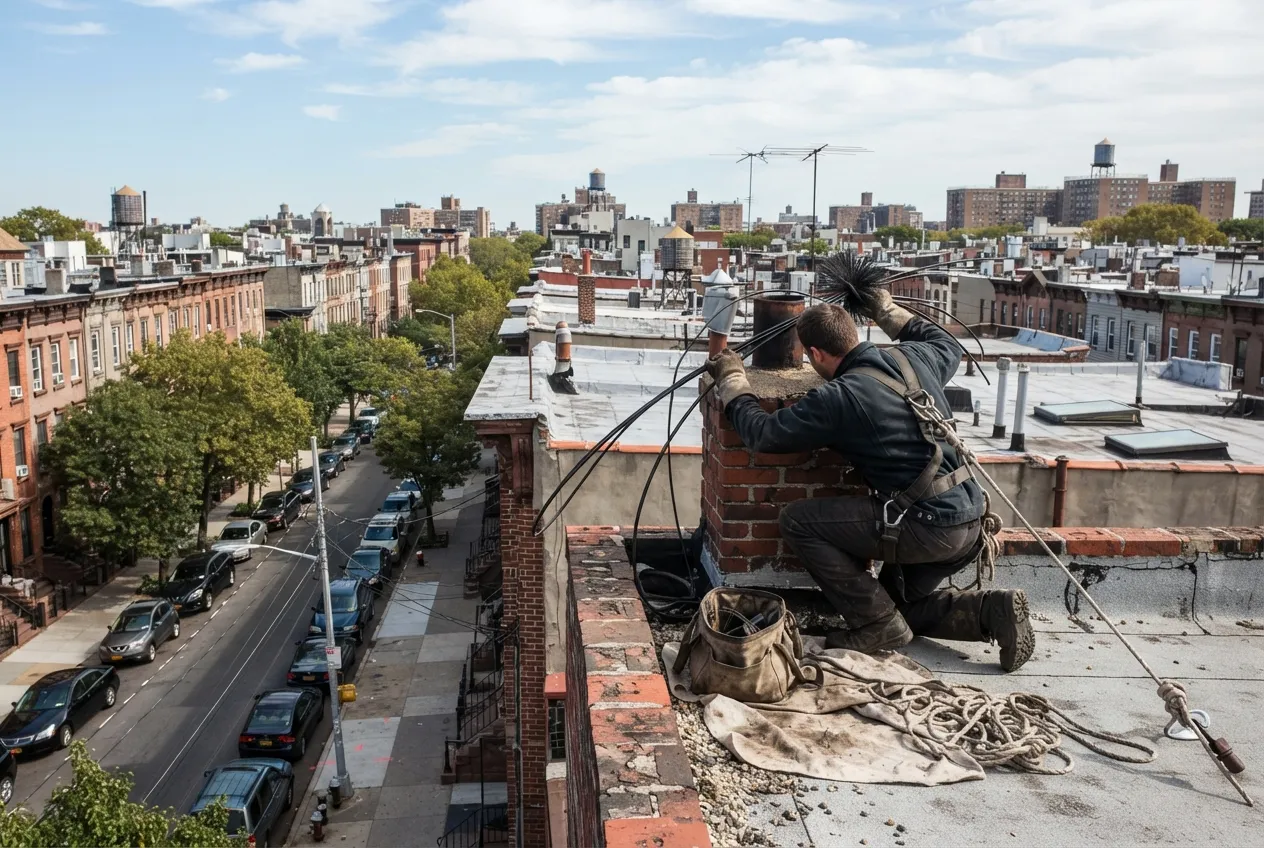
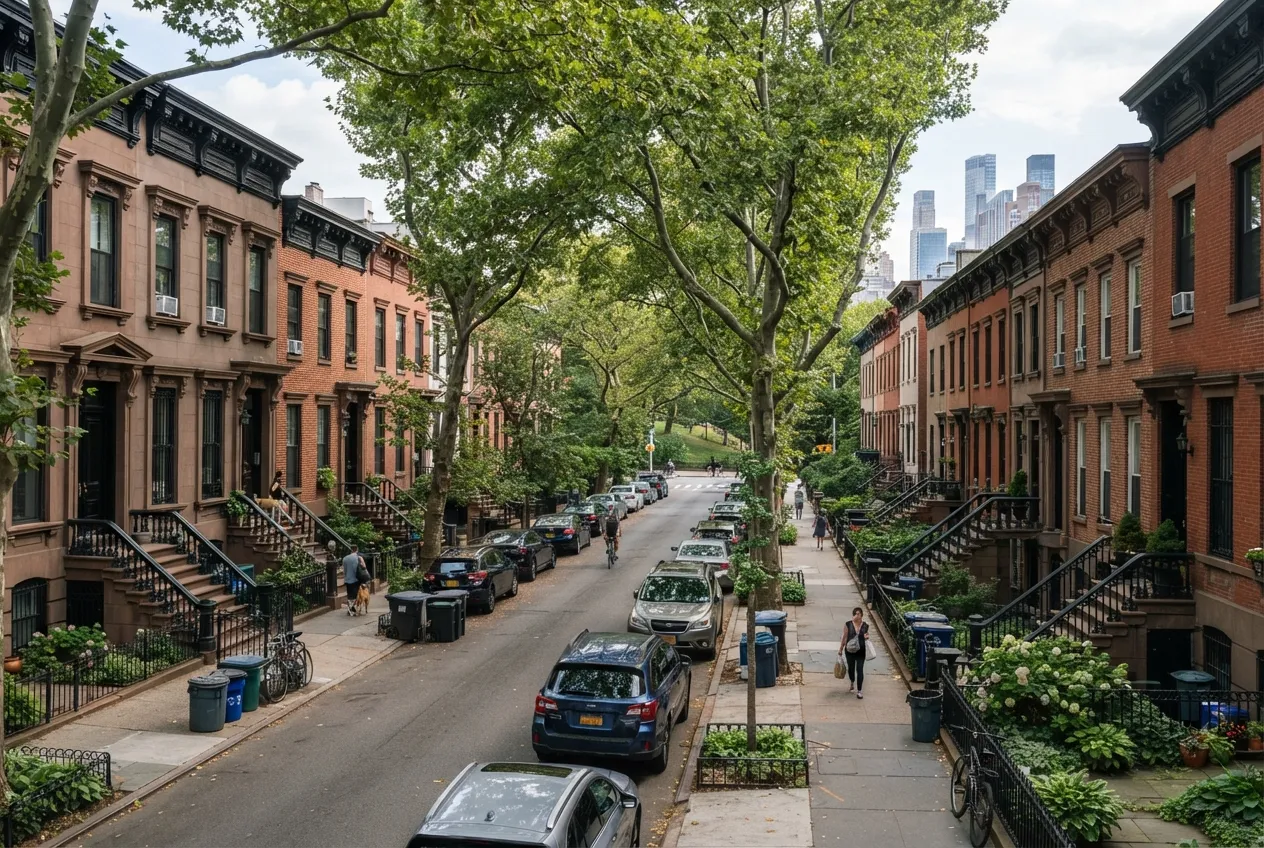
The short answer
Fort Greene chimneys usually need repair because of age, water entry, and flue liners that can't handle modern heating equipment. Expert Chimney Sweep inspects the chimney, explains what is wrong and why, and repairs the masonry, crown, flashing, or liner on brownstones, rowhouses, and apartment buildings in 11205.
Most Fort Greene homes are brownstones, brick rowhouses, and pre-war apartment buildings, and their chimneys have stood through many decades of New York winters, summer heat, and freeze-thaw cycles. That age shows up as loose bricks, eroded mortar joints, cracked crowns, failing flashing, and flue liners that no longer seal. Expert Chimney Sweep repairs chimneys throughout Fort Greene (ZIP 11205) from our office in Clinton Hill, about a mile to the southeast. Our certified technicians start by finding out why the chimney is failing, then fix that problem, so the same damage doesn't come back a season later.
Common Chimney Problems in Fort Greene Homes
Older Brooklyn masonry was built with softer brick and lime-based mortar. Both handle the city's climate well when they're maintained, but once water gets into the joints, each freeze widens the gaps. On rowhouses and brownstones, the chimney often shares a party wall with the house next door, so a leak or a cracked flue can affect more than one home.
These are the problems we see most often on Fort Greene chimneys:
- Spalling or crumbling brick above the roofline, where exposure is worst
- Mortar joints that have washed out and need repointing
- Cracked or missing chimney crowns that let water run straight into the masonry
- Rusted, lifted, or tar-patched flashing where the chimney meets a flat roof
- Clay tile liners that are cracked, have gaps at the joints, or are missing sections
- Damaged or missing caps that let in rain, debris, and animals
- Water stains on ceilings or walls next to the chimney breast
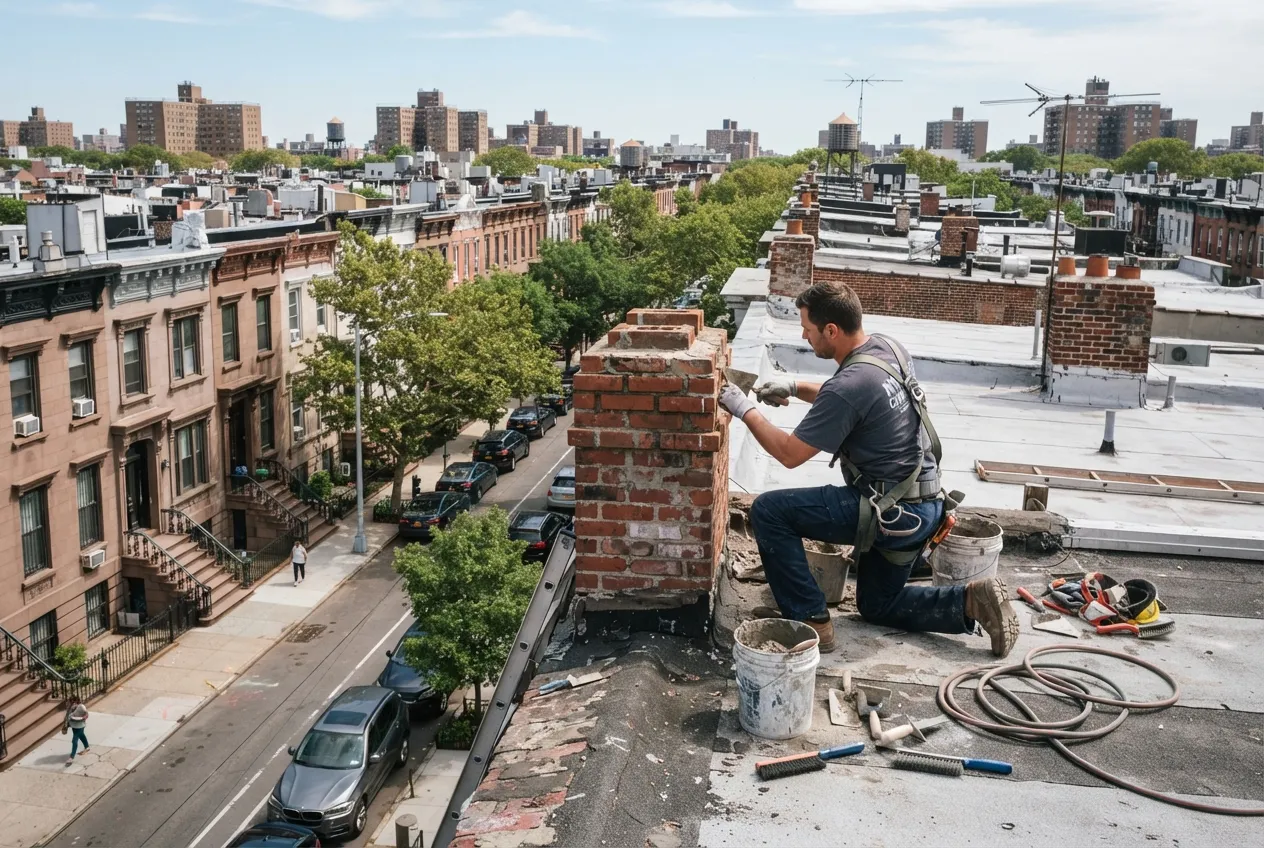
How We Approach a Chimney Repair
Every repair starts with an inspection. The NFPA 211 standard calls for chimneys, fireplaces, and vents to be inspected once a year, and it describes three levels. A Level 1 inspection fits when nothing about the system has changed. A Level 2 inspection, which includes a camera look inside the flue, applies when the system changes (for example a new appliance or a switch of fuel) or when the home is sold. A Level 3 inspection is needed only when a suspected hazard is hidden and part of the chimney or building has to be opened to reach it.
After the inspection, we show you what we found, with photos when they help, and explain which repairs are urgent and which can be planned for later. On attached homes, we also point out anything that may involve a shared wall or a neighbor's flue, so you can coordinate before work begins.
Repairs for Masonry, Crowns, Flashing, and Liners
For brick and mortar, we repoint deteriorated joints with a mortar that suits the age of the masonry and replace bricks that have spalled past saving. When damage near the top is severe, part of the chimney may need to be rebuilt above the roofline.
A crown is the concrete or mortar slab that caps the masonry. Hairline cracks can sometimes be sealed, while a crown that is broken apart should be replaced. Most Fort Greene rowhouses have flat roofs, so we pay close attention to how the flashing ties into the roofing material, because that joint is a frequent source of leaks that get blamed on the chimney itself.
Inside the chimney, a damaged liner lets heat and exhaust reach the surrounding masonry and wood framing. We reline flues with liners sized to the appliance they serve, whether that is a fireplace, a boiler, or a water heater.
Time for your annual chimney check?
Boiler Conversions and Pre-War Buildings
Many Fort Greene brownstones and apartment buildings once heated with oil. When a New York City building converts its boiler from oil to gas, the chimney has to be evaluated as part of the work. A new liner is often needed, because gas exhaust produces acidic condensate that can corrode a masonry flue. If you're planning a conversion or have already finished one, we can check whether the existing flue is suitable and reline it if it isn't.
Timing matters for buildings with tenants. New York City's heat season runs from October 1 through May 31, when owners must keep apartments heated to the city's minimum temperatures. Scheduling flue and liner repairs for late spring or summer helps keep the boiler running when residents depend on it.
Serving Fort Greene and Nearby Neighborhoods
Since our office is in Clinton Hill, Fort Greene is right in our home area. We also repair chimneys in Clinton Hill, Downtown Brooklyn, DUMBO, Boerum Hill, and Prospect Heights, where the housing is similar: attached masonry homes and older multifamily buildings with chimneys that need the same careful attention.
More services in Fort Greene
- Chimney Sweep in Fort Greene
- Chimney Inspection in Fort Greene
- Air Duct Cleaning in Fort Greene
- Chimney Liner Installation in Fort Greene