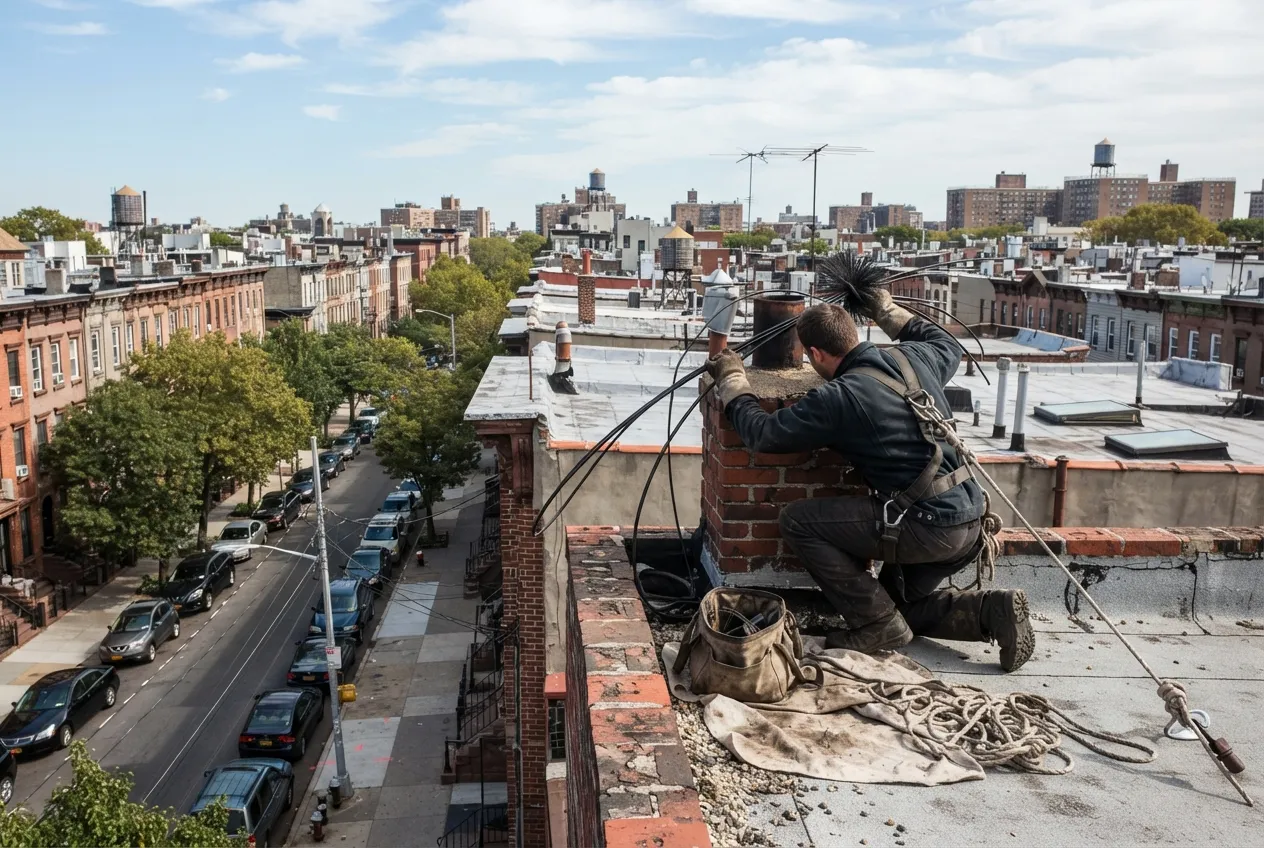
The short answer
A chimney sweep removes soot, creosote and debris from your flue and checks the system for damage or blockages. In South Williamsburg that usually means masonry chimneys serving fireplaces or gas and oil boilers. The NFPA 211 standard calls for an inspection once a year, and before heating season is the most practical time to do it.
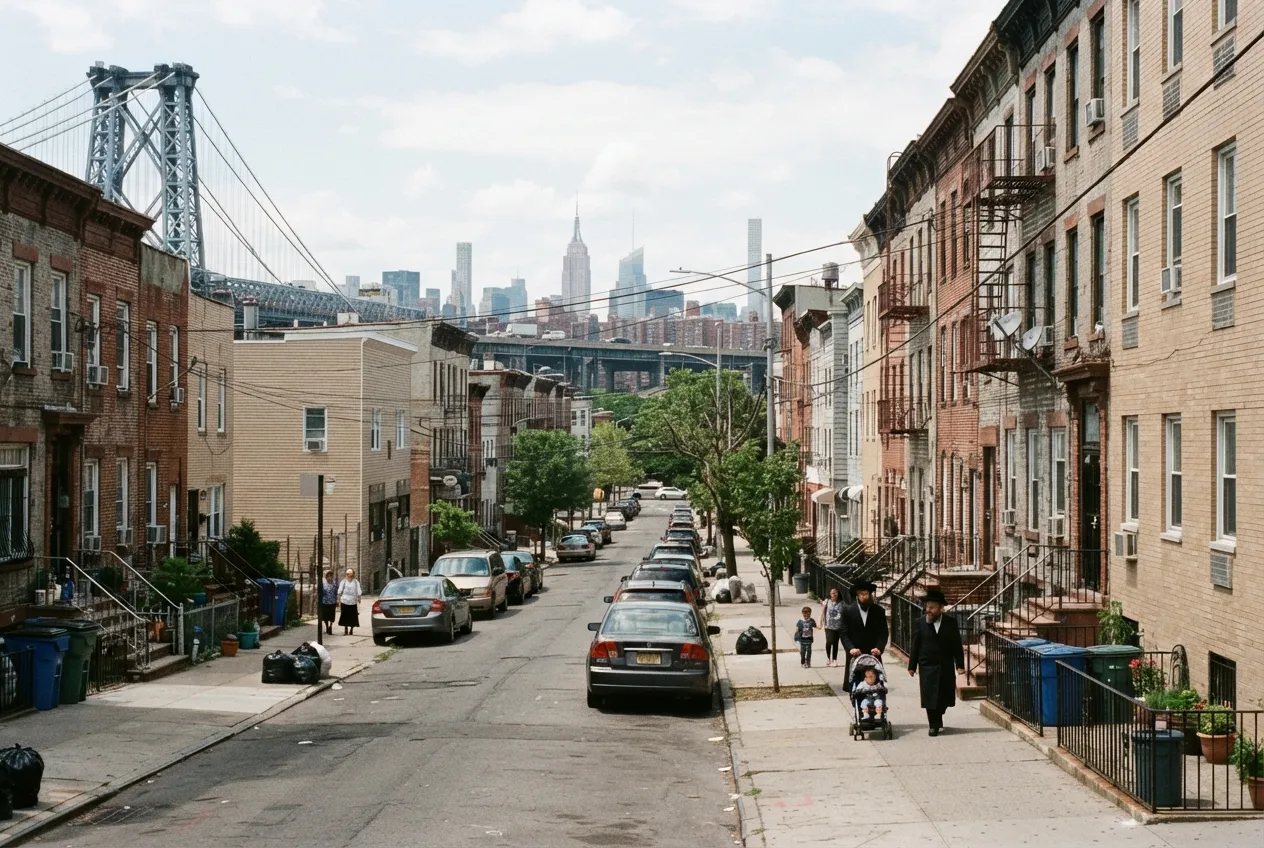
Expert Chimney Sweep cleans and inspects chimneys for homes and buildings in South Williamsburg (ZIP 11249). Our office in Clinton Hill is about a mile south, so getting to your block is a short trip. The neighborhood's housing ranges from older brick rowhouses and pre-war walk-ups to multi-family buildings and newer construction, and their chimneys serve different jobs. Some vent a wood-burning fireplace. Many more vent a boiler or water heater that runs most of the year. Our certified technicians sweep both kinds and tell you plainly what they find.
What a Sweep Covers in South Williamsburg Homes
Most chimneys here are masonry flues built into older brick buildings. Over decades, mortar joints wear, clay tile liners crack, and debris collects at the base of the flue. A sweep clears what's inside the flue. An inspection tells you whether the flue is still sound enough to vent safely.
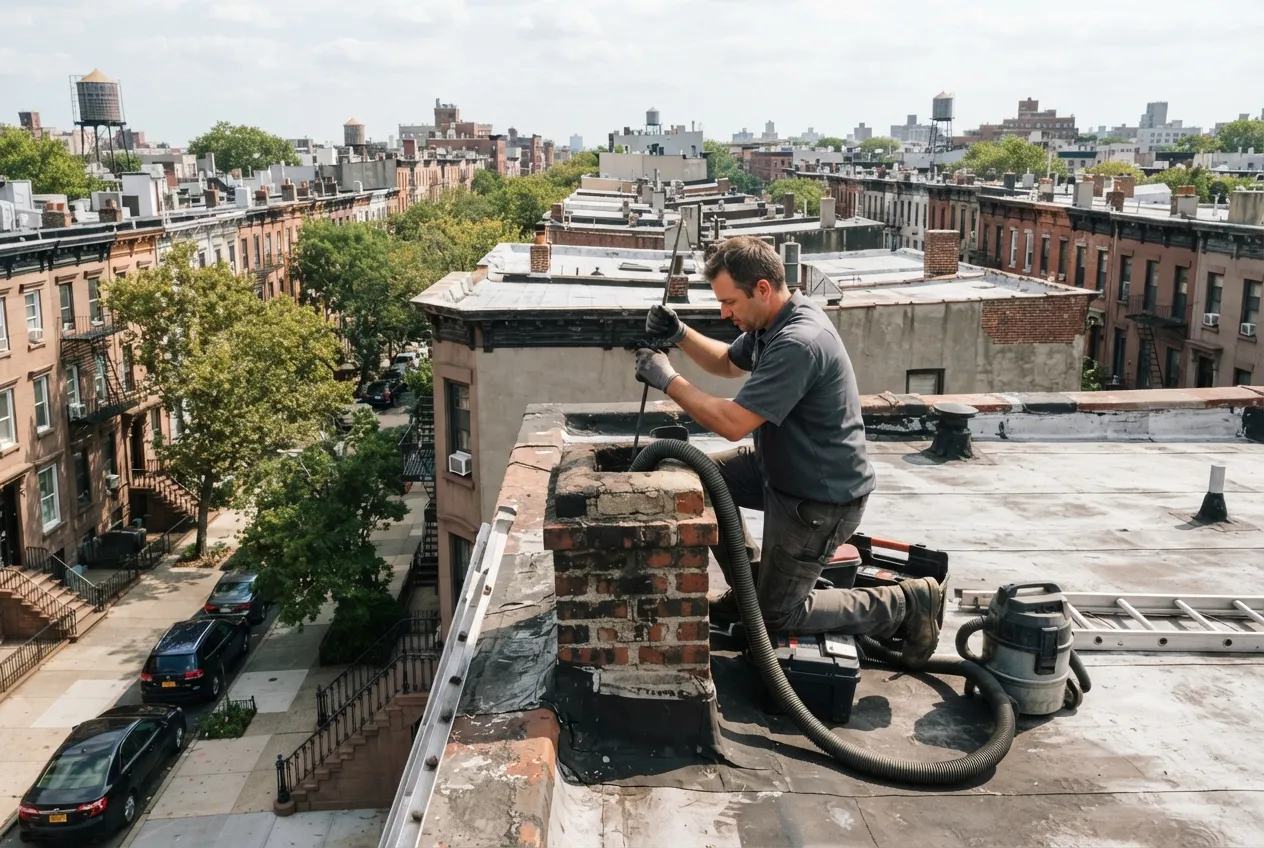
On a typical visit we protect the area around the fireplace or appliance, brush the flue from the top or bottom depending on access, and vacuum up what comes down. We look at the firebox, damper, smoke chamber, liner, crown and cap where we can reach them. In a multi-family building we pay attention to which flue serves which appliance, because shared and adjacent flues are common in older rowhouses and walk-ups.
Fireplace Chimneys vs. Boiler and Water Heater Flues
A wood-burning fireplace builds up creosote, a tar-like residue that can ignite if it gets thick enough. How often you burn, and how dry your wood is, affects how fast it builds. Gas and oil appliances don't leave creosote, but oil leaves soot and scale, and any flue can be blocked by nesting birds, fallen masonry or a collapsed liner. A blocked boiler flue can push exhaust, including carbon monoxide, back into the building.
New York City's heat season runs from October 1 through May 31, and building owners have to keep apartments at the city's minimum temperatures during that time. If you own a building with a central boiler, sweeping and inspecting the flue in late summer or early fall lets you fix problems before tenants depend on the heat.
Converting From Oil to Gas
Many older Brooklyn buildings have switched, or are thinking about switching, from oil heat to gas. When a New York City building converts its boiler from oil to gas, the chimney has to be evaluated as part of the work. A new liner is often needed because gas exhaust produces acidic condensate that can corrode an unlined or tile-lined masonry flue over time.
Before or during a conversion, we sweep the old oil residue out of the flue and inspect its condition, so you and your heating contractor know whether the existing flue can be used or needs a liner sized for the new equipment.
Time for your annual chimney check?
Inspection Levels and When Each Applies
The NFPA 211 standard calls for chimneys, fireplaces and vents to be inspected once a year. Chimney professionals use three levels of inspection, and the right one depends on your situation:
- Level 1: for a system that hasn't changed and is used the same way as before. This is the standard yearly check that goes along with a routine sweep.
- Level 2: when something changes, such as a new boiler, a switch from oil to gas, or a new insert, and when a home is being sold.
- Level 3: when a hidden hazard is suspected and part of the chimney or building has to be opened to reach it.
Signs Your Chimney Needs Attention Now
Don't wait for the yearly visit if you notice any of these:
- Smoke drifting into the room when the fireplace is lit
- A strong smoky or sour odor, especially in humid weather
- Black flakes or chunks of tile falling into the firebox or boiler cleanout
- Water stains, or loose or spalling brick on the chimney exterior
- Sounds of birds or animals in the flue
- A carbon monoxide alarm going off near a fuel-burning appliance
Scheduling a Sweep in 11249
Because we're based nearby in Clinton Hill, South Williamsburg is part of our regular service area, along with Fort Greene, Bedford-Stuyvesant, Downtown Brooklyn and DUMBO. Before we arrive, let fires burn out at least a day ahead, clear a path to the fireplace or boiler room, and let tenants or building staff know we'll need access to the roof or the appliance area. After the visit, you'll get a plain explanation of the flue's condition and any repairs we recommend.
More services in South Williamsburg
- Chimney Inspection in South Williamsburg
- Chimney Repair in South Williamsburg
- Air Duct Cleaning in South Williamsburg
- Chimney Liner Installation in South Williamsburg