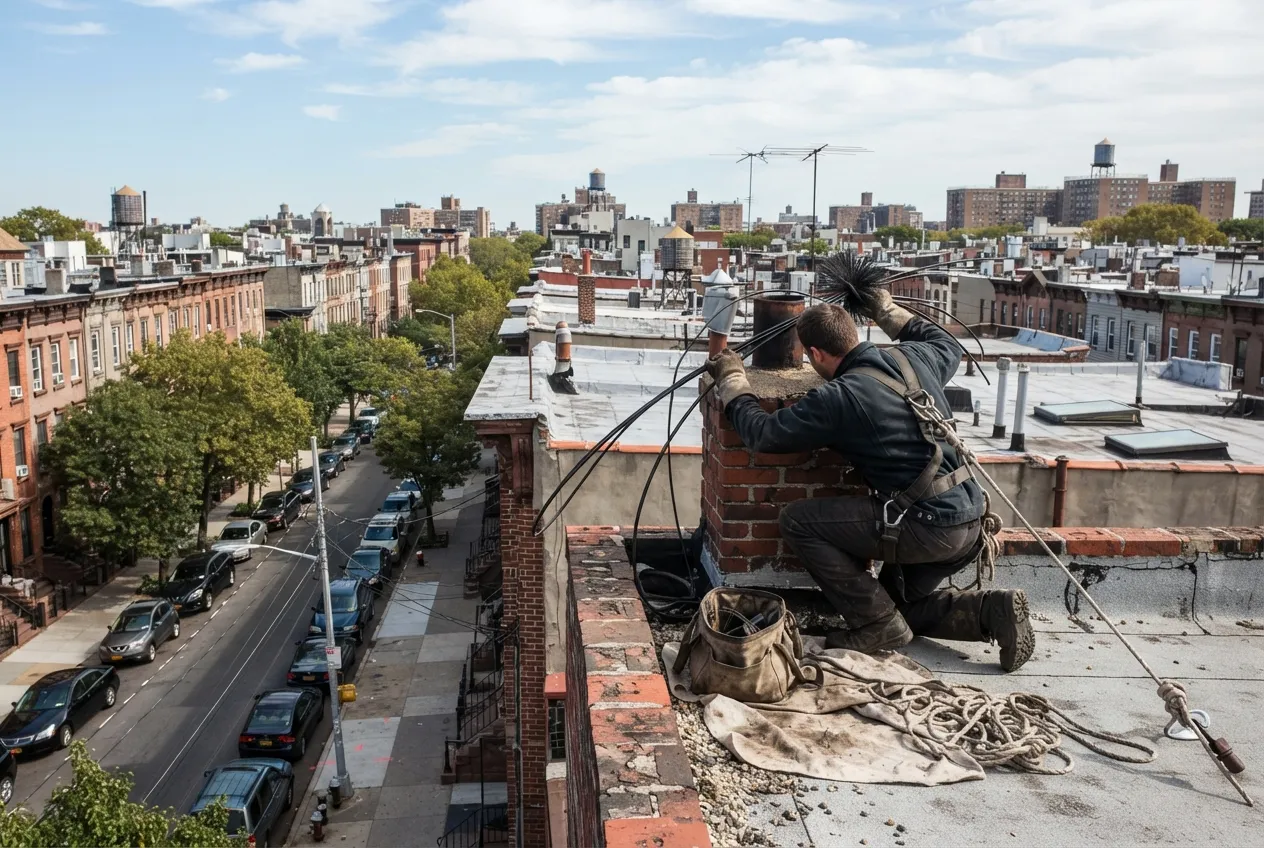
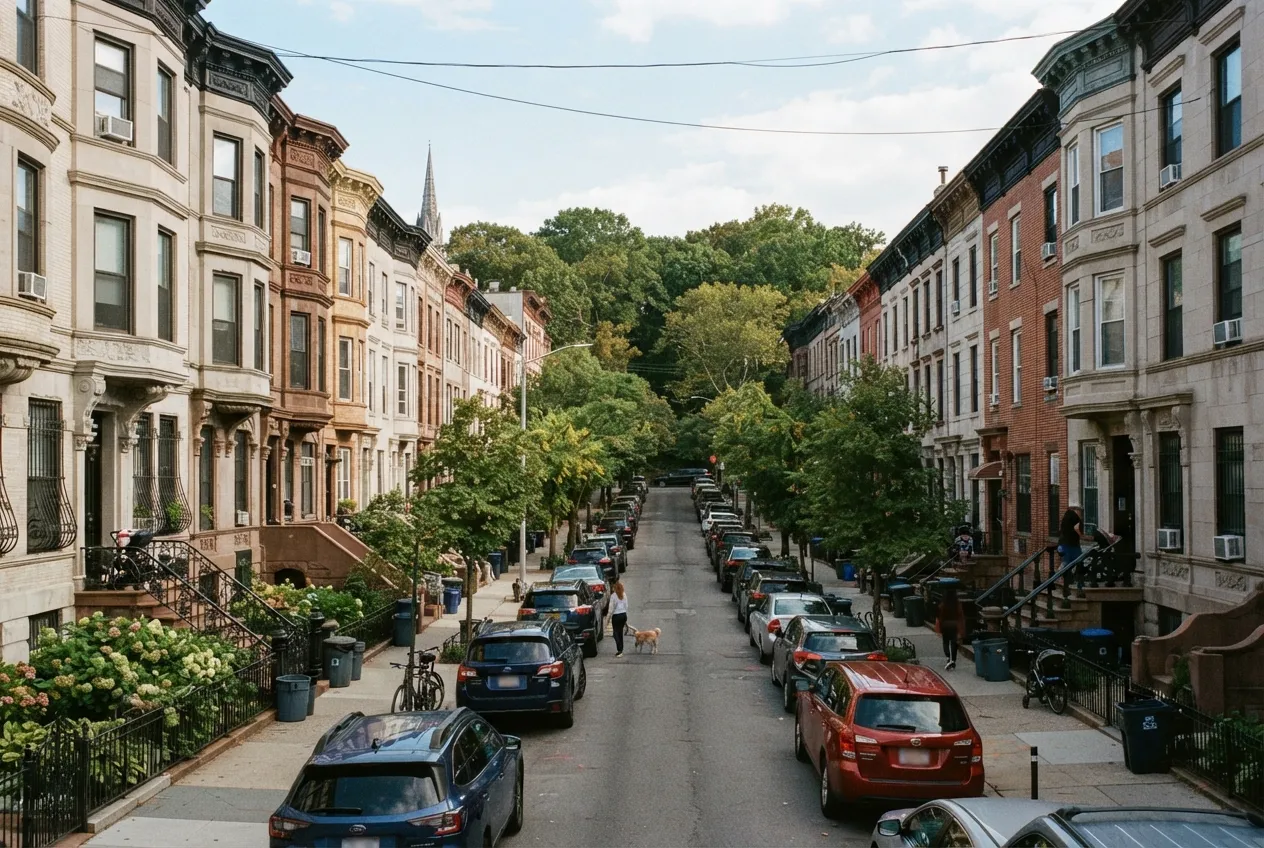
The short answer
A chimney sweep removes creosote, soot and debris from the flue and checks the chimney for damage and blockages. Park Slope homeowners should have chimneys swept and inspected once a year, ideally before the heat season starts on October 1. Brownstones and rowhouses with several flues or a recent boiler conversion often need a closer look.
Many Park Slope brownstones and rowhouses have more chimney than the household uses today. One masonry stack may hold several flues: one for a parlor-floor fireplace that still burns wood, one for a bedroom fireplace that was closed off long ago, and one venting the boiler or water heater in the cellar. Each flue builds up its own soot, debris and wear, and each needs attention. Our certified technicians sweep chimneys throughout the 11217 ZIP code. They work from our office in Clinton Hill, about a mile away, so a visit to Park Slope is a short trip across the neighborhood line.
What a Chimney Sweep Covers in a Park Slope Home
A sweep is more than running a brush down the flue. We start by checking how the fireplace or appliance is used and which flues are active. Then we clean and inspect each active flue from the firebox up. We lay down drop cloths and use containment to keep soot off original floors, mantels and plaster, which matters in older Brooklyn interiors.
When we finish, we walk you through what we found in plain terms. You'll hear what was cleaned, what looks sound, and what needs a repair or a closer look.
- Removal of creosote and soot from the flue walls, smoke chamber and smoke shelf
- Clearing of nests, leaves and fallen masonry debris
- Check of the damper for smooth operation and a proper seal
- Look at the firebox for cracked brick or failing mortar joints
- Exterior check of the crown, cap and flashing where it can be reached safely
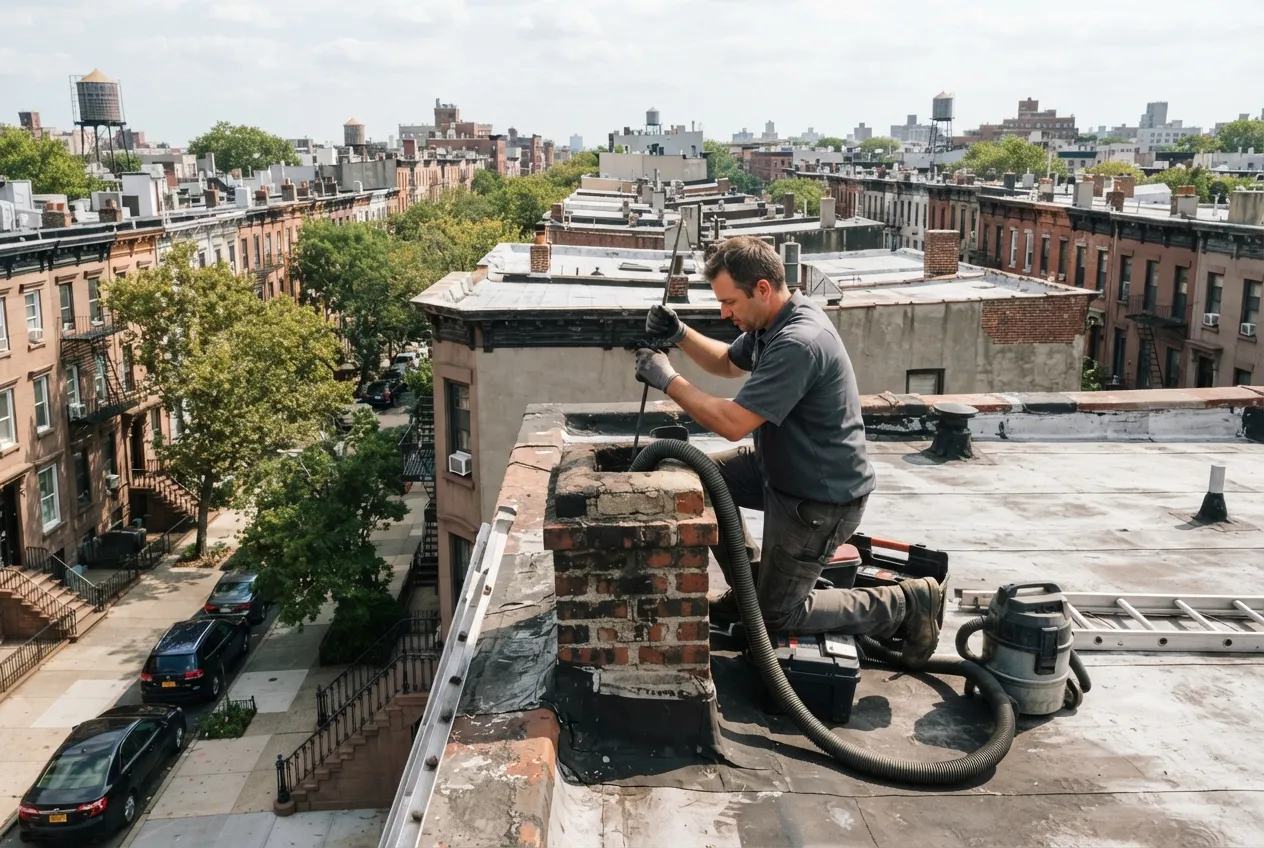
Brownstones, Rowhouses and Pre-War Buildings
Park Slope's housing comes with its own chimney issues. Many rowhouse fireplaces were built for coal or wood and went unused for decades. If you plan to light a fireplace that hasn't been used in years, have it swept and inspected first. Old flues can be unlined or have cracked clay tile. They can also hold years of debris that you can't see from the hearth.
Rowhouses share party walls, so a chimney problem doesn't always stay in one house. Gaps in an old flue can let smoke or heat move where it shouldn't. Crowns and caps on these roofs take years of freeze-thaw cycles, and water entry often shows up first as stained plaster or a damp smell near the fireplace.
In pre-war apartment buildings and multi-family brownstones, a single chimney may serve several units or a shared boiler. We work with owners and building managers to sweep and inspect those flues before heating demand picks up.
When Park Slope Homeowners Should Schedule a Sweep
The NFPA 211 standard calls for chimneys, fireplaces and vents to be inspected once a year. Chimney professionals use three inspection levels. A Level 1 inspection fits when nothing about the system has changed. A Level 2 inspection is called for when the system changes, such as a new appliance or a switch of fuel, or when the home is sold. A Level 3 inspection applies when a hidden hazard can only be reached by opening part of the chimney or building.
Timing matters in New York City. The city's heat season runs from October 1 through May 31. During that period, building owners must keep apartments heated to the city's minimum temperatures. Late summer and early fall are good times to book, before boilers and fireplaces are running daily.
- Once a year, as a routine sweep and inspection
- Before the first fire of the season
- After buying a brownstone or rowhouse
- Before lighting a fireplace that hasn't been used in years
- Whenever you notice smoke entering the room, a strong odor or water stains near the chimney
Time for your annual chimney check?
Boiler Conversions and Gas Appliance Flues
Many Park Slope buildings have moved from oil heat to gas. When a New York City building converts its boiler from oil to gas, the chimney has to be evaluated as part of the work. A new liner is often needed. Gas exhaust produces acidic condensate, and that condensate can corrode a masonry flue that was built for oil.
If your building has converted, or a conversion is planned, we can sweep the old oil residue from the flue and check whether the existing liner suits the new appliance. We'll explain what we see so you and your heating contractor can plan the next step.
Serving Park Slope and Nearby Neighborhoods
Besides Park Slope, we sweep chimneys in Prospect Heights, Carroll Gardens, Fort Greene, Clinton Hill and Downtown Brooklyn. These neighborhoods have much of the same older masonry housing, and the same care for original interiors applies to every visit.
To prepare, stop using the fireplace at least a day ahead so the firebox is cool. Clear a path to the hearth and to the boiler room if we're checking that flue too. If you know it, let us know which flues are active.
More services in Park Slope
- Chimney Inspection in Park Slope
- Chimney Repair in Park Slope
- Air Duct Cleaning in Park Slope
- Chimney Liner Installation in Park Slope