The short answer
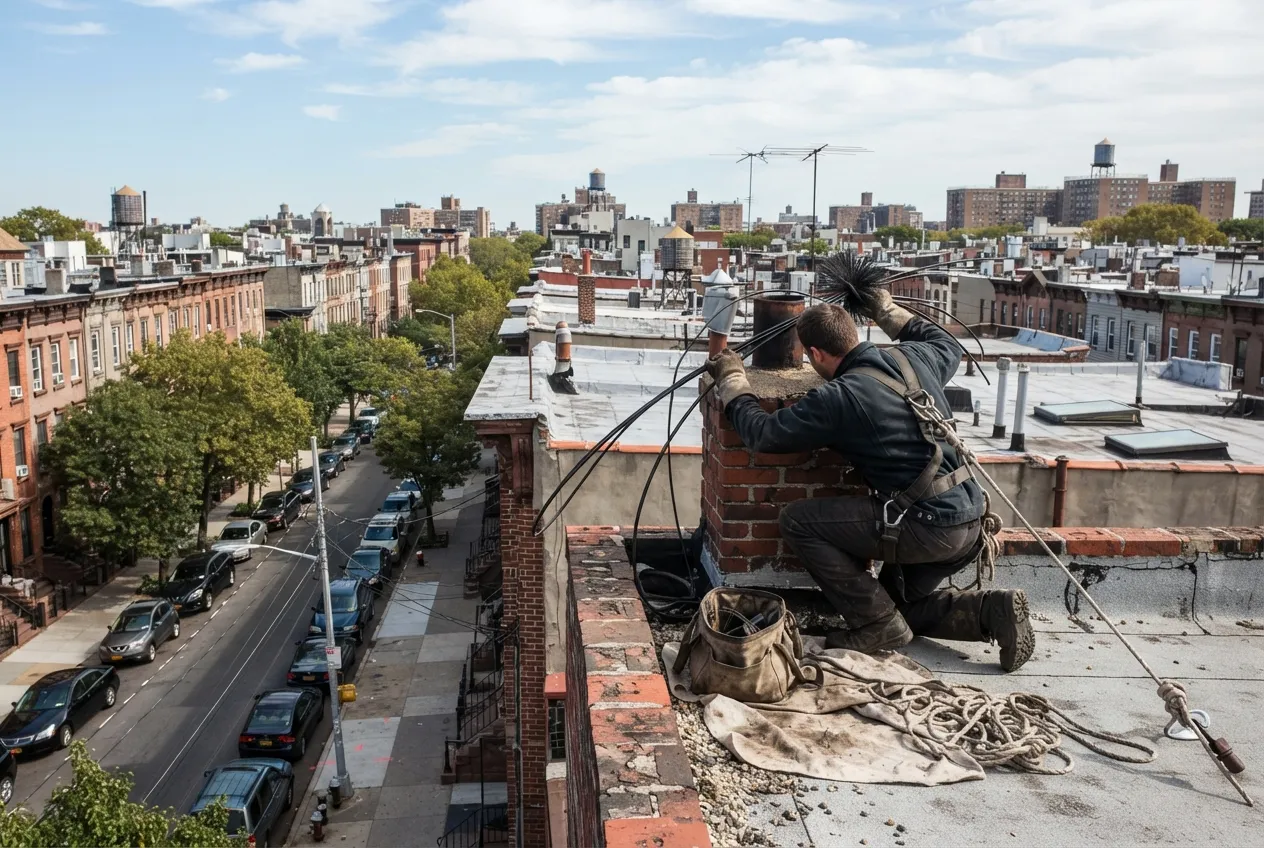
A chimney sweep in Clinton Hill removes soot, creosote and debris from your flue and checks it for damage, blockages and venting problems. Older masonry chimneys in local brownstones and rowhouses should be inspected once a year under the NFPA 211 standard, and more closely after any change to the heating system.
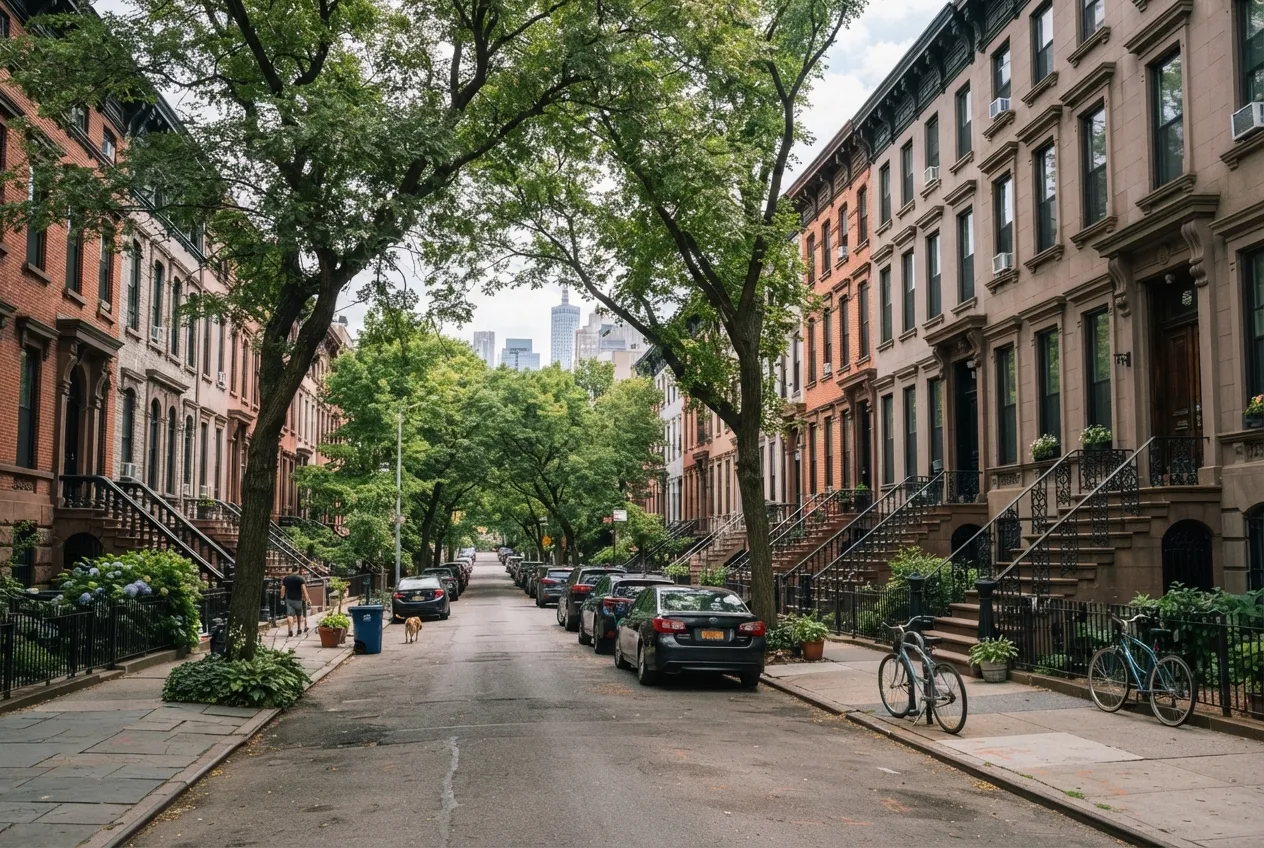
Our office is at 419 Waverly Ave, so Clinton Hill is home base for Expert Chimney Sweep. The neighborhood's housing (brownstones, rowhouses, pre-war apartment buildings and some detached homes) comes with a wide mix of chimneys. Some serve working wood-burning fireplaces. Others vent gas or oil boilers in the cellar. Many belong to fireplaces that have sat unused for years. Each needs a different kind of attention. Our certified technicians clean and inspect them with the age and construction of the building in mind, so you know what your flue is doing and whether it is safe to use.
What a Chimney Sweep Covers in a Clinton Hill Home
A sweep is more than running a brush up the flue. We start by looking at how the chimney is used: wood fires, a gas insert, a boiler or water heater connection, or nothing at all. That tells us what kind of buildup to expect and what to look for while we work.
We protect the room and the hearth before we start, because soot travels easily in older homes with original floors and plaster. Then we clean the flue and check the parts that commonly fail.
- Removal of soot and creosote from the firebox, smoke chamber and flue
- Clearing of nests, leaves and fallen masonry that block the draft
- A check of the damper for a proper seal and smooth operation
- A look at the liner, or the lack of one, and at flue tile condition
- A review of the crown, cap and visible exterior brick where it can be reached safely
- A plain-language report on what we found and what, if anything, needs attention
Older Masonry Chimneys in Brownstones and Rowhouses
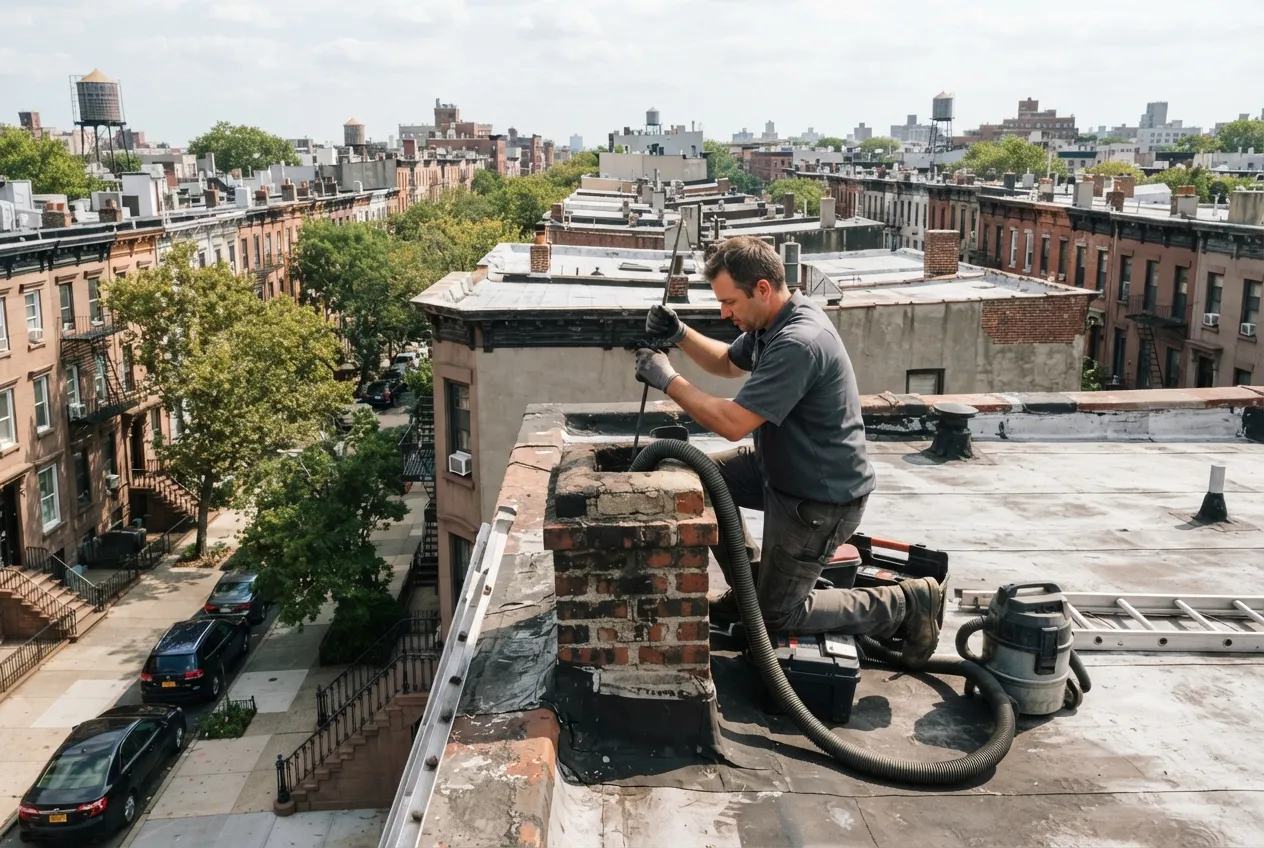
Many Clinton Hill rowhouses were built with several fireplaces feeding into a shared chimney stack, and flues often run side by side. Over time, mortar between flues can break down, and smoke or gases can leak where they shouldn't. We check each flue you plan to use and point out any that share walls with flues still in service.
Fireplaces that have been closed off or used only for decoration often hide problems: debris sitting on a closed damper, animal nests, or crumbling tile. If you are thinking about lighting a fire in a fireplace that hasn't been used in a long time, have it swept and inspected first. It is the most common situation we see in the neighborhood's older homes.
Boiler Flues, Gas Conversions and Heat Season
In many pre-war apartment buildings and converted rowhouses, the chimney's main job is venting the boiler. Those flues collect soot and scale, and a partial blockage can push exhaust back into the building. Cleaning and checking them before heating demand picks up keeps the system venting the way it should.
If your building is converting its boiler from oil to gas, the chimney has to be evaluated as part of the job in New York City. A new liner is often needed, because gas exhaust produces acidic condensation that can eat away at an old masonry flue. We can inspect the flue and explain its condition before or during the conversion.
New York City's heat season runs from October 1 through May 31, and building owners have to keep apartments at the city's minimum temperatures during that time. Scheduling boiler flue work in late summer or early fall avoids surprises once the heat has to stay on.
Time for your annual chimney check?
How Often to Schedule a Sweep and Inspection
The NFPA 211 standard calls for chimneys, fireplaces and vents to be inspected once a year. Whether the flue also needs a full cleaning depends on how much it is used and what burns in it. Inspections come in three levels, and the right one depends on your situation.
- Level 1: a yearly check when nothing about the system has changed
- Level 2: when you add or replace an appliance, switch fuels, or buy or sell the home
- Level 3: when a suspected hidden hazard means opening part of the chimney or wall to reach it
Serving Clinton Hill and Nearby Neighborhoods
Because we're based on Waverly Ave, we can get to homes across Clinton Hill without a long trip. We also regularly work in Fort Greene, Prospect Heights, South Williamsburg, Downtown Brooklyn and DUMBO, where the mix of rowhouses, brownstones and older apartment buildings raises many of the same chimney questions.
More services in Clinton Hill
- Chimney Inspection in Clinton Hill
- Chimney Repair in Clinton Hill
- Air Duct Cleaning in Clinton Hill
- Chimney Liner Installation in Clinton Hill