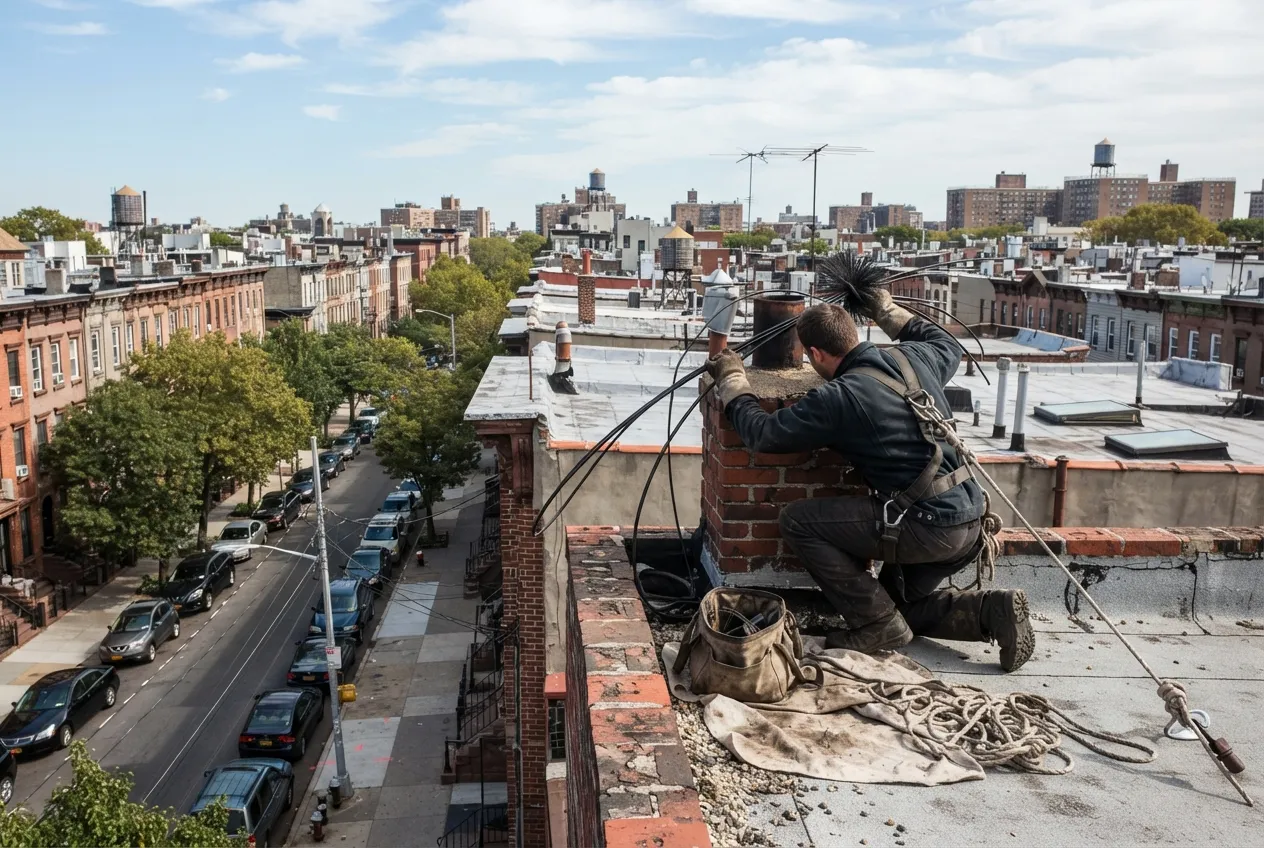
The short answer
Chimney repair in Clinton Hill usually means fixing aging masonry, including mortar, brick, crowns and flashing, or relining a flue, especially after an oil-to-gas conversion. Expert Chimney Sweep, based on Waverly Ave, inspects first and then repairs only what the inspection shows is needed.
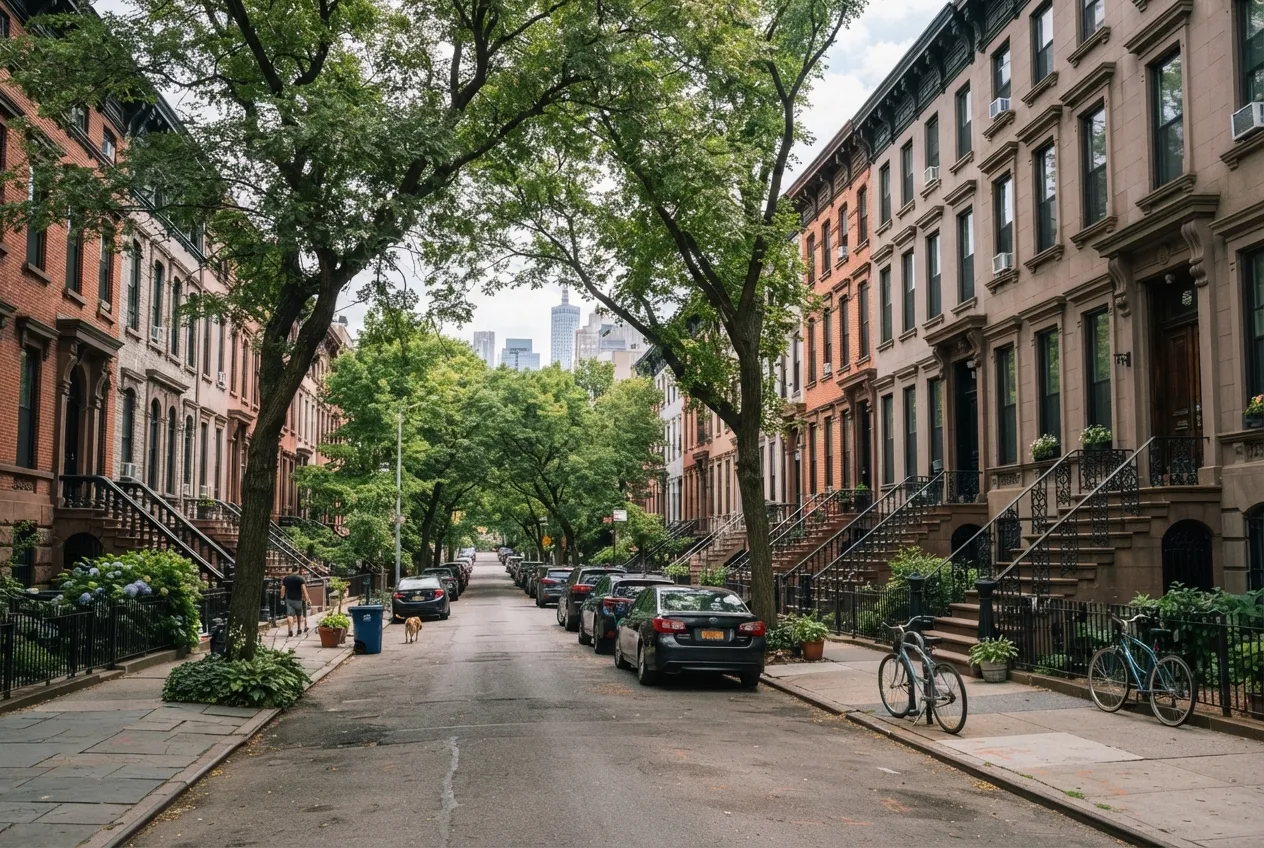
Most chimneys in Clinton Hill are older than the heating systems attached to them. The neighborhood's brownstones, brick rowhouses and pre-war apartment buildings were built with masonry chimneys that have spent decades exposed to rain, freeze-thaw cycles and the exhaust of several generations of boilers and fireplaces. Expert Chimney Sweep repairs those chimneys from our office at 419 Waverly Ave, right here in the neighborhood. We start by finding out what is actually wrong and explain it in plain terms. Then we repair what needs repairing, not everything that could be replaced.
Common Chimney Problems in Clinton Hill Homes
Masonry chimneys fail slowly. The first signs usually show up somewhere other than the chimney itself: a water stain on a top-floor ceiling, flakes of brick in the fireplace, or a musty smell in the room when it rains. On rowhouses and brownstones, the chimney often runs through a shared party wall, so a problem left alone can affect the building next door too.
These are the repairs we handle most often on older Brooklyn homes:
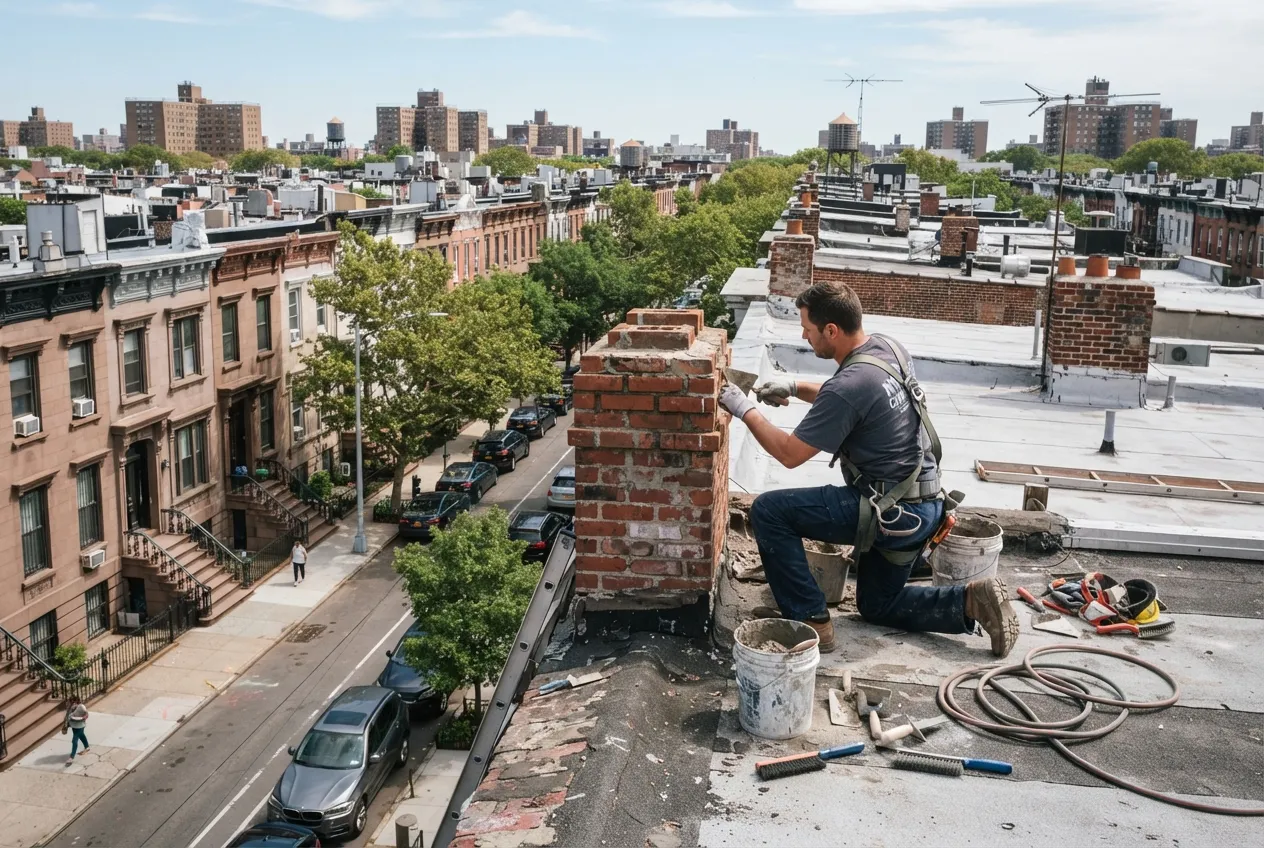
- Deteriorated mortar joints that let water into the brick and need repointing
- Spalling brick, where the face of the brick breaks off after water freezes inside it
- Cracked or crumbling chimney crowns, the concrete cap at the top that sheds rain
- Failed flashing where the chimney meets the roof, a frequent cause of leaks into top-floor rooms
- Missing or rusted chimney caps that let in rain, debris and animals
- Cracked clay flue tiles or damaged liners that no longer contain exhaust safely
- Stuck, rusted or warped fireplace dampers
Oil-to-Gas Conversions and Chimney Liners
Many Clinton Hill buildings have switched from oil heat to gas, or are planning to. When a New York City building converts its boiler from oil to gas, the chimney has to be evaluated as part of the work. A new liner is often needed. Gas exhaust produces acidic condensate that can corrode a masonry flue over time.
We inspect the existing flue and check whether it is suited to the new appliance. If a liner is required, we install it. If you are coordinating a conversion with a plumber or heating contractor, we can work alongside them so the chimney portion fits into the project schedule.
What a Repair Visit Looks Like
Every repair starts with an inspection. The NFPA 211 standard calls for chimneys, fireplaces and vents to be inspected once a year, and chimney professionals use three inspection levels:
After the inspection, our certified technicians walk you through what they found. They separate urgent safety problems from items that can wait, and you decide what gets done. On brownstones and rowhouses, we plan roof access and rooftop work carefully so we disturb as little as possible inside your home.
- Level 1 applies when nothing about the system has changed.
- Level 2 applies when the system changes, such as a new appliance or a switch of fuel, or when the home is sold.
- Level 3 applies when a suspected hidden hazard can only be reached by opening part of the chimney or the building.
Time for your annual chimney check?
Planning Repairs Around Heat Season and the Weather
New York City's heat season runs from October 1 through May 31. During that time, building owners must keep apartments heated to the city's minimum temperatures. For owners of multi-unit buildings, a chimney problem in January is more than an inconvenience, because the heating system serves tenants who depend on it.
Masonry work such as repointing and crown repair also goes best in mild, dry weather. If an inspection turns up problems in the fall, we will tell you which ones to handle before you rely on the system all winter and which can wait until spring. Booking an inspection in late summer gives you the most room to plan.
Clinton Hill and Nearby Neighborhoods
Our office is on Waverly Avenue, so Clinton Hill is home turf. We also repair chimneys in Fort Greene, Prospect Heights, South Williamsburg, Downtown Brooklyn and DUMBO. Housing in these areas ranges from brownstones and rowhouses to pre-war apartment buildings and converted lofts. The problems tend to be similar across all of them: old masonry, aging flues, and heating systems that have changed over the years without the chimney being updated to match.
More services in Clinton Hill
- Chimney Sweep in Clinton Hill
- Chimney Inspection in Clinton Hill
- Air Duct Cleaning in Clinton Hill
- Chimney Liner Installation in Clinton Hill