The short answer
Expert Chimney Sweep cleans and inspects fireplace, stove and appliance chimneys in DUMBO's lofts, condos, pre-war buildings and rowhouses. The NFPA 211 standard calls for a yearly inspection. Booking a sweep before the heat season starts on October 1 is the easiest way to stay ahead of problems.
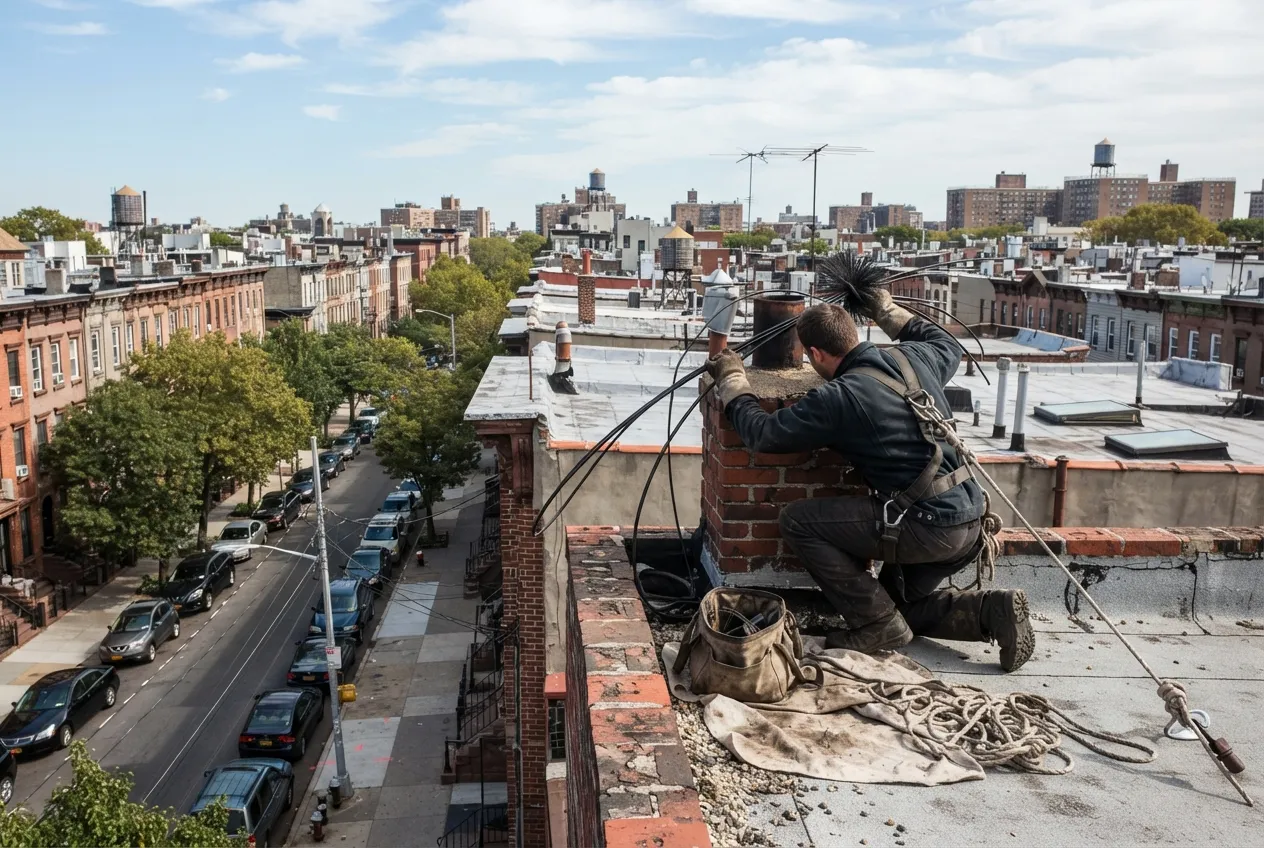
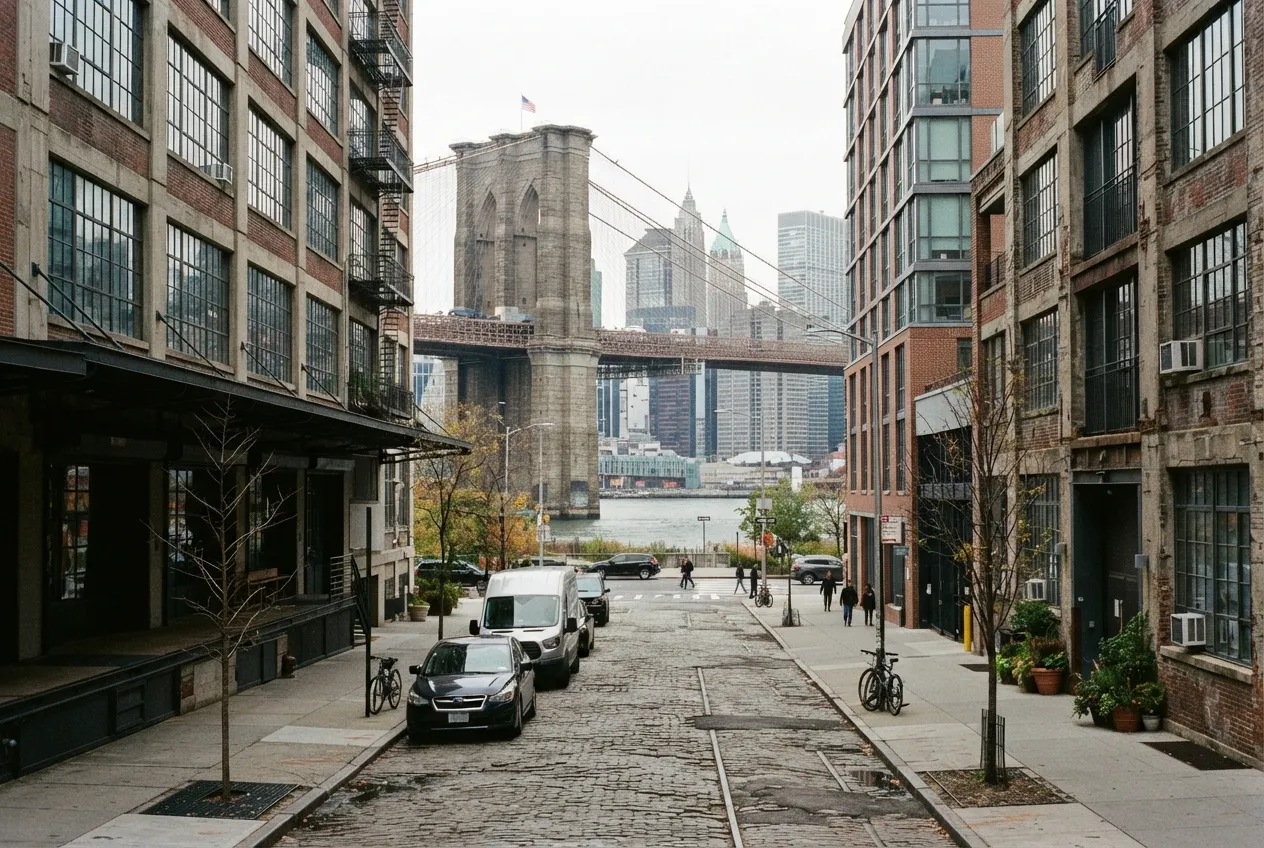
Many DUMBO homes have a working fireplace, wood stove or gas appliance venting through a masonry chimney. These may be converted loft buildings, pre-war apartment buildings, newer condominiums or one of the older rowhouses. Expert Chimney Sweep cleans and inspects those chimneys for homeowners, co-op and condo residents, and building owners throughout the 11201 ZIP code. Our office is in Clinton Hill, about a mile southeast of DUMBO, so getting a certified technician to your door is a short trip. The goal of every visit is simple. We remove the soot and creosote that build up in a flue, check that the chimney is venting the way it should, and tell you plainly what we found.
What a Chimney Sweep Covers in a DUMBO Home
A sweep is more than running a brush down the flue. When a fire burns, it leaves creosote on the inside walls of the chimney. Creosote is a tar-like residue that can ignite, and it builds up faster when wood is damp or fires burn cool and smoky. Gas and oil appliances leave less visible residue, but their flues can still collect debris, nesting material and flaking masonry.
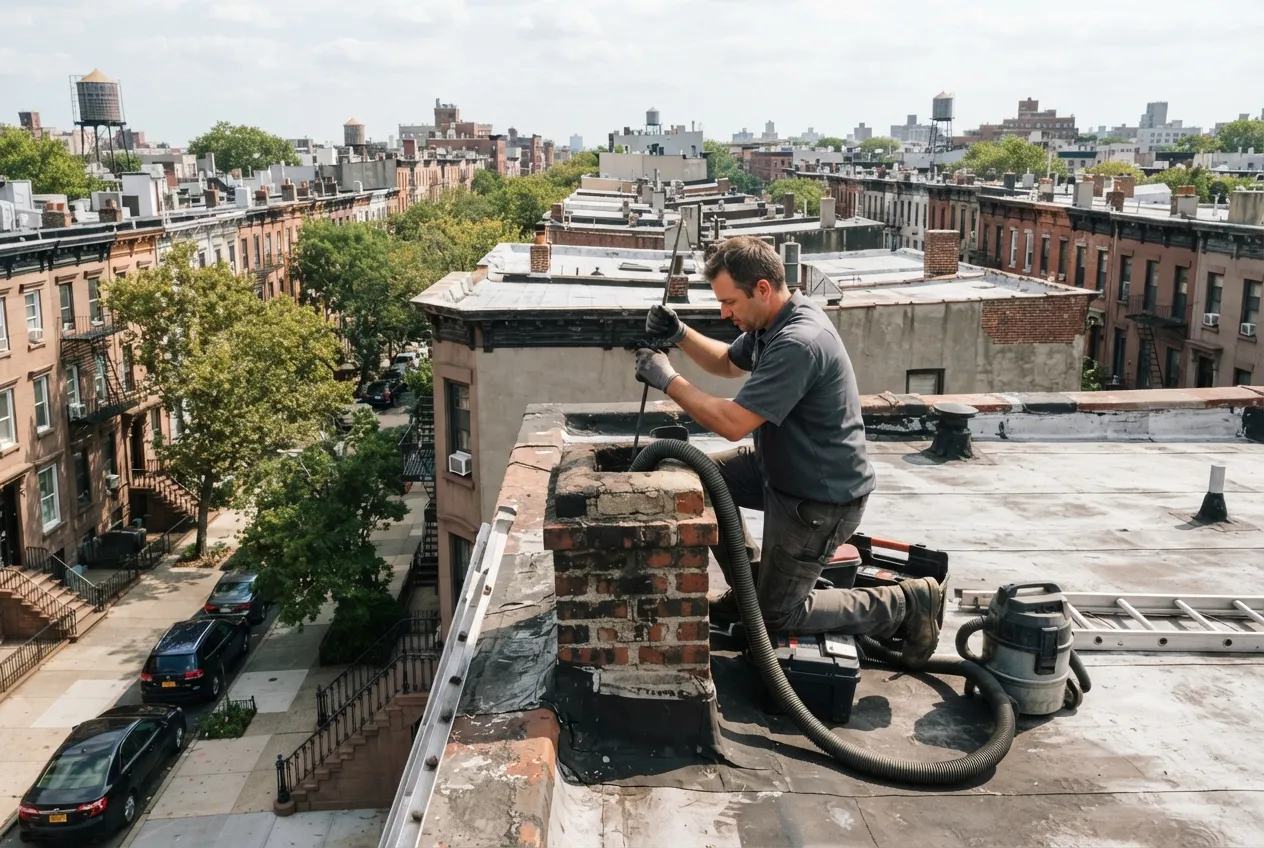
On a typical visit, our technician protects the room around the fireplace, cleans the flue and smoke chamber, and checks the parts you can't easily see yourself.
- Firebox, damper and smoke shelf cleaned and checked for damage
- Flue swept from the bottom, the top, or both, depending on access
- Liner and visible masonry checked for cracks, gaps and deterioration
- Chimney cap and crown looked over for openings that let in water or animals
- A plain-language summary of conditions and any repairs worth considering
How DUMBO's Buildings Affect Chimney Care
DUMBO's housing ranges from large former industrial buildings converted to residential lofts, to pre-war apartment buildings, to newer construction and a smaller number of older rowhouses. Each type brings its own chimney questions.
In converted loft buildings, a fireplace or stove may vent through a flue added during the conversion, or through an older masonry stack shared with other units. Tall buildings mean long flue runs and rooftop access that has to be coordinated with management. In pre-war apartment buildings and rowhouses, original masonry flues may be unlined or lined with clay tile that has cracked over time. Newer condos often use factory-built fireplaces with metal flues, which need to be cleaned and checked according to the manufacturer's design.
We look at the system you actually have before recommending anything. For buildings with a board or managing agent, we can work with them on roof access and scheduling.
Yearly Inspections and the Three Inspection Levels
The NFPA 211 standard calls for chimneys, fireplaces and vents to be inspected once a year, even if you rarely use them. Chimney professionals use three inspection levels, and knowing which one applies helps you understand what a visit involves.
A Level 1 inspection fits most annual visits, when nothing about the system has changed. A Level 2 inspection is appropriate when something has changed, such as a new appliance or a switch of fuel, or when the home is being sold. That makes it common in DUMBO, where condos and lofts change hands regularly. A Level 3 inspection is reserved for situations where a hidden hazard has to be reached by opening part of the chimney or building. It is not routine, and we will explain why it's needed before anything is opened.
Time for your annual chimney check?
Oil-to-Gas Conversions and Building Chimneys
If you own or manage a DUMBO building whose boiler is being converted from oil to gas, the chimney has to be evaluated as part of that work. Gas exhaust produces acidic condensate that can corrode a masonry flue, so a new liner is often needed. Our technicians can sweep and inspect the existing flue so you and your heating contractor know its condition before the conversion moves forward.
Timing matters too. New York City's heat season runs from October 1 through May 31. During those months building owners must keep apartments heated to the city's minimum temperatures, so chimney work on a building's heating system is easiest to schedule in late spring or summer.
Scheduling a Sweep from Our Clinton Hill Office
Because we're based in nearby Clinton Hill, DUMBO is part of our regular service area, along with Downtown Brooklyn, Brooklyn Heights, Boerum Hill and Fort Greene. When you book, it helps to tell us what kind of appliance you have, how often you use it, and whether roof access requires building approval.
Fall fills up quickly as people prepare for the first cold nights. If you use your fireplace or stove regularly, a summer or early fall appointment usually gives you the most flexibility.
More services in DUMBO
- Chimney Inspection in DUMBO
- Chimney Repair in DUMBO
- Air Duct Cleaning in DUMBO
- Chimney Liner Installation in DUMBO