The short answer
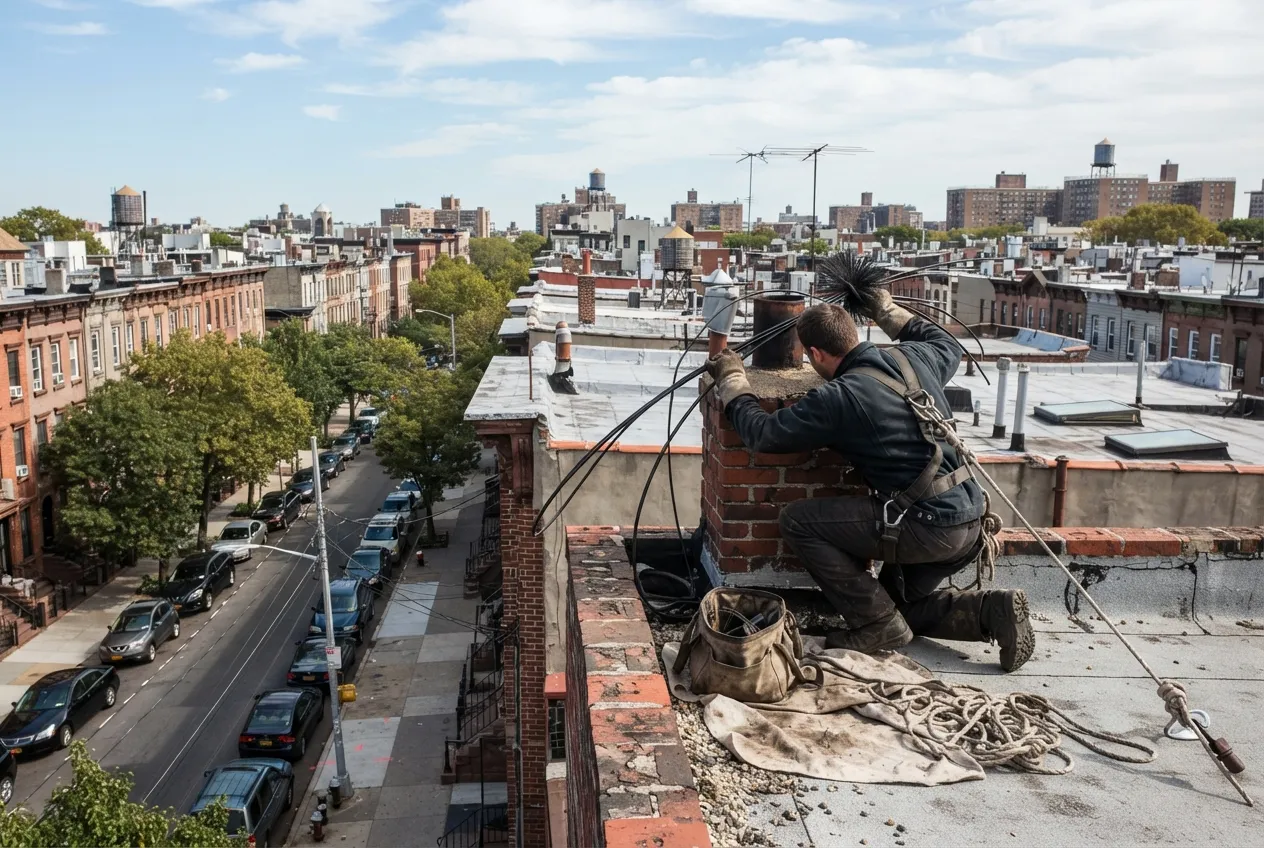
A chimney sweep removes creosote, soot and debris from your flue and checks the chimney for damage, blockages and draft problems. The NFPA 211 standard calls for chimneys, fireplaces and vents to be inspected once a year, so most Carroll Gardens homes should schedule a sweep and inspection annually, ideally before the heating season.
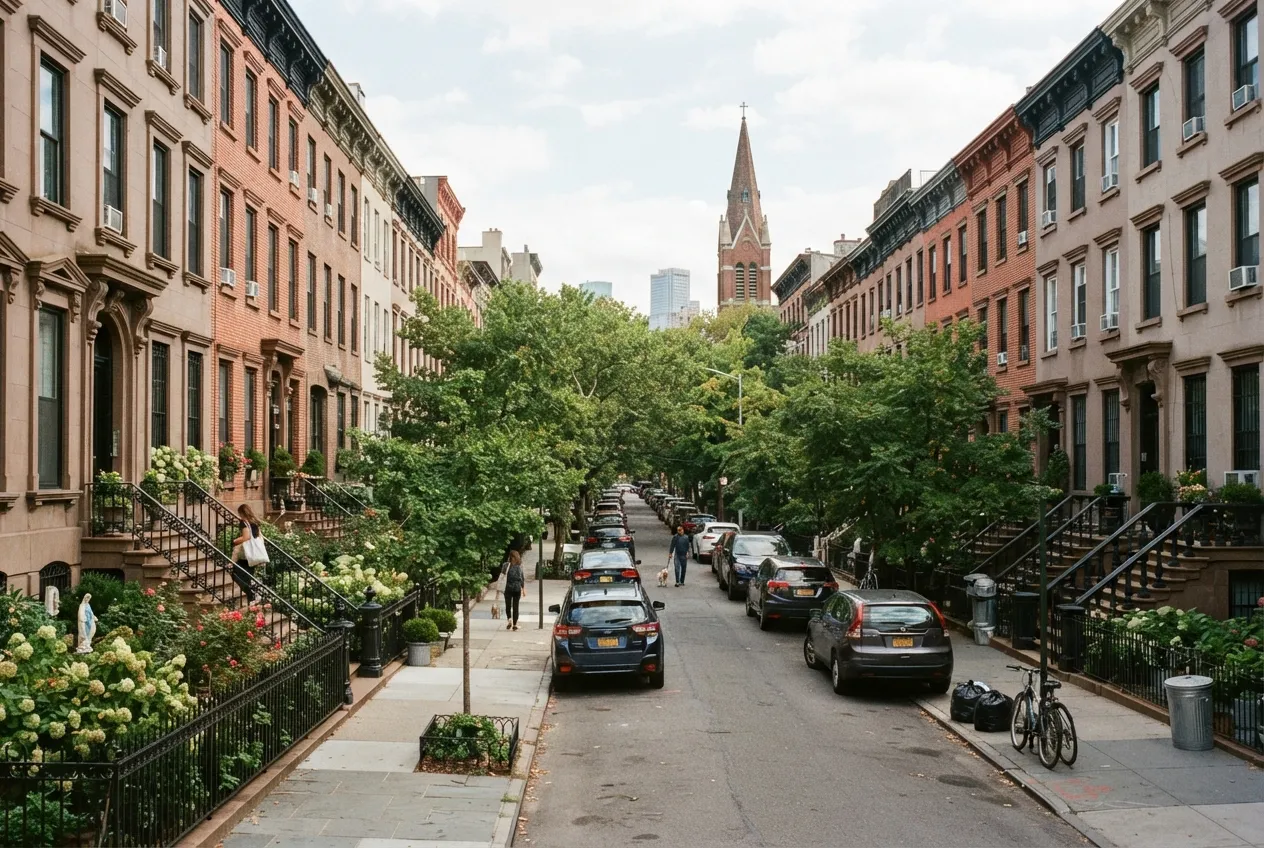
Many Carroll Gardens homes were built long before modern heating, and their chimneys have been working for generations. Brownstones and rowhouses often have several flues in one shared stack, with fireplaces on more than one floor. Pre-war apartment buildings may have a boiler flue running the full height of the building. Our certified technicians come from our Clinton Hill office, about 2 miles east, to sweep and inspect chimneys throughout ZIP code 11231. We clean the flue, look closely at its condition, and tell you plainly what we found and what, if anything, needs attention.
What a Chimney Sweep Covers in a Carroll Gardens Home
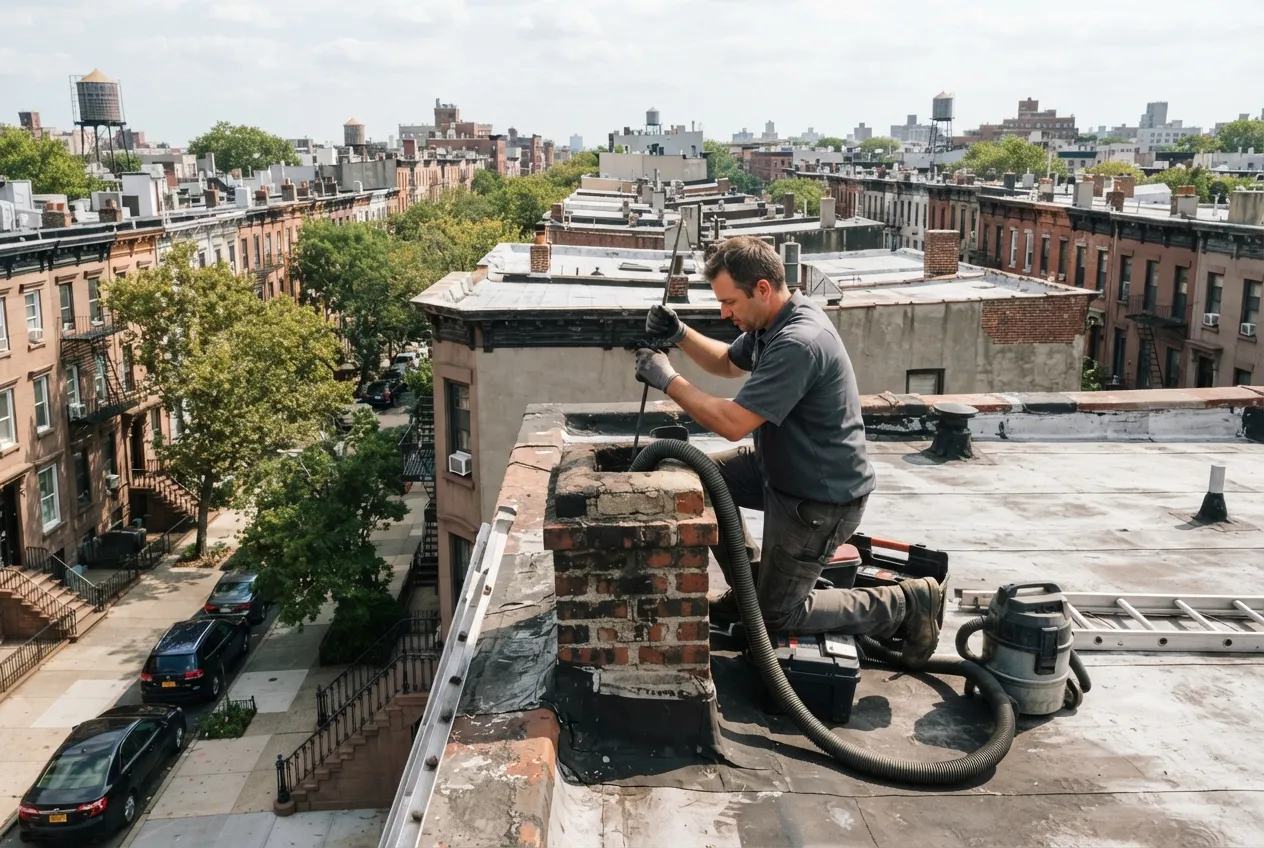
A sweep is more than running a brush up the flue. We protect the room around the fireplace, clean the firebox, smoke chamber and flue, and remove the soot and creosote that build up from burning wood or from a heating appliance. Creosote is flammable, and a thick layer narrows the flue so smoke and gases have a harder time getting out.
While we clean, we inspect. Old masonry chimneys in the neighborhood can have cracked flue tiles, missing mortar joints, a damper that no longer seals, or a crown that lets water in. We point out anything we see and explain what it means for safe use.
- Firebox, smoke chamber and flue cleaning
- Damper operation check
- Visual check of flue tiles, mortar joints and the crown
- Look for nests, leaves and fallen debris
- Plain explanation of what we found
Why Older Brownstones and Rowhouses Need Extra Attention
Carroll Gardens rowhouses and brownstones commonly have multiple fireplaces stacked on different floors, each with its own flue inside one chimney. Some of those fireplaces have been closed off for years, and some have been reopened by new owners. A flue that has sat unused can collect debris, nests or fallen masonry, and it should be cleaned and checked before anyone lights a fire in it again.
Because these chimneys sit between neighboring houses, problems are not always visible from the street. Water damage, loose bricks near the top, or a leaning stack can affect both your home and the one next door. Catching these issues during a routine sweep is far easier than dealing with them after a leak or a smoke problem.
Inspection Levels and When You Need Each One
The NFPA 211 standard calls for a yearly inspection, and chimney professionals use three inspection levels. We will recommend the one that fits your situation rather than the most involved one by default.
- Level 1: the routine yearly check when nothing about the system has changed
- Level 2: when the system changes, such as a new appliance or a switch of fuel, or when the home is sold
- Level 3: when a hidden hazard has to be reached by opening part of the chimney or building
Time for your annual chimney check?
Boiler Flues and Oil-to-Gas Conversions
Many pre-war apartment buildings and some larger rowhouses in the neighborhood vent a boiler through a masonry chimney. When a New York City building converts its boiler from oil to gas, the chimney has to be evaluated as part of the work. A new liner is often needed, because gas exhaust produces acidic condensate that can corrode a masonry flue over time.
If you are planning a conversion or have already made one, a sweep and inspection of the boiler flue helps confirm it is clear and in suitable condition for the appliance it now serves.
Timing Your Sweep Around the Heat Season
New York City's heat season runs from October 1 through May 31, when building owners must keep apartments heated to the city's minimum temperatures. For buildings that rely on a boiler, having the flue swept and checked before October helps avoid problems once the heat has to stay on.
For homeowners who use a wood-burning fireplace, late summer and early fall are good times to book, before the cold weather brings a rush of requests. We also serve nearby Park Slope, Brooklyn Heights, Downtown Brooklyn, DUMBO and Boerum Hill, so scheduling around neighboring jobs is straightforward.
More services in Carroll Gardens
- Chimney Inspection in Carroll Gardens
- Chimney Repair in Carroll Gardens
- Air Duct Cleaning in Carroll Gardens
- Chimney Liner Installation in Carroll Gardens