The short answer
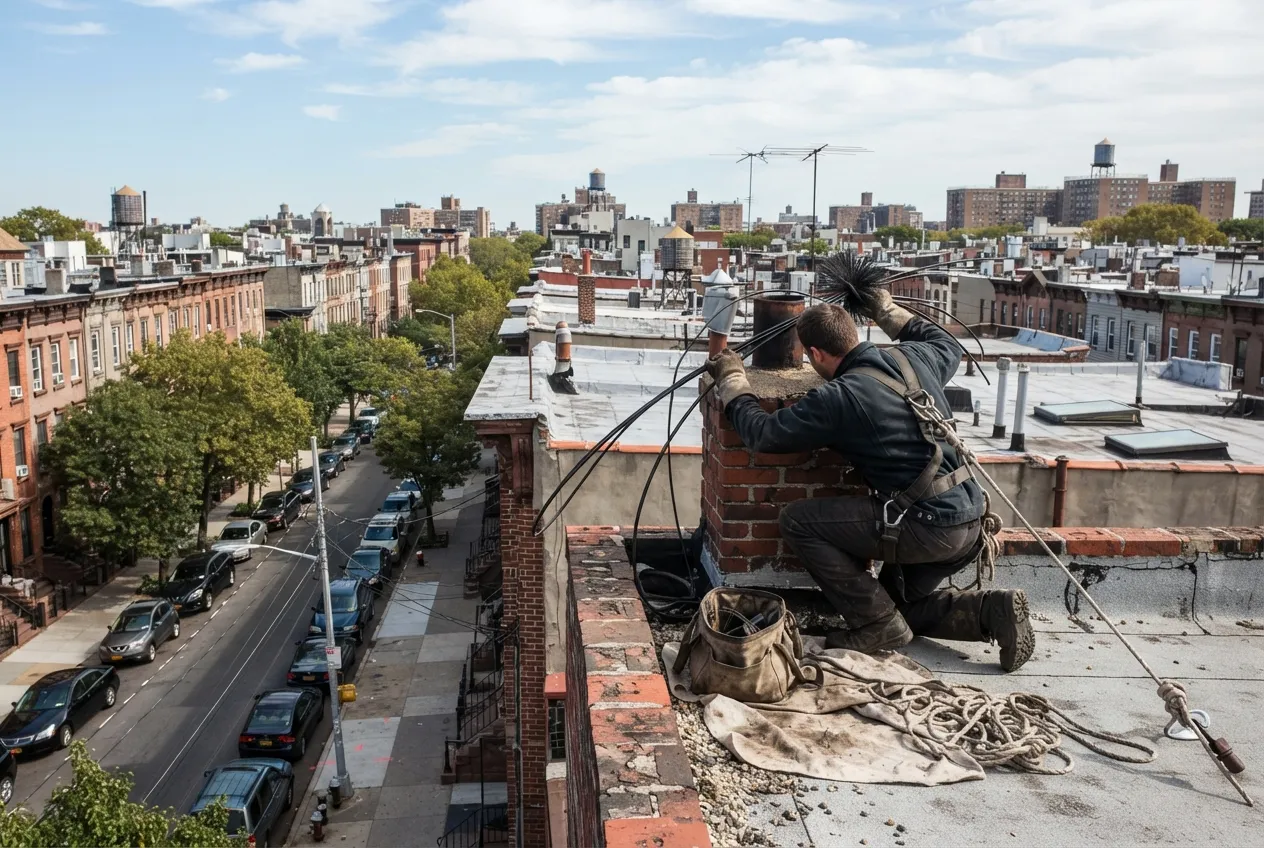
A chimney sweep removes creosote, soot and debris from your flue and checks it for blockages and damage. The NFPA 211 standard calls for chimneys to be inspected once a year, and older Brooklyn Heights brownstones and rowhouses benefit from that routine. Expert Chimney Sweep's certified technicians handle both cleaning and inspection for homes and buildings in the neighborhood.
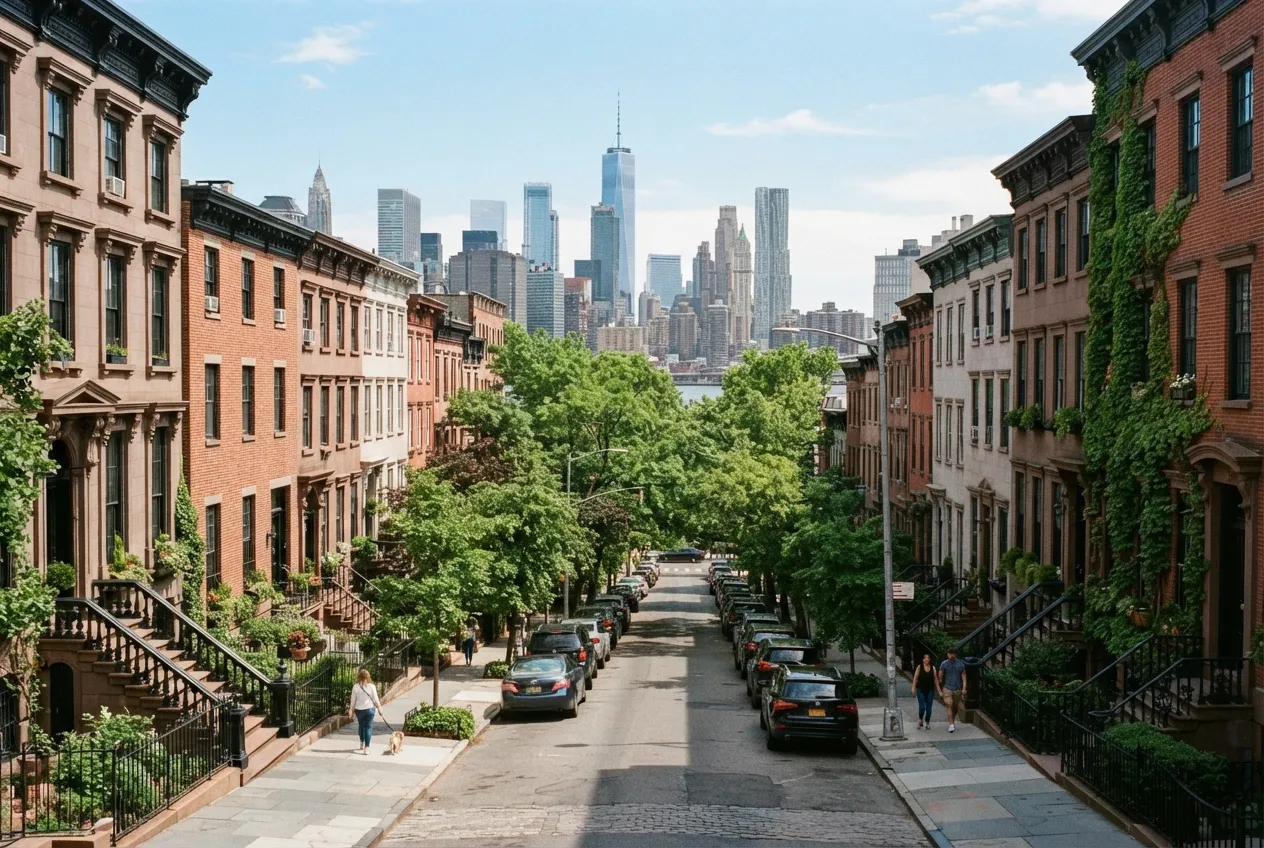
Many Brooklyn Heights homes have chimneys that are older than anyone who lives in them. Brownstones, rowhouses and pre-war apartment buildings often have several flues running up one shared masonry stack. Some vent a working fireplace, some vent a boiler or water heater, and some have been sealed off for decades. Expert Chimney Sweep cleans and checks these chimneys for homeowners and building owners in Brooklyn Heights. Our office in Clinton Hill is about 2 miles southeast of the neighborhood. A sweep is more than brushing out soot. It's also a chance to see what's going on inside a flue you can't see from the living room.
What a chimney sweep covers in a Brooklyn Heights home
Our certified technicians start by figuring out which flue serves which appliance. In a brownstone, the chimney you see on the roof may hold several flues. Some may connect to a parlor-floor fireplace, a bedroom fireplace and a basement boiler. Cleaning the right one and spotting a problem in the one next to it both depend on getting that map right.
From there, a typical visit includes:
- Laying down drop cloths and setting up containment so soot stays out of your rooms
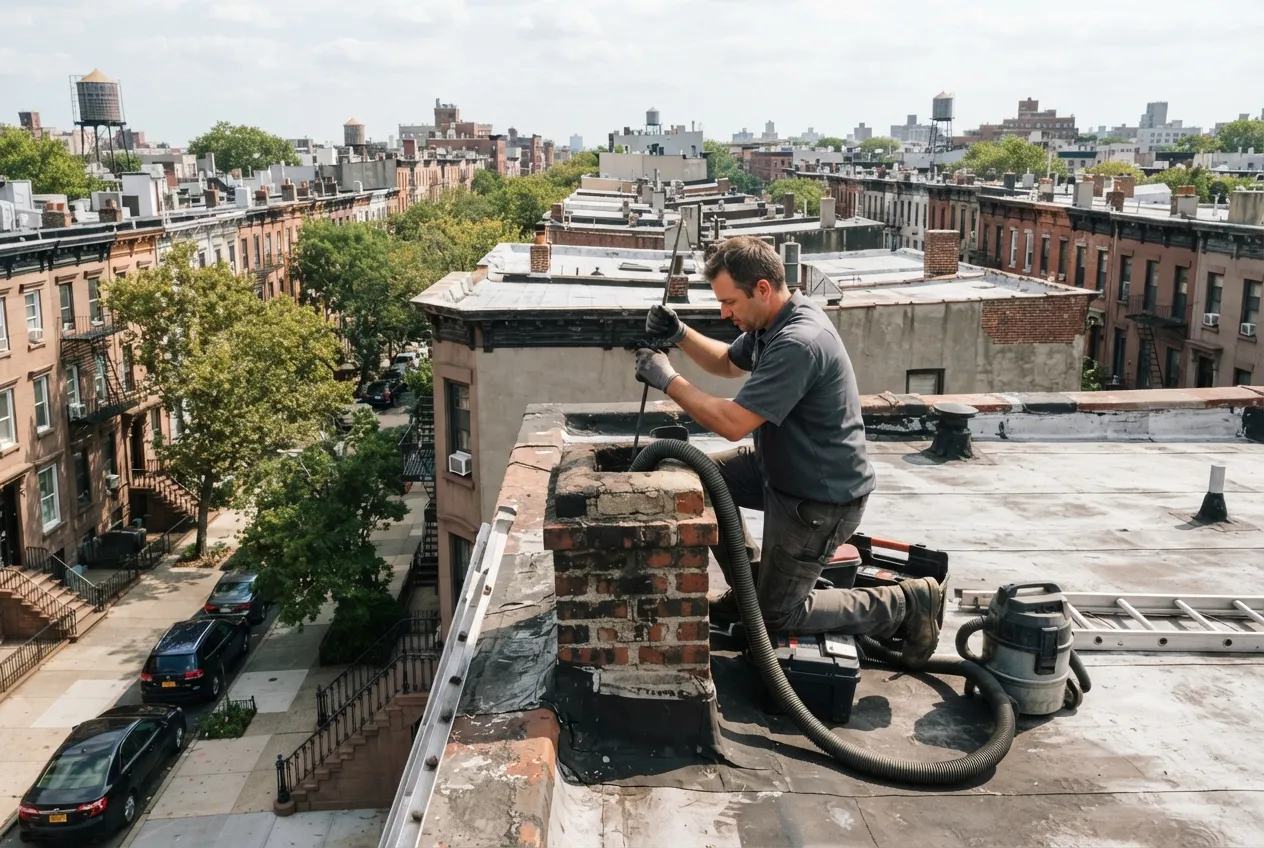
- Brushing the flue to remove creosote, soot and loose debris
- Clearing the smoke chamber, smoke shelf and firebox on wood-burning fireplaces
- Checking the damper for proper opening and sealing
- Looking for blockages such as nests, fallen masonry or leaves at the top of the flue
- Noting cracked flue tiles, missing mortar or a damaged chimney cap and crown
- Explaining what we found in plain language, with photos when they help
Why older brownstones and rowhouses need regular attention
Many chimneys in Brooklyn Heights were built for coal or wood long before modern liners existed. Over the years, mortar joints wear down. Clay tiles crack from heat and freeze-thaw cycles. Rainwater gets in where caps are missing. A flue can look fine from the hearth and still have gaps that let heat or smoke reach the wood framing around it.
Creosote is the other concern. It's a tarry byproduct of burning wood that builds up inside the flue, and it can ignite. Fireplaces that see only occasional use can still collect it, especially when people burn wood that isn't fully dry. Regular sweeping keeps that buildup under control.
Yearly inspections and the three inspection levels
The NFPA 211 standard calls for chimneys, fireplaces and vents to be inspected once a year. Chimney professionals use three levels of inspection:
- Level 1: for a chimney that is in regular use and where nothing about the system has changed
- Level 2: when the system changes, such as a new appliance or a switch in fuel, or when the home is sold
- Level 3: when a hidden hazard has to be reached by opening part of the chimney or building
Time for your annual chimney check?
Boiler chimneys and oil-to-gas conversions
Plenty of Brooklyn Heights buildings heat with a boiler that vents through the same old masonry chimney. When a New York City building converts its boiler from oil to gas, the chimney has to be evaluated as part of the work. A new liner is often needed. Gas exhaust produces acidic condensate, and that condensate can corrode an unlined masonry flue from the inside.
If you are planning a conversion or have already finished one, we can inspect the boiler flue. We'll let you know whether the existing setup is suited to the new fuel.
Timing your sweep around the heat season
New York City's heat season runs from October 1 through May 31. During those months, building owners must keep apartments heated to the city's minimum temperatures. For owners of rowhouses and small apartment buildings, that means the boiler flue has to work properly all winter.
Scheduling a sweep and inspection in late summer or early fall gives you time to handle any repairs before the boiler is running every day. It also gets your fireplace ready for the first cold evening.
Serving Brooklyn Heights and nearby neighborhoods
Along with Brooklyn Heights, we sweep chimneys in Downtown Brooklyn, DUMBO, Boerum Hill, Fort Greene and Carroll Gardens. The housing across these neighborhoods is similar, with plenty of brownstones, rowhouses and pre-war buildings. The same careful approach applies wherever we work.
More services in Brooklyn Heights
- Chimney Inspection in Brooklyn Heights
- Chimney Repair in Brooklyn Heights
- Air Duct Cleaning in Brooklyn Heights
- Chimney Liner Installation in Brooklyn Heights