The short answer
Most Bedford-Stuyvesant homes should have their chimney swept and inspected once a year, ideally before the heat season starts on October 1. A sweep removes soot, creosote and debris, and the inspection checks whether the flue is still safe for the fireplace, boiler or water heater connected to it.
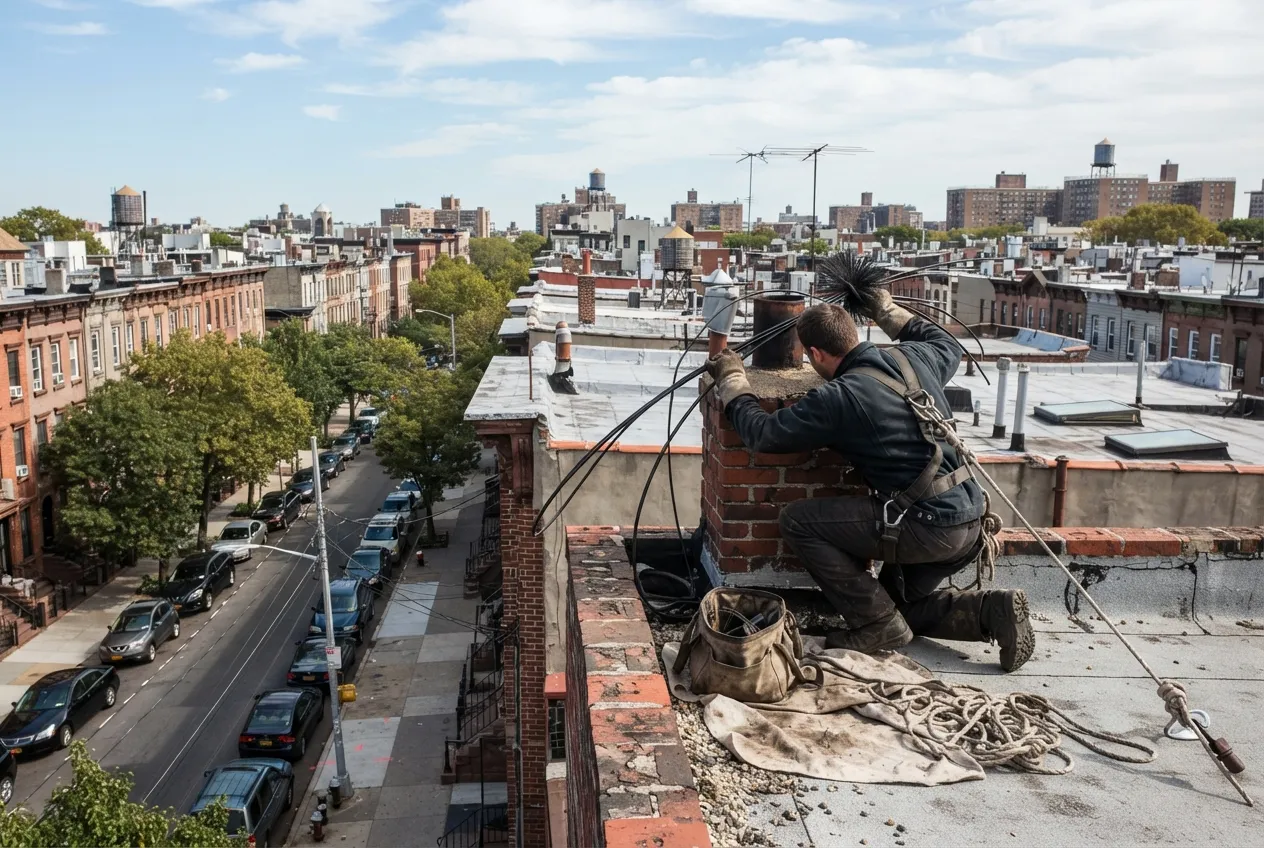
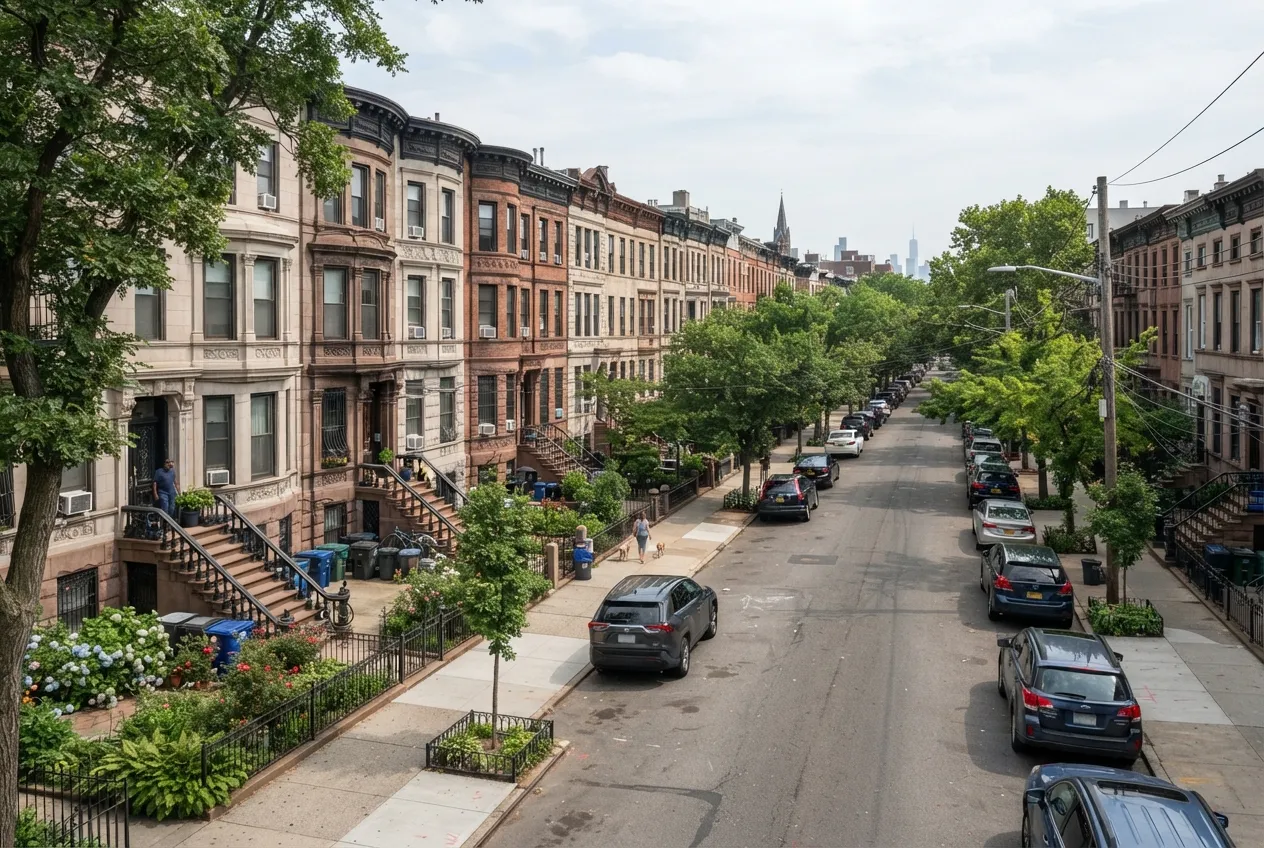
Bedford-Stuyvesant has some of Brooklyn's oldest working chimneys. Its brownstones, rowhouses and pre-war apartment buildings were built for coal and wood, and many now vent oil or gas boilers, gas water heaters or a restored parlor-floor fireplace. Expert Chimney Sweep is based in Clinton Hill, about a mile away, and our certified technicians clean and inspect chimneys throughout ZIP codes 11216 and 11221. This page explains what a sweep involves in a Bed-Stuy home, when to schedule one, and what we look for while we're there.
Why Bed-Stuy Chimneys Need Regular Attention
The typical Bedford-Stuyvesant brownstone or rowhouse has several flues in one masonry stack, often shared along a party wall. One flue may serve the boiler in the cellar, another a fireplace on the parlor floor, and others may have been sealed off decades ago. Over a century of use, mortar joints wear, clay tile liners crack, and debris builds up where flues bend or narrow.
Wood-burning fireplaces leave creosote, a tar-like residue that can ignite inside the flue. Oil and gas appliances leave soot and scale, and gas exhaust produces acidic condensation that slowly attacks old masonry. Birds, squirrels and fallen brick can also block a flue, sending exhaust, including carbon monoxide, back into the house instead of up and out.
What Our Chimney Sweep Includes
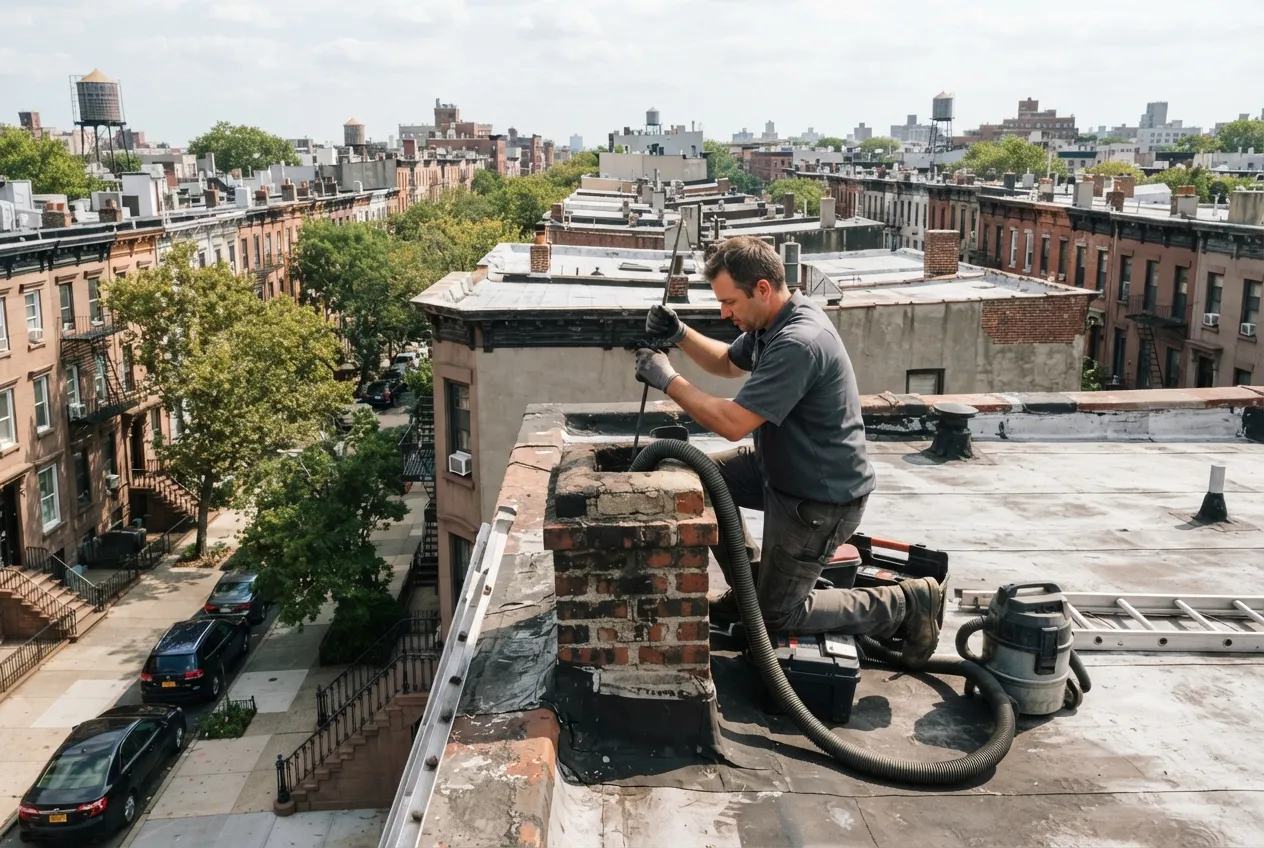
We protect the room first, because many Bed-Stuy homes have original woodwork, plaster and mantels worth keeping clean. Then we work through the flue methodically and tell you what we found in plain terms.
- Drop cloths and sealed containment around the fireplace or appliance opening
- Brushing and vacuuming of the flue, smoke chamber, smoke shelf and firebox
- Removal of creosote, soot, nesting material and loose debris
- A visual check of the liner, damper, crown, cap and the visible masonry
- A camera look inside the flue when the condition can't be seen from the openings
- A clear explanation of any problems, with photos when they help
Inspection Levels and the Once-a-Year Standard
The NFPA 211 standard calls for chimneys, fireplaces and vents to be inspected once a year. A routine sweep usually comes with a Level 1 inspection, which is appropriate when nothing about the system has changed.
A Level 2 inspection is called for when the system changes, such as a new boiler, a switch to a different fuel or a fireplace being put back into use, and when a home is sold. That matters in Bed-Stuy, where many brownstones change hands or go through renovations. A Level 3 inspection is reserved for cases where a hidden hazard can only be reached by opening part of the chimney or the building.
Time for your annual chimney check?
Oil-to-Gas Conversions in Older Brooklyn Buildings
Many Bedford-Stuyvesant buildings have converted, or are planning to convert, their boilers from oil to gas. In New York City, the chimney has to be evaluated as part of that work, and a new liner is often needed because gas exhaust produces acidic condensate that can corrode an unlined or tile-lined masonry flue.
If you're planning a conversion, have the chimney swept and inspected early so the liner question is answered before the boiler work is scheduled. If your building converted years ago and the flue was never relined, an inspection can show whether the masonry is holding up.
Timing Your Sweep Around the Heat Season
New York City's heat season runs from October 1 through May 31, and building owners must keep apartments heated to the city's minimum temperatures during those months. For owners of multi-unit brownstones and pre-war apartment buildings, a blocked or damaged boiler flue in January can turn into a no-heat problem quickly.
Late summer and early fall are the best times to book. The boiler is often idle or lightly used, and there is time to make repairs before tenants need steady heat. Homeowners who burn wood can schedule in spring or summer so the fireplace is ready when the weather turns.
Serving Bed-Stuy and Nearby Neighborhoods
Because our office is in Clinton Hill, Bedford-Stuyvesant is close to home for us. We also work in Crown Heights, Prospect Heights, Fort Greene, South Williamsburg and Clinton Hill itself, where the housing and the chimney problems are much the same. Whether you own a single-family rowhouse, a two-family brownstone or a larger pre-war building, we can tell you what condition your chimney is in and what, if anything, it needs.
More services in Bedford-Stuyvesant
- Chimney Inspection in Bedford-Stuyvesant
- Chimney Repair in Bedford-Stuyvesant
- Air Duct Cleaning in Bedford-Stuyvesant
- Chimney Liner Installation in Bedford-Stuyvesant