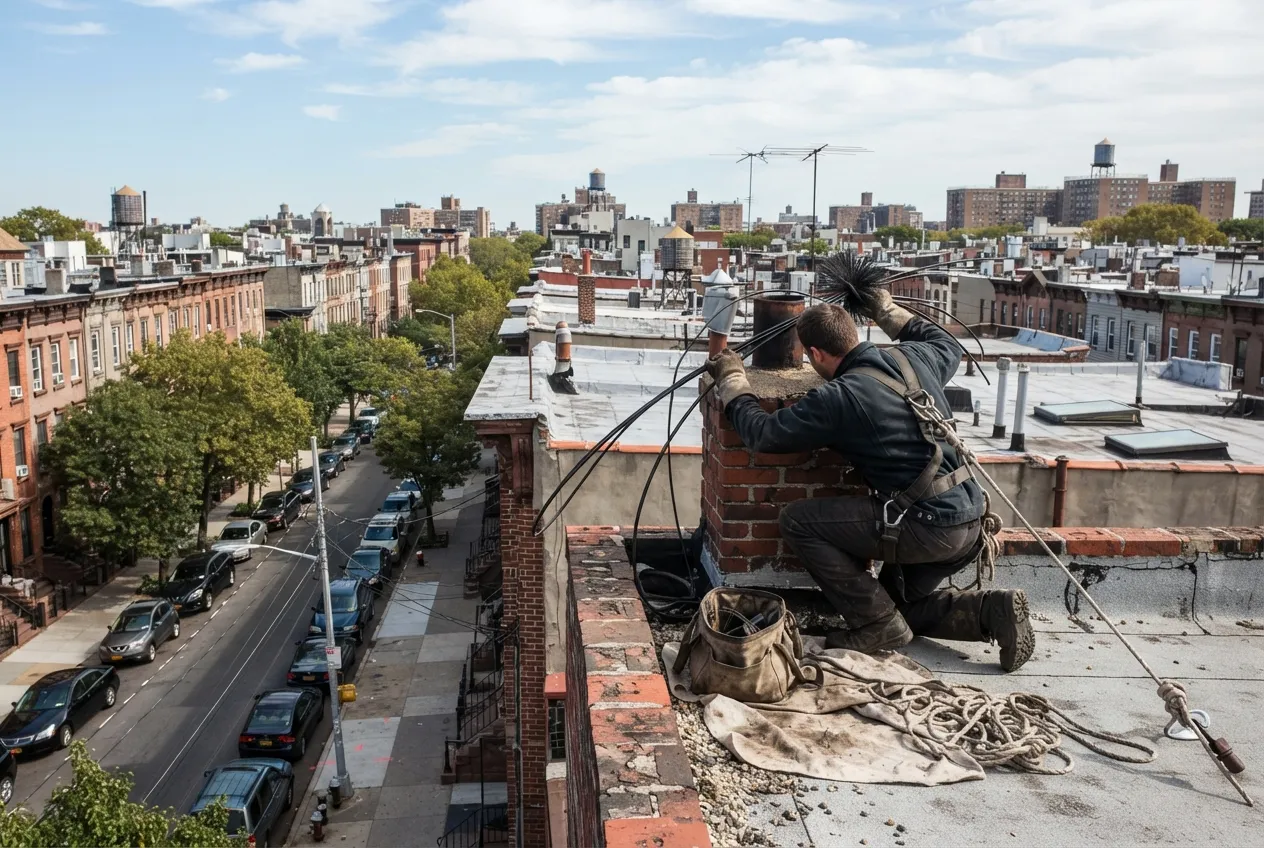
The short answer
Chimney repair in Downtown Brooklyn usually means fixing weathered masonry, cracked crowns, failed flashing or damaged flue liners on brownstones, rowhouses and older apartment buildings. We inspect first, explain what we find, and repair the problems that affect safety and water entry.
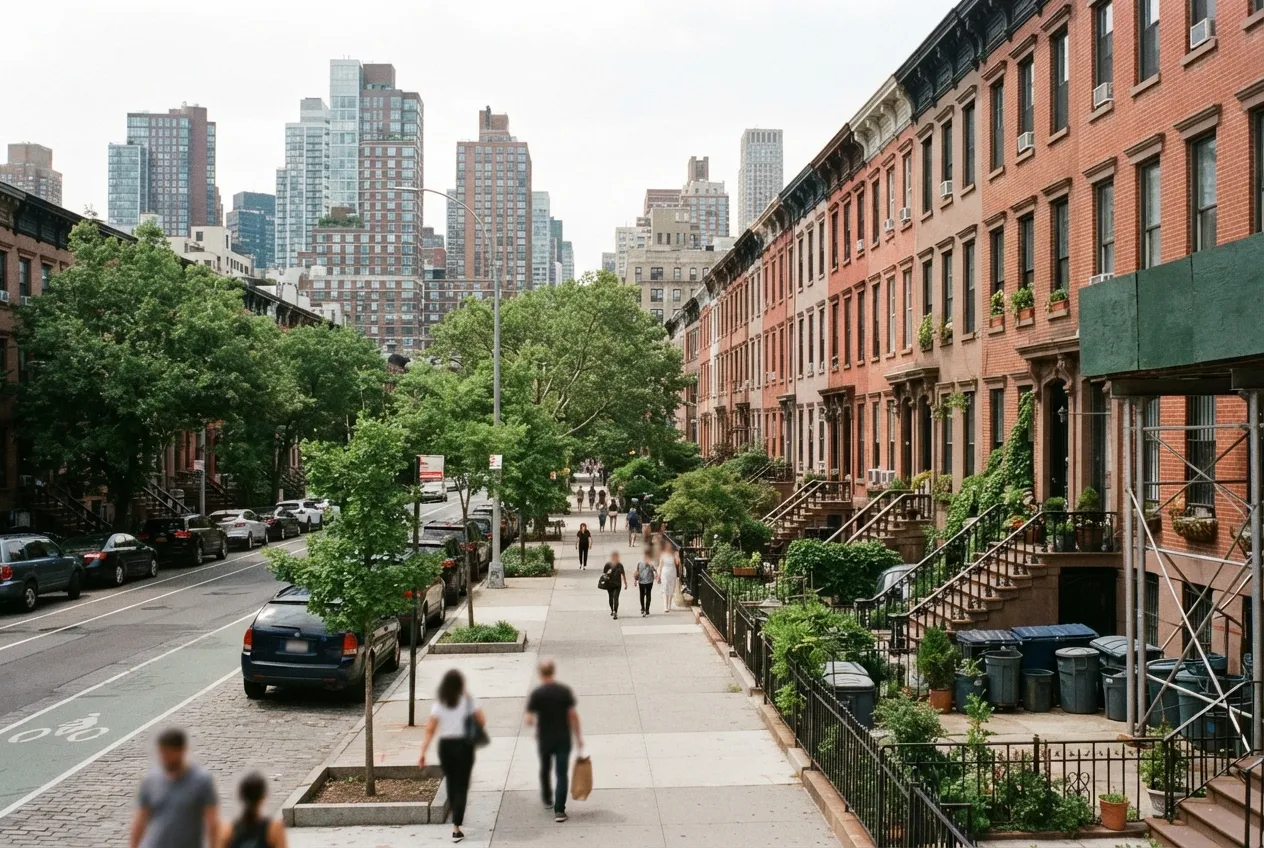
Downtown Brooklyn mixes pre-war apartment buildings, brownstones, rowhouses and newer residential towers, and the chimneys serving them have very different jobs. Some vent a fireplace in a parlor floor. Others carry exhaust from a building boiler that runs most of the year. Our Clinton Hill office is about a mile southeast of the neighborhood, so we can get to homes and buildings in the 11201 ZIP code quickly to find out what is wrong and repair it. Our certified technicians inspect the whole system before recommending work, so you know what each repair is for and why it matters.
Common Chimney Problems in Downtown Brooklyn Buildings
Most chimneys here are brick, and many have been through decades of freeze-thaw cycles, coastal wind and rain. Water is behind most of the damage we see. Once it gets into brick and mortar, it expands when it freezes and slowly pushes the masonry apart. Leaks often show up first as stains on a top-floor ceiling or on the wall beside the chimney breast.
Chimneys on attached rowhouses and brownstones often share party walls or sit close to a neighbor's roof. That affects how water drains and how repairs have to be staged. In larger pre-war buildings, the chimney may serve a central boiler, so a damaged flue can affect every unit.
- Crumbling or missing mortar joints (repointing)
- Cracked or deteriorated chimney crowns
- Loose, spalling or shifted brick near the top of the stack
- Failed or poorly sealed flashing where the chimney meets the roof
- Cracked, gapped or corroded flue liners
- Missing or rusted chimney caps that let in rain and animals
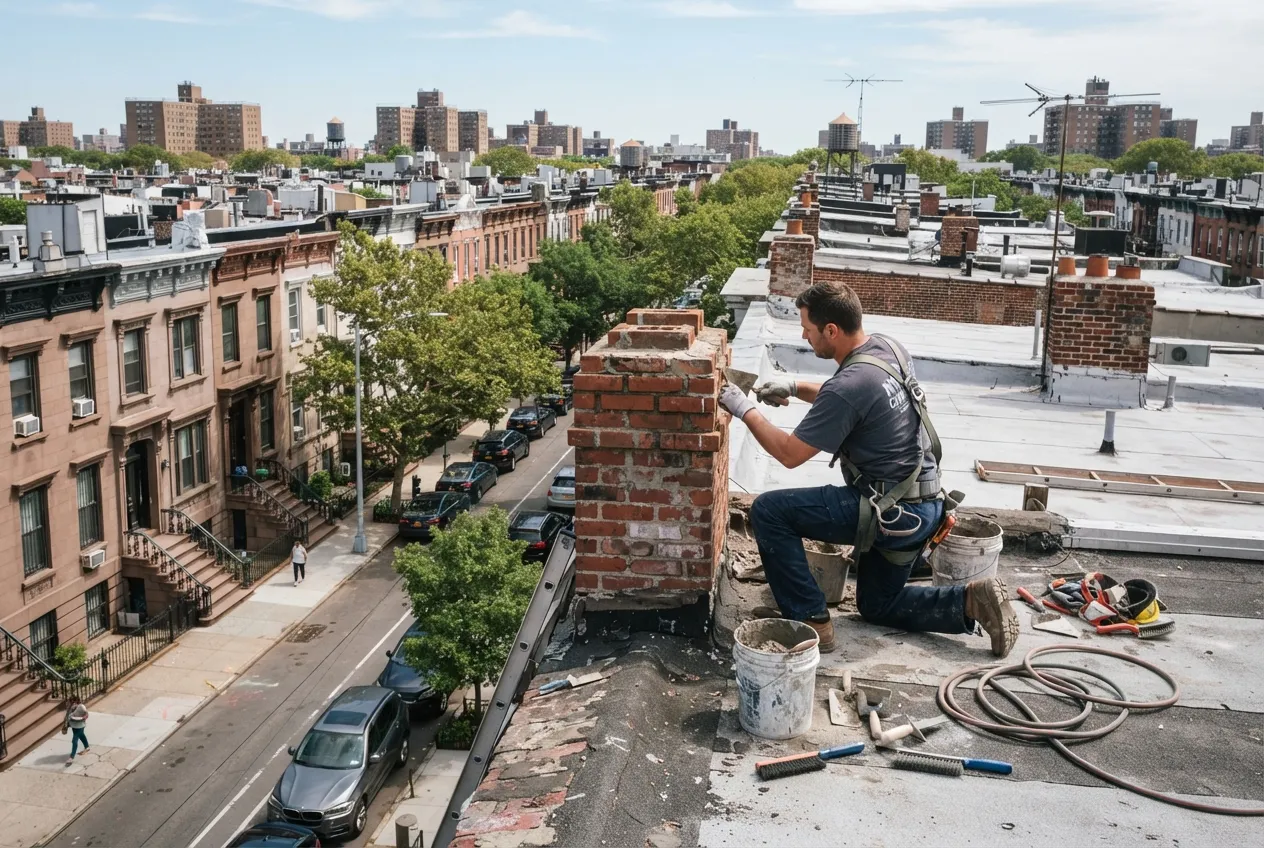
How We Approach a Repair
Every repair starts with an inspection. The NFPA 211 standard calls for chimneys, fireplaces and vents to be inspected once a year, and it describes three levels. A Level 1 inspection fits when nothing about the system has changed. A Level 2 inspection is called for when the system changes, such as a new appliance or a switch in fuel, or when the home is sold. A Level 3 inspection is used when a hidden hazard has to be reached by opening part of the chimney or building.
After the inspection, we explain what we found, separate urgent safety problems from maintenance that can be planned, and describe the repair options. On rowhouses and taller buildings, roof access and staging are part of the plan, so we talk through those details before work starts.
Oil-to-Gas Conversions and Flue Liners
Many older buildings in Downtown Brooklyn have moved, or are moving, from oil heat to gas. When a New York City building converts its boiler from oil to gas, the chimney has to be evaluated as part of the work. A new liner is often needed because gas exhaust produces acidic condensate that can corrode a masonry flue from the inside.
If your building is planning a conversion, or has already converted and the chimney was never looked at, we can evaluate the flue and recommend a liner that fits the new appliance. A properly sized liner protects the masonry and helps the boiler vent safely.
Time for your annual chimney check?
Timing Repairs Around Heat Season
New York City's heat season runs from October 1 through May 31. During that period, building owners must keep apartments heated to the city's minimum temperatures. A chimney problem that takes a boiler offline in January is a much bigger issue than one found and fixed in late summer.
For that reason, we recommend scheduling inspections and repairs for building chimneys before October. Homeowners with fireplaces benefit from the same timing, because masonry and crown work goes best in mild, dry weather, and you start the cold months knowing the chimney is sound.
Serving Downtown Brooklyn and Nearby Neighborhoods
We work throughout Downtown Brooklyn and in the surrounding neighborhoods, including DUMBO, Boerum Hill, Brooklyn Heights, Fort Greene and Clinton Hill. Whether you own a single brownstone, manage a pre-war walk-up, or live in a co-op with a shared boiler flue, we can inspect the chimney, explain its condition in plain terms and handle the repair.
More services in Downtown Brooklyn
- Chimney Sweep in Downtown Brooklyn
- Chimney Inspection in Downtown Brooklyn
- Air Duct Cleaning in Downtown Brooklyn
- Chimney Liner Installation in Downtown Brooklyn