The short answer
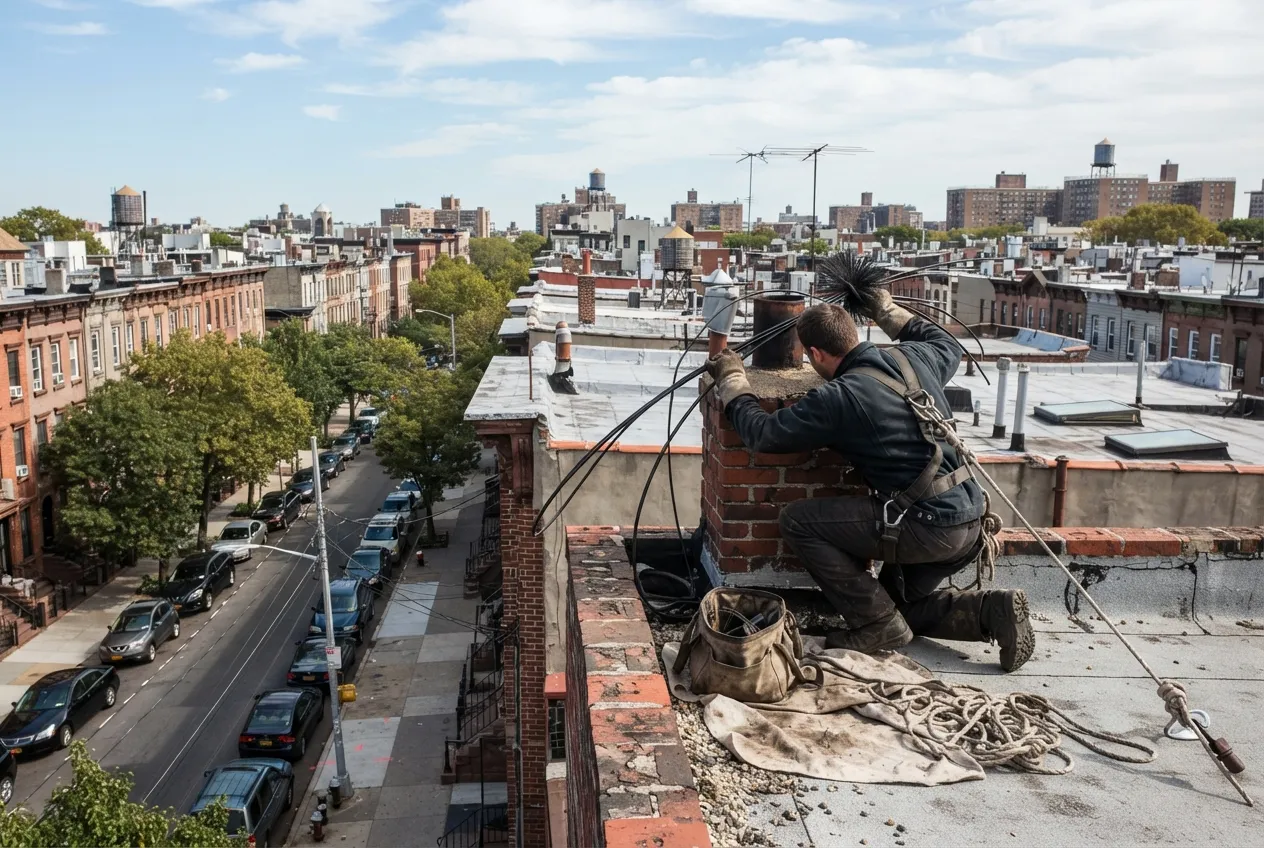
Expert Chimney Sweep serves the Financial District, about 3 miles from our Clinton Hill office, with chimney sweeping, inspection, repair, relining, and dryer vent and air duct cleaning. We work in individual apartments and on building-wide systems such as boiler chimneys, and we recommend a yearly chimney inspection in line with the NFPA 211 standard.
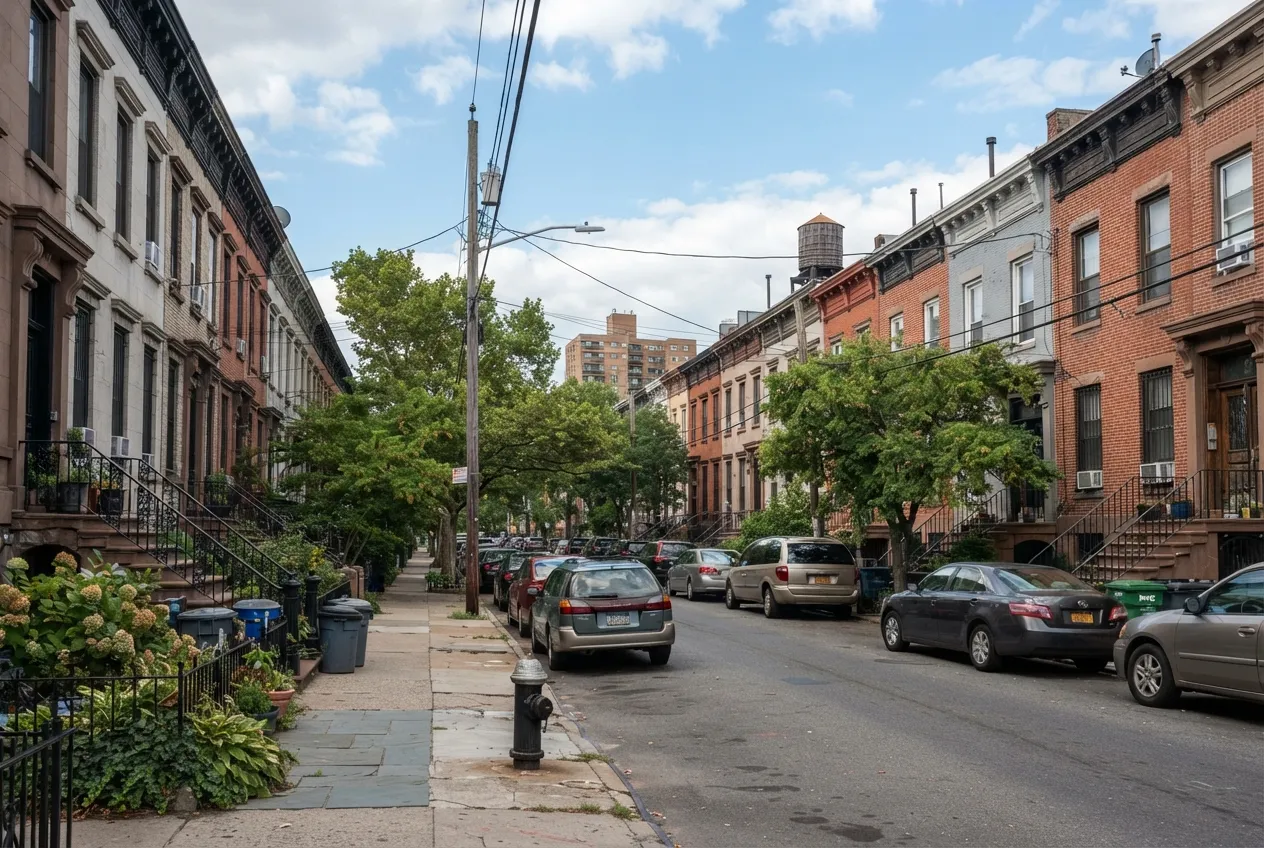
The Financial District sits about 3 miles northwest of our office in Clinton Hill, Brooklyn, so lower Manhattan is a regular part of our route. Most homes here are apartments in pre-war buildings, newer towers, and older commercial buildings converted to residential use. That mix means very different systems: a wood-burning fireplace in one unit, a gas fireplace in another, a building boiler chimney serving dozens of households, plus dryer vents and duct runs that snake through tight shared spaces. Our certified technicians sweep, inspect, repair and reline chimneys and clean dryer vents and air ducts for residents, co-op and condo boards, and building managers in ZIP codes 10005, 10006, 10038, 10271, 10280 and 10282.
Chimney and Fireplace Care for Lower Manhattan Buildings
Fireplaces in the Financial District are usually found in pre-war apartments, converted lofts and some newer units with gas or sealed fireplaces. Many share masonry stacks with other units or connect to flues that run many stories. When something goes wrong, like a stuck damper, a smoky draft or cracked firebox brick, it can affect more than one home.
We handle chimney sweeping, fireplace and damper repair, and masonry work for single units and whole buildings. If your building has a management office or board, we can coordinate access to roofs, mechanical rooms and shared flues so the work is scheduled once and documented clearly.
Yearly Inspections and When a Deeper Look Makes Sense
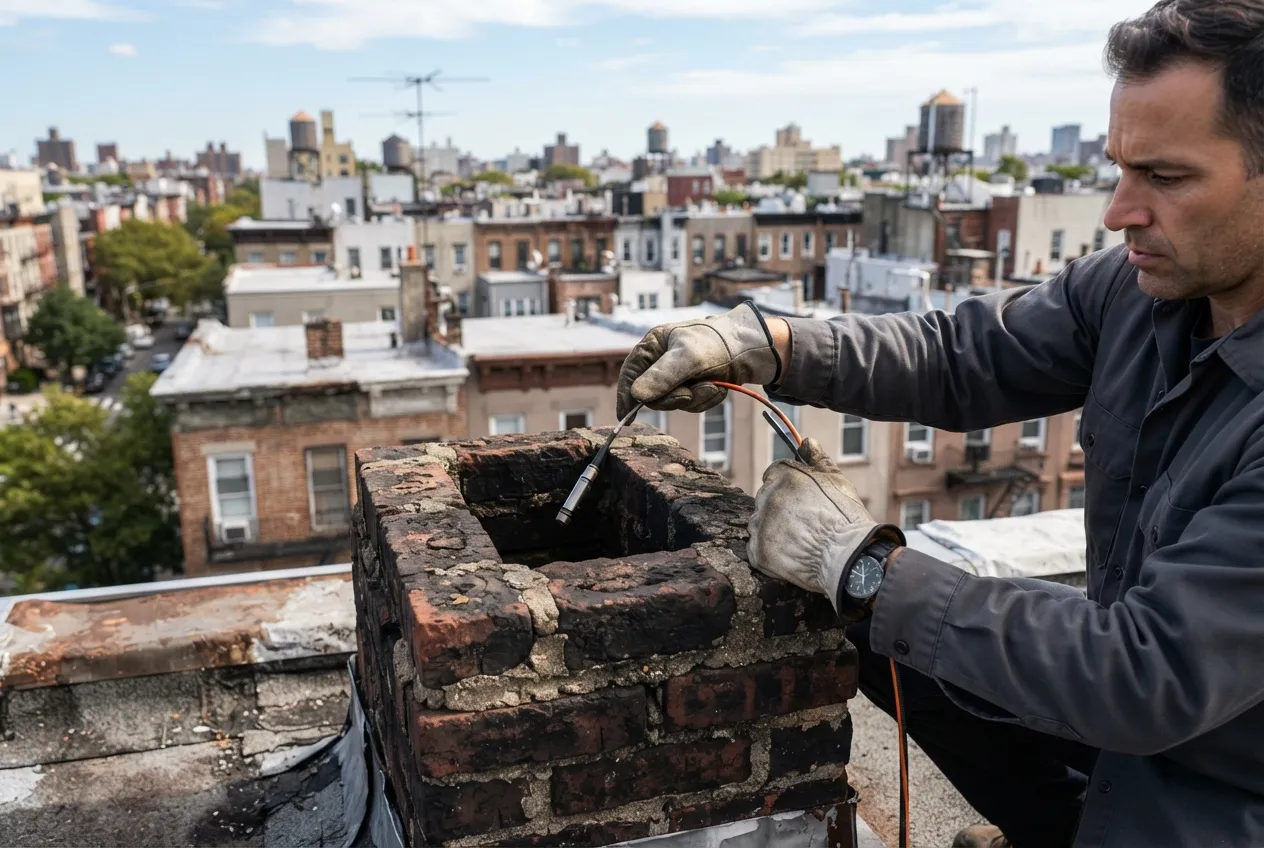
The NFPA 211 standard calls for chimneys, fireplaces and vents to be inspected once a year. Inspections are done at three levels, and the right one depends on what has changed in your home or building.
- Level 1: a standard yearly check when nothing about the system has changed.
- Level 2: when a new appliance goes in, the fuel changes, or the apartment or building is sold.
- Level 3: when a suspected hidden problem can only be reached by opening part of the chimney or wall.
Oil-to-Gas Conversions, Liners and the Heat Season
Many Financial District buildings rely on central boilers. When a New York City building converts its boiler from oil to gas, the chimney has to be evaluated as part of the work. A new liner is often needed, because gas exhaust produces acidic condensate that can corrode an unlined or worn masonry flue. We inspect the flue, explain what we find and install chimney liners sized for the new equipment.
Timing matters. New York City's heat season runs from October 1 through May 31, when owners must keep apartments heated to the city's minimum temperatures. Building managers usually find it easier to schedule chimney inspection and liner installation in late spring or summer, before the boiler has to run every day.
Time for your annual chimney check?
Weather Near the Water Is Hard on Masonry
The Financial District is surrounded by water on several sides, and rooftop chimneys here take wind-driven rain, winter storms and repeated freeze-thaw cycles. Water soaks into brick and mortar, freezes, expands and slowly breaks the masonry apart. Humid summers add to the moisture load.
Our protective work includes chimney caps and chase covers to keep rain, debris and birds out of the flue, and chimney waterproofing with breathable sealers that let trapped moisture escape. When damage has gone further, we handle chimney repair such as repointing and crown work, and chimney rebuilding when a stack is no longer sound.
Dryer Vent and Air Duct Cleaning
Apartment dryer vents often run long distances to an exterior wall or a shared shaft, which gives lint plenty of room to build up. According to the U.S. Fire Administration, failure to clean is the leading factor contributing to clothes dryer fires in homes. If drying takes longer than it used to, or the laundry area feels hot, it is time for a cleaning.
For air ducts, we follow the U.S. EPA's guidance: cleaning makes sense when there is substantial visible mold, signs of vermin, or excessive dust and debris. The EPA also notes that duct cleaning has not been shown to prevent health problems, so we will tell you plainly whether your ducts need it, and we do not push chemical treatments.
Serving the Financial District and Nearby Brooklyn
Our crews come from Clinton Hill, a short trip across the river. We serve all of the Financial District's ZIP codes: 10005, 10006, 10038, 10271, 10280 and 10282. On the Brooklyn side, we also work in Brooklyn Heights, Downtown Brooklyn, DUMBO, Boerum Hill and Carroll Gardens.
ZIP codes we serve
- 10005
- 10006
- 10038
- 10271
- 10280
- 10282