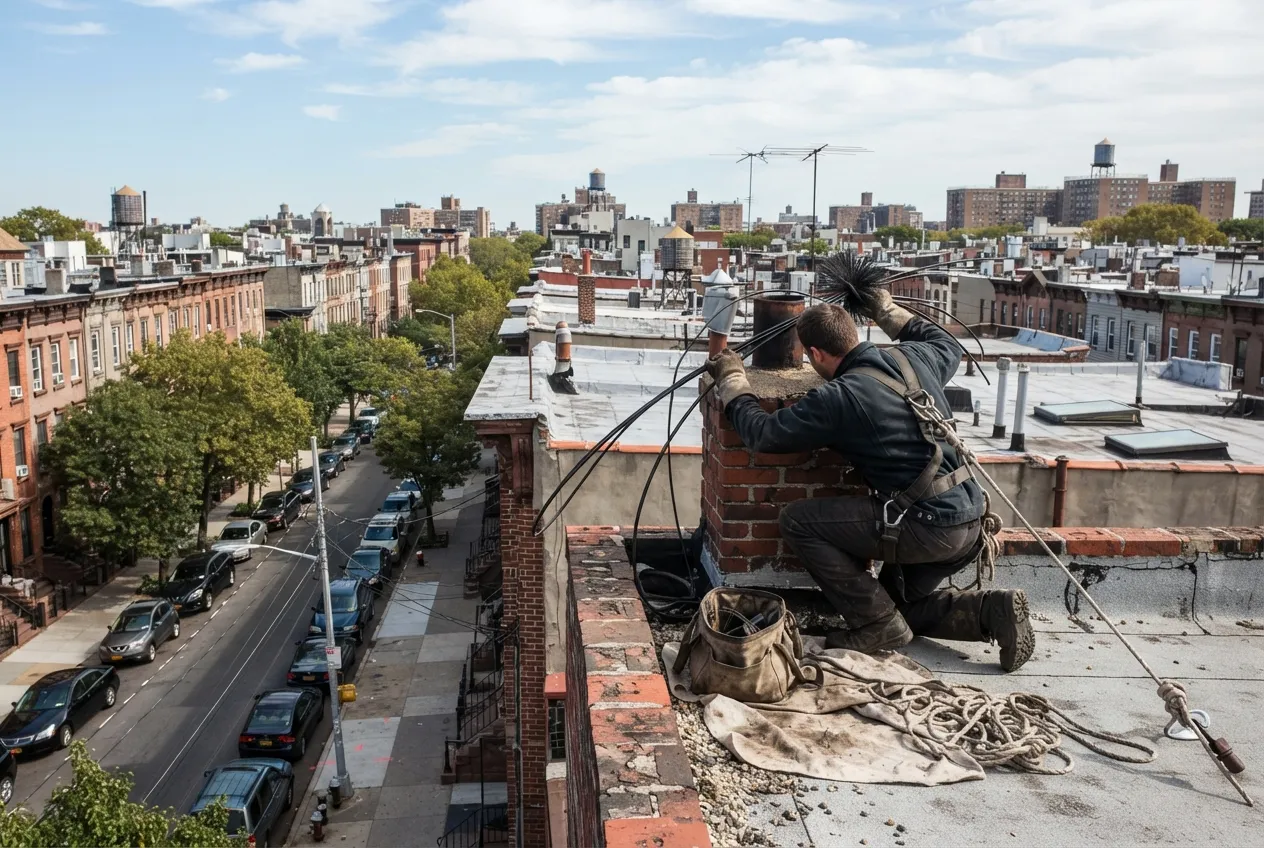
The short answer
Expert Chimney Sweep repairs chimneys in Boerum Hill, including masonry, crowns, flashing, caps, dampers and flue liners on brownstones, rowhouses and pre-war apartment buildings. Every repair starts with an inspection to find the cause, and we explain what we found before any work begins.
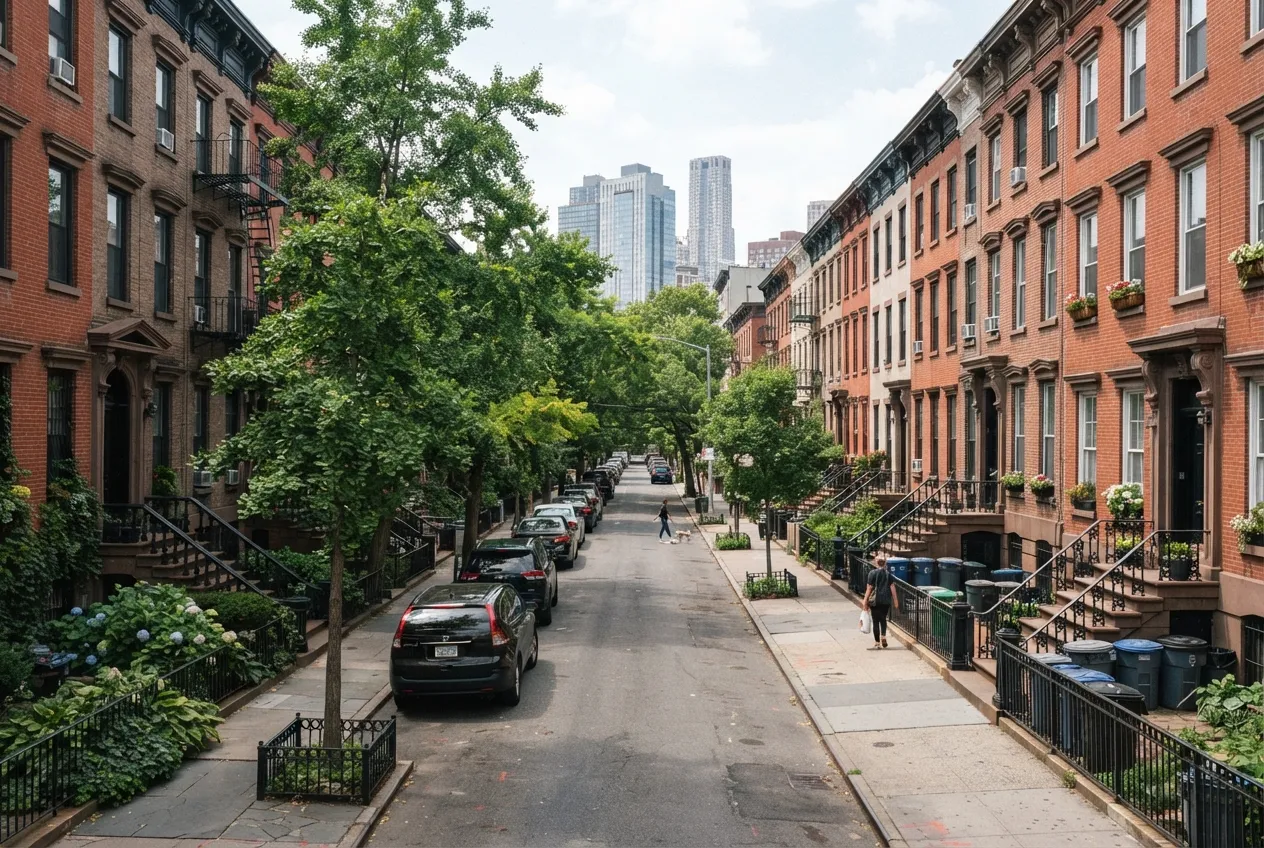
Chimneys in Boerum Hill take a beating. Many of the neighborhood's brownstones and rowhouses have masonry stacks that rise through several floors and finish on flat roofs exposed to wind, rain and repeated freezing and thawing. Pre-war apartment buildings often run tall flues serving boilers that work hard all winter. When mortar washes out, a crown cracks or flashing pulls loose, water gets in, and small problems turn into stained ceilings, damaged plaster and unsafe flues. Expert Chimney Sweep repairs chimneys throughout Boerum Hill (11201) from our office in Clinton Hill, about a mile to the southeast.
Why Boerum Hill Chimneys Need Repair
Most chimneys here are brick, and brick chimneys age from the top down. The crown, the cap and the top few courses of brick face the weather directly, so that is where trouble usually starts. Once water gets past the crown or into open mortar joints, it can travel down the stack and show up as a stain several floors below the actual leak.
Many older homes also have fireplaces that were closed off, converted or rebuilt over the years. Before a fireplace goes back into use, or after years of heavy use, the flue, damper and smoke chamber should be checked for cracks, gaps and deterioration.
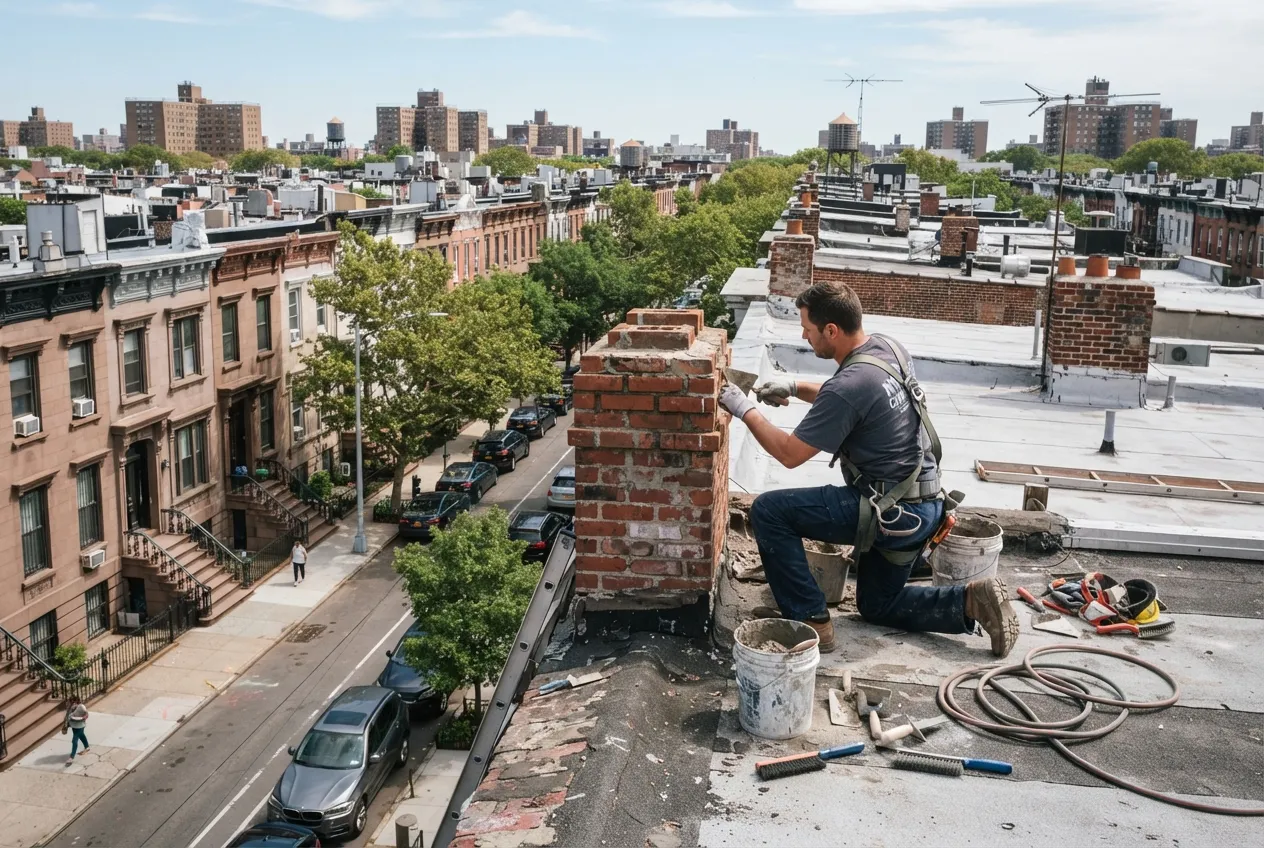
Common Chimney Repairs We Handle
Most repairs fall into a few categories. We look for the source of the problem rather than covering up the symptom.
- Repointing: replacing cracked or eroded mortar joints so water stays out of the masonry
- Crown repair or rebuilding: fixing or replacing the concrete or mortar cap that sheds water off the top of the chimney
- Flashing repair: resealing the joint where the chimney meets the roof, a frequent source of leaks on flat roofs
- Chimney caps: installing or replacing caps to keep out rain, debris and animals
- Damper repair or replacement, including top-sealing dampers for fireplaces that are used only occasionally
- Smoke chamber parging: smoothing and sealing the area above the firebox so it draws properly
- Firebox repair: replacing damaged firebrick and mortar
- Flue liner repair and relining
Liners and Oil-to-Gas Conversions
Many Boerum Hill buildings have converted, or are planning to convert, from oil heat to gas. When a New York City building converts its boiler from oil to gas, the chimney has to be evaluated as part of the work. A new liner is often needed, because gas exhaust produces acidic condensate that can corrode an unlined or deteriorated masonry flue.
We inspect the existing flue, explain whether it can be reused or needs a liner, and size the liner to the appliance it will serve. If you are planning a conversion, it helps to bring the chimney into the conversation early so it does not hold up the project.
Time for your annual chimney check?
How a Repair Visit Works
Every repair starts with an inspection. The NFPA 211 standard calls for chimneys, fireplaces and vents to be inspected once a year, and it describes three inspection levels. A Level 1 inspection fits when nothing has changed. A Level 2 inspection is called for when the system changes, such as a new appliance or a switch of fuel, or when a home is sold. A Level 3 inspection is needed when a hidden hazard can only be reached by opening part of the chimney or building.
Our certified technicians check the chimney from the roof and from inside the home, and use a camera inside the flue when needed. We then explain what we found, show you photos, and lay out the repair options before any work begins. On attached rowhouses we take care with shared roofs and neighboring stacks, and we let you know if a problem appears to involve a neighbor's chimney.
Plan Repairs Before Heat Season
New York City's heat season runs from October 1 through May 31, when building owners must keep apartments heated to the city's minimum temperatures. For buildings with boilers, a chimney problem in the middle of winter can be urgent. Scheduling inspections and repairs in late spring and summer gives you time to complete masonry and liner work before the boiler is needed.
Leaks, falling brick, smoke entering the home, or a strong odor from the fireplace should be looked at right away, whatever the season.
Serving Boerum Hill and Nearby Neighborhoods
Because our office is in Clinton Hill, Boerum Hill is close to home for us. We also repair chimneys in Downtown Brooklyn, DUMBO, Brooklyn Heights, Fort Greene and Clinton Hill, where the housing ranges from brownstones and rowhouses to pre-war apartment buildings.
More services in Boerum Hill
- Chimney Sweep in Boerum Hill
- Chimney Inspection in Boerum Hill
- Air Duct Cleaning in Boerum Hill
- Chimney Liner Installation in Boerum Hill